













































WorldStage–The Federal Government of Nigeria has said that it will audit regional development commissions nationwide and sanction those found to be non-performing.
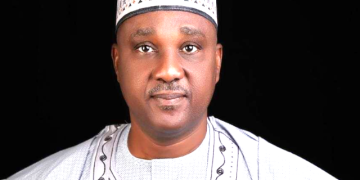
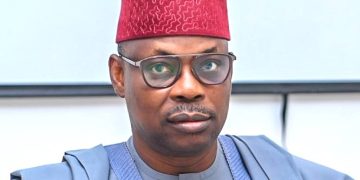
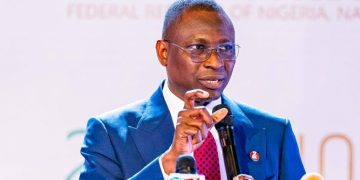
The Minister of Regional Development, Mr Abubakar Momoh, disclosed this in Abuja at the First-Ever North Central Stakeholders Development Summit organised by the North Central Development Commission (NCDC).
The two-day summit was themed: “A Great Leap Forward: A 20-Year Economic, Infrastructural, and Social Development Plan for the North Central Region.”
Momoh charged the commissions to operate within strict public governance frameworks and align their activities with government policies and regulations.
“Let it be made clear that these regional development commissions are not private enterprises.
“They are government establishments governed by government rules and all extant regulations.
“You cannot sit in the comfort of your house and operate in isolation from Federal Government guidelines,” Momoh warned.
He said the ministry would soon conduct a comprehensive performance audit and peer review of all regional development commissions across the country.
Momoh said the outcome of the exercise would be submitted to President Bola Tinubu to determine whether each commission had fulfilled its mandate.
“In a very short time, as a ministry, we will sit down and peer-review all the development commissions and submit a report to the President.
“If you have not been active, you have to put on your thinking cap, because our report will form the basis for determining whether your commission has fulfilled its mandate,” he said.
The minister praised the NCDC and North East Development Commission (NEDC) for demonstrating early capacity and vision in implementing their mandates.
He urged newly established commissions to emulate the Niger Delta Development Commission (NDDC), which he said had demonstrated a shift toward transformative development.
Momoh, quoting Vice-President Kashim Shettima, said the NDDC had “transformed from being a transactional institution to a transformative institution under the current administration.”
He outlined five guiding principles for regional development: integrated planning, leveraging comparative advantages, infrastructure connectivity, human welfare and sustainable peace.
Also speaking, the Minister of State for Regional Development, Alhaji Uba Maigari Ahmadu, said the NCDC was established to provide a tailored and well-resourced response to challenges confronting the North Central region.
Ahmadu said the National Regional Development Policy, expected to run from 2026 to 2030, would provide a unified framework for regional planning and resource mobilisation.
“The goal is for the policy to provide a single coherent national architecture within which the NCDC and its sister commissions can plan, prioritise and mobilise resources,” he said.
The host governor and Chairman of the North Central Governors’ Forum, Mr Abdullahi Sule of Nasarawa, called for realistic economic planning focused on industrial processing and resource development.
“North Central, we have it all. We have the people, the leadership, the agricultural belt and the solid minerals,” Sule said.
He highlighted Nasarawa’s growing lithium and cement processing industries, describing the state as an emerging industrial driver within the North Central region.
“Today, Nasarawa is home to the biggest and second-biggest lithium processing plants in the country. This is a thing of pride,” he said.
Sule also cited Benue’s cement industry, alongside rice and sesame production, as evidence of the region’s abundant economic potential.
“What do we need more? We need thinkers. We need implementers. We need people who understand what it means to lead and serve the people right,” he said.
The governor said natural resources alone could not transform the region without dedicated leadership, strategic execution and accountable governance.
Sule also commended the economic policies of Tinubu, saying recent fiscal reforms had improved revenue allocations to the different tiers of government.
“Even if you disagree with President Tinubu, you cannot disagree with his policies.
“Today, we are paying salaries without borrowing money from banks,” he said.
Presenting the draft 20-Year Economic, Infrastructural and Social Development Plan, the NCDC Managing Director, Dr Cyril Tsenyil, described the summit as a historic turning point for the region.
Tsenyil said the commission’s mandate covered transport, agriculture, security, industrialisation, housing and digital connectivity, stressing the need for regional collaboration.
“Investors do not see the boundary between Benue and Nasarawa, or between Kogi and Niger, the way governments do,” he said.
“They see markets, supply chains, corridors, resources and labour pools.
“We must compete globally by collaborating regionally,” Tsenyil added.
He said agricultural production should support regional processing industries rather than merely supplying raw commodities.
Tsenyil said infrastructure projects should be designed as interconnected regional economic corridors rather than isolated state-level interventions.
The NCDC chief executive also announced the deployment of structured “Deal Rooms” to match bankable regional projects with commercial and development finance.
“The most important feature of this summit is that we do not intend to end with speeches; we intend to end with deals, pipelines and commitments,” he said.
“Five years from now, we should be able to say how many jobs were created, how much private capital was mobilised and how many kilometres of strategic infrastructure were delivered,” Tsenyil added.
The summit brought together ministers, lawmakers, traditional rulers and private-sector leaders.
The participants sought to establish structured investment pipelines and promote coordinated economic, infrastructural and social development across the North Central region.