





































* Boosts BHCPF supported facilities from 8,309 to 13,512 nationwide
By Abiodun Folarin
The Federal Government of Nigeria has disclosed that it scaled up healthcare access by disbursing N70.6 billion through the Basic Healthcare Provision Fund (BHCPF) between 2023 and 2025, while committing over $150 million annually to vaccine procurement as it intensifies efforts to strengthen Nigeria’s primary healthcare system.
The government also said its scaling up healthcare access by increasing the number of BHCPF supported facilities from 8,309 to 13,512 nationwide, with about 3,789 new facilities already identified out of the additional 5,200 planned.
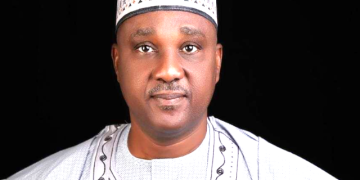
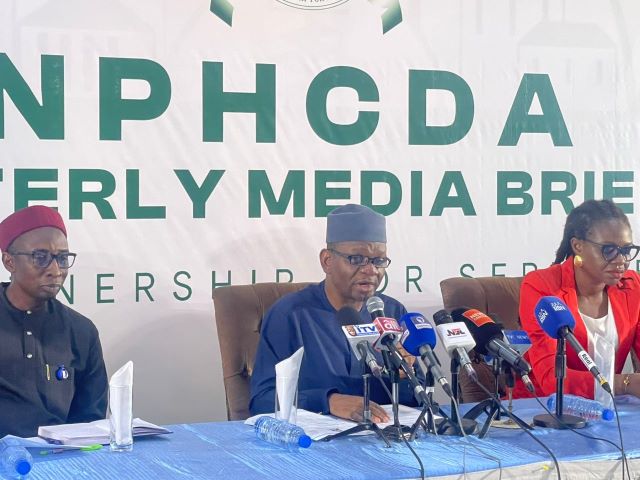
The Executive Director of the National Primary Health Care Development Agency (NPHCDA), Dr. Muyi Aina, made the disclosure on Tuesday at the agency’s first quarterly briefing for 2026 held in Abuja.
Aina explained that Nigeria currently spends over $150 million yearly on vaccines, funded partly by the federal government and partly through donor partnerships, noting that declining global donor support is pushing the country toward greater domestic financing.
“Every year, the Nigerian government spends over $150 million to procure vaccines. This is funded in part by government resources and in part by donors, but that support is gradually declining,” he said.
He stressed that beyond vaccines, significant resources are also required for syringes, cold chain equipment, waste management systems, and vaccine delivery logistics, describing the overall cost as substantial and rising.
According to him, the government is now prioritising domestic resource mobilisation and encouraging greater contributions from states to sustain immunisation programmes.
He added that efforts are underway to reduce costs through local vaccine production, which would limit exposure to foreign exchange pressures and make procurement more affordable.
On malaria vaccination, Aina revealed that the programme is currently being implemented in four states, with nearly one million children already vaccinated in Bayelsa and Kebbi states alone. He noted that the malaria vaccine requires four doses for full effectiveness, posing challenges in ensuring compliance across all stages.
“Now, what’s unique about the current malaria vaccine is that for it to be fully effective, you have to take four doses, which we are still learning from. You know, many of our vaccines, you take once, maybe twice. For Penta, you take three times, right? Now we have one that you have to take four times.
“And what we find is that sometimes there’s a dropout between each stage. So we’re working through systems to learn how to successfully bring people back four times for the vaccine.
He note that, the number children vaccinated so far include, 984,559 children in Kebbi and Bayelsa, while Ondo 166,342 and Bauchi 105,890. He added that about 600,000 pieces of vaccine is currently in the cold store.
He also disclosed that 48,372 women have benefited from emergency obstetric services under the programme, while about 2,500 women have received obstetric fistula repairs in collaboration with other health agencies.
Aina emphasised that while government continues to supply vaccines and strengthen systems, public demand and acceptance remain critical to the success of immunisation efforts.
“When vaccination works, people don’t notice it. It is when it fails that outbreaks occur. We must all take responsibility government, media, and citizens to ensure success,” he said.