












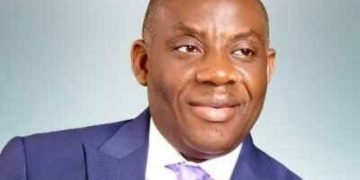






























WorldStage Newsonline– Senator Jimoh Ibrahim representing Ondo South federal constituency in Nigeria’s Senate is making a strong case for a bill for an act to establish Bitumen Development Commission of Nigeria for the exploitation of the resources of which the country has 38 billion reserves.
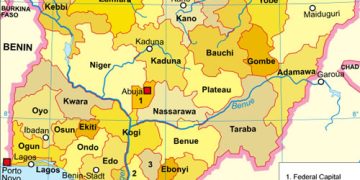
According to him, bitumen deposits have been discovered in southern part of Ondo State decades ago but have remained untapped due to politics and lack of expertise.
Not happy with the situation, the senator has taken the bull by the horns to champion the sponsoring of a bill for an act to establish bitumen development commission of Nigeria.
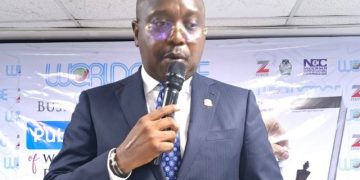
Making a case for the establishment of the Act before the Committee on Solid Minerals Development at National Assembly Complex, Three Arms Zone, Abuja during a public hearing titled: A Bill for an Act to Establish the Bitumen Development Commission of Nigeria and provide a legal framework for the promotion of research, study, investment, exploration, production, exportation, development and utilization of locally sourced bitumen in Nigeria and for related matters (S.B. 07), Ibrahim stated that Ondo State had the highest deposit in Africa, with an estimated value of 42 billion tons.
According to him, the global in-place bitumen and heavy oil resources are estimated to be 5.9 trillion barrels (938 billion m 3), saying more than 80% of these resources are found in Canada, the US, Nigeria, Venezuela (Meyer and Attanasi 3003: Hein 3031).
Citing Agbabu, Ode-Irele, Igbotako, Ode Aye and Ajebandele in Ondo State as where bitumen is in massive volume, Ibrahim explained that the performance of Agbabu natural bitumen is modified with polyphosphoric acid through fundamental and Fourier transform infrared spectroscopic investigations.
He added that various forms of bitumen deposits are in Agbabu, Ode-Irele and Igbotako, as well as in Ogun, Lagos, Edo and Akea Ibom states.
Talking of what Nigeria stands to gain from enacting the bill, Jimoh Ibrahim pointed out that financial gains from bitumen in terms of revenue generation is valued at $107.59 in 2022 and was projected to reach $146.59 by 2030 at a CAGR of 4.00% over the forecast period.
He reminded that market players in the mineral like the US, Germany, UK, France, Italy, Spain, Russia, Poland, China, Japan, India, Malaysia, Singapore, Philippines, Indonesia, Thailand, Vietnam, Brazil, Mexico, Colombia were increasing stakes whole some Middle East countries of Saudi Arabia, United Arab Emirates, Turkey, Egypt and South Africa.
In economic terms, Senator Ibrahim argued that establishment of the act would ignite job creation and reduce dependence on oil as a source of revenue.
He identified the importance of bitumen as including use for industrial purposes, and that bitumen was beneficial for emulsion in road construction, improved workability and mixing.
In addition, Ibrahim added that bitumen enhanced adhesion and durability, energy efficiency and environmental benefits through versatility in application as we as as well as cost-effective solution.
Emphasizing the need for an Act to Establish Bitumen Development Commission of Nigeria, Ibrahim stated that the Act would prevent unconventional sources from taking advantage of research-enhanced applications over other competitors.
He also argued that since Nigeria had been able to develop despite the government’s economic diversification policy, the need for a commission to create and coordinate activities was imperative.
He also maintained that since the Petroleum Act excluded bitumen regulation, there was a need for a legal framework.
“Nigeria, with 38 billion reserves of bitumen, requires a regulatory framework,” he also stated.
He stated that the Act was also necessary because international institutions would require a legal framework to support Nigeria’s effort to develop bitumen, therefore rendering the Ministry of Solid Mineral Resources directive insufficient.
Finally, Ibrahim assured that Bitumen Development Commission of Nigeria would lead innovation and improved strategy for finance resource, saying it was a good case of the impressive alternative revenue for Nigeria.