



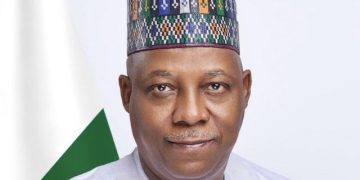














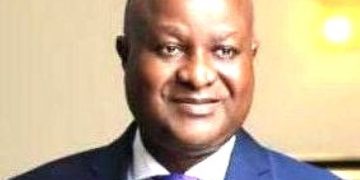






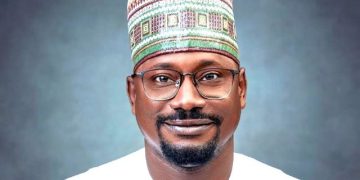













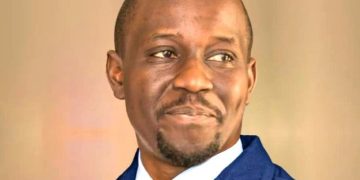



WorldStage Newsonline– Hon. Ahmed Munir, a member of Nigeria’s House of Representatives has suggested the need to bring the informal activities across West African nations into the formal economy in order to widen GDP coverage and also provide participants with access to funding and protections essential to business growth.
Munir, who represents Lere Federal Constituency in Kaduna State and serves as Deputy Chair of the ECOWAS Parliament Committee on Infrastructure, made the remarks while addressing journalists at the sidelines of the ECOWAS Parliament’s Sixth Legislature Delocalised Meeting of the Joint Committee on Infrastructure, Energy and Mines, held in Lomé, Togo.
He emphasized that despite a robust volume of trade across West African nations, most of it remains undocumented due to its predominance in the informal sector.
According to him, the informal economy plays a significant role in cross-border trade among ECOWAS citizens but is largely unrecorded, making it difficult to fully assess the region’s economic potential.
“You’d be surprised by the volume of trade happening within West Africa — it’s quite robust. The issue is that much of it falls under the informal sector, and that’s why it’s not properly captured,” he said.
He emphasized that including the informal sector in economic metrics is a necessary step for regional growth and development.
Munir also stressed the importance of improving interconnectivity among ECOWAS member states, particularly in air travel, which was a central theme of the Lomé meeting.
“There can’t be proper regional integration without the free and easy movement of goods and people,” he said, noting that projects like the Lagos-Dakar highway were already underway and included in Nigeria’s national budget.
He also called for deeper collaboration to ensure such infrastructure connects landlocked countries and extends via transshipment routes to places like Cape Verde.
He proposed leveraging the region’s river systems to facilitate trade and logistics, including dredging and improved water transport networks.
To meet infrastructure goals, Munir argued for a greater role for the private sector.
“Governments can’t shoulder this responsibility alone,” he said.
“Through PPP models, private companies can build and maintain sections of highways and recover their investments through tolls or tax incentives. We must explore innovative financing models across West Africa.”
Despite current challenges, Munir expressed strong optimism about the future of ECOWAS, citing the region’s population of over 400 million and its achievements over the last 50 years.
Drawing parallels to the telecommunications boom, he said West Africa could replicate similar success in aviation, tourism, and education.
“We want to see West Africans flying within the region with ease, trading, studying, and vacationing across borders. That’s what true integration looks like.”
He noted that meetings like the one in Lomé were essential for forging a common front and developing actionable policies.
Munir concluded by reaffirming the role of ECOWAS parliamentarians in domestically adopting the outcomes of regional deliberations.
“When we agree on policies or legislative proposals here, it’s our job to take them back home and ensure they’re domesticated in our national laws. The process may be gradual, but progress is being made,” he said
He acknowledged that the region’s diversity and sovereignty pose coordination challenges but insisted that unity and shared vision remain the driving force behind ECOWAS.
“We’ve come a long way, and with continued collaboration and reforms, we’ll go even further. There’s plenty of hope for tomorrow,” he said



