


















































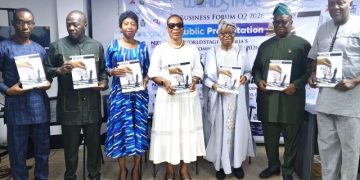


WorldStage— Nigeria this week inaugurated West Africa’s largest lithium processing plant in Nasarawa State, a major step in Nigeria’s push to move beyond exporting raw minerals and build a value-driven mining and manufacturing industry.
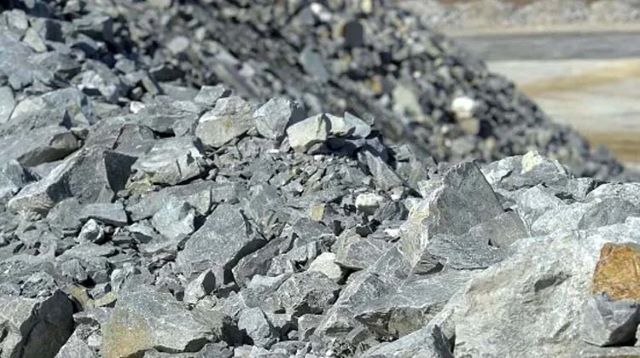
The facility, located in Endo community in Nasarawa Local Government Area, has the capacity to process 6,000 metric tonnes of lithium ore daily, translating to about three million metric tonnes annually.
The project’s promoters said the plant has already created more than 1,000 direct jobs and over 2,000 indirect employment opportunities, highlighting its potential to drive industrial growth and economic development.
President Bola Tinubu represented by Vice President Kashim Shettima at the inauguration, said the investment aligns with the federal government’s strategy of positioning the solid minerals sector as a key pillar of economic diversification, job creation and export earnings.
He stressed that while Nigeria is richly endowed with mineral resources, long-term economic prosperity depends on processing those resources locally rather than exporting them in raw form.
“Natural resources may be a blessing, but only vision can turn them into wealth. Only institutions can protect that wealth. Only industry can multiply it, and only people can give it meaning,” the president said.
Tinubu noted that the global transition to clean energy has made lithium one of the world’s most sought-after minerals because of its critical role in the production of rechargeable batteries, electric vehicles and renewable energy storage systems.
He described the commissioning of the Diamond New Energy lithium processing plant as a strong vote of confidence in Nigeria’s ongoing economic reforms and a clear indication that the country is advancing from mineral extraction to value-added industrial production.
“A factory is never just a building. It is where policy becomes employment, where investment becomes production, and where hope begins to acquire structure,” he added.
The president said investments of this scale would strengthen local manufacturing, promote technology transfer, develop skilled manpower and improve Nigeria’s competitiveness in the global critical minerals value chain.
Tinubu also commended Nasarawa State Governor Abdullahi Sule for creating an enabling environment that has attracted significant mining investments, describing the state as a model for responsible mineral development.
He added that peace, policy consistency and strong institutions remain essential for attracting long-term investment into the mining sector.
Governor Sule described the project as another milestone in Nasarawa’s emergence as one of Nigeria’s leading destinations for mining investment.
He thanked Diamond New Energy for choosing the state despite competition from other mining locations and assured investors of continued security, policy support and a conducive business environment.
According to the governor, Nasarawa possesses commercially viable deposits of lithium, lead, zinc, copper, iron ore, gold, marble and gemstones, alongside vast agricultural resources and its strategic proximity to the Federal Capital Territory, giving the state a competitive advantage for industrial development.
He also acknowledged the support of the host community, saying its cooperation was crucial to the successful completion of the project.
Minister of Solid Minerals Development, Dele Alake, said the commissioning validates the Federal Government’s policy requiring investors to process mineral resources locally before export.
According to him, the policy is intended to stimulate domestic manufacturing, create skilled jobs, encourage technology transfer and maximise value from Nigeria’s abundant mineral resources.
Alake said the government’s long-term ambition is to establish a complete lithium value chain capable of producing lithium batteries, electric vehicles, solar panels, mobile phones and other clean-energy technologies within Nigeria.
“Our goal is to begin producing lithium batteries, electric vehicles, mobile phones, solar panels and every technology that depends on lithium. We want to produce them in Nigeria,” he said.
He added that Nigeria’s local value-addition policy is attracting international attention, with several African countries beginning to adopt similar approaches to mineral beneficiation.
Speaking on behalf of Diamond New Energy and its partners, JULING and CANMAX, Ambassador Yu Chongqiang said the company is committed to helping position Nigeria as a leading player in the global critical minerals industry through responsible mining, local processing and industrial innovation.
He said the company has invested not only in modern processing facilities but also in workforce development, infrastructure, environmental sustainability and partnerships with host communities.
Yu noted that the completion of processing plants in Nasarawa and Ogun states forms part of a broader strategy to build an integrated industrial ecosystem that will strengthen local manufacturing, deepen domestic supply chains and support Africa’s clean energy transition.
The commissioning comes as Nigeria intensifies efforts to attract investment into its solid minerals sector, seeking to capitalise on surging global demand for critical minerals driven by the rapid growth of electric vehicles, battery manufacturing and renewable energy technologies.





