


















































*As FG shares ₦5.6b to improve basic education
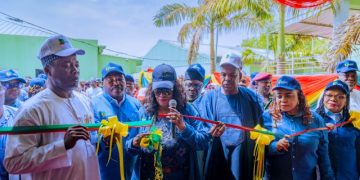
WorldStage– In a significant move to revitalise the nation’s basic education sector, the Federal Government of Nigeria, through the Universal Basic Education Commission (UBEC), on Thursday, April 23, 2026, flagged off the 2025 School-Based Management Committee – School Improvement Programme (SBMC-SIP).
The event, which took place in Abuja, also featured the formal disbursement of ₦434.5 million as the final tranche of the 2023 and 2024 SBMC-SIP support funds, alongside the earmarking of ₦5.18 billion for the 2025 implementation cycle.
Representing the Executive Secretary of UBEC, Dr. Aisha Garba, at the event, the Deputy Executive Secretary (Technical), Mr. Rasaq Olajuwon Akinyemi, highlighted the government’s commitment to community-driven improvements, with ₦5.18 billion earmarked to support 518 schools nationwide for 2025.
The ₦434.5 million in final-tranche funds for 2023/2024 is set to complete over 11,000 projects, including classrooms, sanitation facilities, and security upgrades.
To further enhance the initiative’s impact on educational access, UBEC introduced a Learner Retention Programme.
Minister of Education, Dr. Tunji Alausa, represented at the programme by an official of the ministry, emphasized that these community-managed funds are vital for upgrading learning environments, urging local stakeholders to ensure transparency in implementation.
Also speaking on the fund, the Federal Ministry of Information and National Orientation, said the funds are aimed at facilitating over 15,000 localized projects, including classroom renovations, construction of WASH facilities (water and sanitation), and enhancing school security.
The initiative, according to the ministry, empowers community-level committees to directly manage school upgrades, ensuring transparency and accountability in the utilization of resources.
Dr. Aisha Garba, the Executive Secretary of UBEC, stated, “We are not merely launching programmes; we are reaffirming a national commitment to every Nigerian child.”
She noted that the programme’s decentralized approach allows communities to take ownership of their local schools’ development. “The goal is to ensure that basic infrastructure gaps are closed effectively,” she added.
Focusing on decentralization and community empowerment, the SBMC-SIP model she said was established to foster local ownership of educational facilities, bridge the gap between the government’s centralized planning and the urgent needs of rural and semi-urban schools.
The 2025 program focuses on providing a conducive learning environment, which, according to studies, significantly boosts learner enrollment and retention.
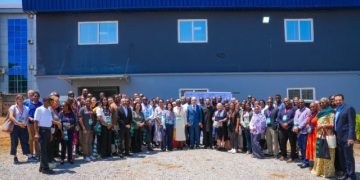
The disbursement ceremony, which took place at the UBEC Digital Resource Centre (DRC) in Abuja, was attended by former Governor of Nasarawa State and board chairman of UBEC, Alhaji Tanko al-makura; stakeholders from the 36 states and the Federal Capital Territory (FCT); as well as representatives from development partners, including UNICEF and UNESCO, who lauded the government for its persistent focus on strengthening primary education.
Alongside the infrastructural improvements, UBEC reaffirmed its commitment to teacher training. The 2025 initiative includes a robust Teacher Professional Development (TPD) programme, meant to improve pedagogical skills for over 223,000 teachers and school administrators across the country.
Officials noted that the 2025–2027 strategic plan includes constructing 7,200 new facilities, upgrading 195,000 classrooms, and providing over 1.6 million units of furniture, aligning with the new competency-based curriculum.
According to the UBEC boss, the 2025 SBMC-SIP aims for enhanced accountability, with each community management committee being tasked with directly overseeing the execution of projects with stringent monitoring mechanisms established by UBEC to ensure the ₦1.8 million per school cap is utilized efficiently.
The event concluded with a call for states and local governments to further complement the federal efforts that are aimed at eradicating the stigma of out-of-school children and provide high-quality, free education for all.





