
















































WorldStage Nigeria’s Macroeconomic Outlook 2026– Demand and Trade Dynamics: Nigeria’s manufacturing sector is expected to recover from a challenging 2025, marked by quarterly declines in output with a projected real growth rate of 3.1 percent in 2026 and contribution of 10.2 percent to the country’s Gross Domestic Product (GDP).
The Manufacturers Association of Nigeria (MAN) attributes this growth to effective policy reforms, including the implementation of the “Nigeria First” policy framework and incentives under new tax laws. The National Single Window Project is also expected to simplify trade and boost manufacturing performance.
The demand and trade dynamics are expected to be shaped by growing domestic demand for manufactured goods in 2026. The drivers will be population growth and urbanization. There is the increasing demand for locally produced goods through government’s local content initiatives to reduce imports. Export opportunities, particularly in the West African region will be driven by the African Continental Free Trade Area (AfCFTA) agreement.
Much benefits are expected from improved macroeconomic stability. A stable exchange rate and lower inflation will go a long way. Government policies to support manufacturing include tax incentives and the National Industrial Policy. The key drivers of growth that make common sense are improved macroeconomic stability, increased oil output, expansion in the financial and manufacturing sectors, and election-related consumption in Q4 2026.
When inflation eventually eases and consumer purchasing power stabilises, demand for manufactured goods will naturally improve, even if modestly.
As raw material imports remained high at ₦3.53 trillion in H1 2025, manufactured goods exports were limited, highlighting a persistent trade deficit and the need for stronger local production and export capacity.
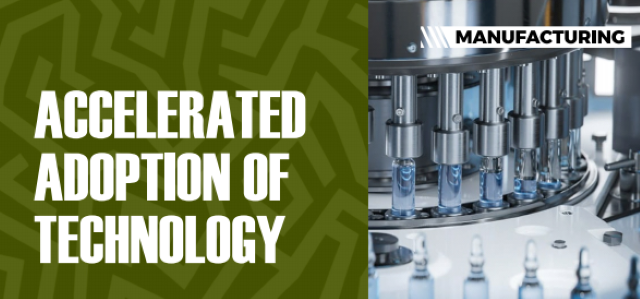
Following accelerated adoption of technology in the manufacturing sector in 2025 with widespread deployment of blockchain, AI powered predictive maintenance, automation, and IoT-driven smart factory systems, output is projected to grow by around 3.1 percent in 2026. It will be further boosted by new tax incentives, harmonised levies, and deeper adoption of AI automation and smart factory models.
Investment and Funding
The Federal Ministry of Industry, Trade and Investment has received ₦2.72 billion budget allocation in 2026. The National Industrial Policy in January 2026 unveiled aims to boost manufacturing competitiveness, value addition, and industrial execution.
The Central Bank of Nigeria (CBN) is also offering intervention funds, including the Manufacturing Expansion Loan to support the sector.
With over $5 billion in foreign and domestic investments in manufacturing in 2025 from reforms that eased registration and regulatory processes, investment inflows are expected to increase moderately in 2026. That is if ongoing tax incentives, credit support, and infrastructure improvements materialise.
Funding opportunities through the Bank of Industry (BOI) have been very popular. It provides financing options, including asset financing, working capital financing, and expansion loans, to support manufacturing businesses.
The package from Nigerian Export-Import Bank (NEXIM) is export financing support for manufacturers. Venture capital funds, such as Future Africa and Harambeans are also open for manufacturing startups.
Government Reforms
The National Industrial Policy is a major reform to boost manufacturing competitiveness, value addition, and industrial execution, with a focus on aligning national industrial frameworks with AfCFTA market rules and rules-of-origin.
Tax reforms have guaranteed 30 percent corporate income tax rate for small manufacturers with an annual turnover of N50 million or less, a 5% annual tax credit on qualifying capital expenditure for priority sectors like manufacturing.
Economic Development Incentive (EDI) is replacing the older “pioneer status” holidays, with 5 percent annual tax credit for five years on qualifying capital expenditures.
Manufacturers can now recover input VAT on all purchases, including services and fixed assets. This eliminates the previous “hidden cost” of non-recoverable VAT.
There also the Simplified Compliance where e-invoicing system under the Nigeria Revenue Service (NRS) reduces administrative burden on tax departments.
Reforms to improve the manufacturing environment, including business registration digitisation, simplified port operations, and advocacy for industrial policy support were implemented in 2025. The focus is to reduce multiple levies, harmonising taxes, and provide incentives for local manufacturers to boost competitiveness.
The National Single Window Project and policy alignment with industrial strategy aim to facilitate exports, formalise operations, and reduce bureaucratic delays.
In 2026, deeper enforcement, improved credit access, and export facilitation are expected to strengthen sector performance, attract investment, and expand contribution to GDP.
Challenges
Meanwhile, structural challenges such as high energy costs and infrastructure gaps are expected to persist in 2026. Poor logistics and port inefficiencies with limited access to affordable credit will not disappear soon.
There is also the challenge of unfair competition from imported goods and unmanaged import competition that will require medium- to long-term solutions to enhance competitiveness.
To sustain growth, stakeholders have recommended fixing power sector value chain. They also want improved access to long-term funds and implementation of smart trade and protection policies.
*Extract from WorldStage Nigeria’s Macroeconomic Outlook 2026.