








































WorldStage Newsonline– The Federal Government of Nigeria has called for an increased investment in water infrastructures across the country in order to improve access to safe and clean water for everyone.
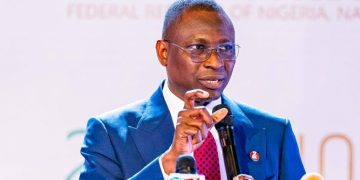
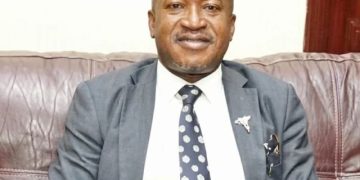
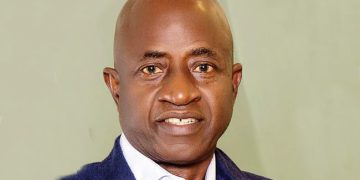
Minister of water and sanitation, Prof. Joseph Utsev, who disclosed this at the commemoration of the ‘2024 World Water Day ‘on Friday in Abuja, said it necessary to avert the challenges of water and sanitation through policies and programs aimed at improving water supply sanitation and hygiene.
The world water day is an important day that provides an opportunity to reflect the importance of access to clean water, and the consequences of water insecurity across the world.
Speaking on the theme of the 2024 World Water Day: ‘Water for Peace’, Prof Utsev, said “it is borne out of need to galvanize active response to water crisis and seek out innovative measures to improve access to potable water supply, with a core focus to support the attainment of Sustainable Development Goal 6: “water and sanitation for all by 2030.
“According to the United Nations, out of every 100 persons, 25 get their water from open streams and ponds. A good percentage relieve themselves outdoors or use dirty, dangerous or broken latrines, leading to human waste flowing into nature untreated, with disastrous health and environmental consequences.”
He said the ministry had developed several initiatives with government at all levels, with critical stakeholders in the water and sanitation sectors, aimed at improving funding for water resources projects and programmes, increasing resource mobilization and enhancing investment in water infrastructure.
“These initiatives would increase access to safe and sufficient water and are geared towards actualization of the Renewed Hope Agenda of President Bola Ahmed Tinubu,” he said.
He highlighted some of the initiatives of water intervention programs, such as the Sustainable Urban-Rural Water Sanitation and Hygiene (SURWASH), National Wash Plan, Clean Nigeria Campaign and Partnership for Expanded Water Supply, Sanitation, and Hygiene (PEWASH).
On Partnership for Expanded Water Supply, Sanitation, and Hygiene (PEWASH) Programmes, he said, 2,190 water boreholes were constructed to serve 2,006,250 persons with 3,001,578 litres/day.
He said, through the clean Nigeria Campaign, to end Open Defecation Campaign by 2025, it had secured additional 15 Open Defecation Free (ODF), LGAs in five states of the federation, “as of today, 120 LGAs across the country are Open Defecation Free (ODF) with Jigawa State having earlier attained the State – wide ODF in Nigeria.”
Meanwhile, as part of the ministry effort to create awareness for the 2024 World Water Day, and emphasizing the pivotal role of water in promoting peace and fostering a safe environment, there was a Staff road walk show, and inauguration of a borehole constructed a critical stakeholder at Durumi-3 community in the FCT.
The UNESCO representative to Nigeria, Mr. Abdourahammanne Diallo, highlighted the global impact of water scarcity as part of the findings of the recent inauguration of the 2024 UN World Water Development Report.
He emphasized the importance of developing and maintaining a secure and equitable water future, stating that it is fundamental for prosperity and peace for all.
He also explained that poverty, inequality, social tensions, and conflict can exacerbate water insecurity, emphasising the intricate relationship between sustainable water management, prosperity and peace.
Diallo pointed out that water scarcity goes beyond meeting basic needs, amplifying issues such as food insecurity, health risks, and social disparities, adding that water scarcity is increasingly fueling conflicts worldwide.
He also highlighted the disproportionate impact on girls and women, who often bear the brunt of water scarcity’s consequences.