






















































WorldStage Newsonline– Appeal has gone to the federal government of Nigeria not to merge the National Centre for Agricultural Mechanization (NCAM) any other federal agencies as doing so will severely compromise its relevance and efficiency.
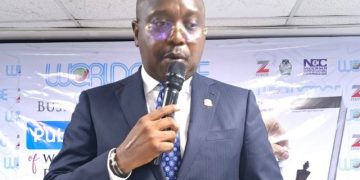
Speaking to WorldStage at the Centre’s headquarters in Amoyo, a suburb of Ilorin in Kwara State, Director of Engineering of the institution, Dr. Ogunjirin, said merging NCAM with another agency would be like joining metal with wood which, according to him, will never fuse.
He argued that if there would be merger at all, professionals, not administrators should be brought into determining the process so that government did not come out with faulty decision.
While emphasizing that he was not in any way opposed to merger, he said he’s only contending that merging the right parts was the ideal approach to ensure optimal performance by merged agencies or institutions.
Justifying his position on merger, Ogunjirin said: “When it comes to the issue of merger or no merger, the Orosanye report dates back to 2012. As at then we had around 900 agencies. As at today, I think we have over 2000. If we actually want to conserve spending, why did we create additional agencies? If we are to merge, (in engineering you don’t merge wood and metal together) you weld metal and metal. That’s when they fuse.
“When you want to do this kind of thing you should bring professionals in, not just administrators. It is not that I am against merging. But merge the right parts together for optimal performance. the National Agency for Science and Engineering Infrastructure (NASENI) has its own mandate, for instance, which is conspicuously different from NCAM’s which starts from mechanizing the Nigerian agricultural system from land development to packaging.
“The National Centre for Agriculture Mechanization is set up to have enough food and fibre for the populace. From its own definition, the National Agency for Science and Engineering Infrastructure, you will see the difference in the mandate. If you want efficiency in a system, it’s even better you separate the component so you can measure performance.”
Asked if the Nigerian public was informed enough about the activities and products of the Centre, Ogunjimi replied “a good hospital doesn’t need any advertisement. Those already treated will tell others.
“Just recently, we came up with a very efficient thresher. Somebody came here, and said they looked everywhere for a thresher in Ofa, and the best they could get was one that could thresh 5 tons per day. Here we have developed one that could do 1.5 per hour.
“The man took our thresher to his farm, and we seized the opportunity to evaluate it. My staff stationed there told me the man was dancing; he never believed this could come from Nigeria. They got up to 20 tons per day. And he told me personally he was going to buy our thresher. He said he had a combined harvester which he would come and dump here—that if we could do this, we could copy that too. That is reverse engineering.
The NCAM’s technical head expressed the belief that if the farmer had not benefitted from the centre’s mechanization expertise he would not make such comment.
He disclosed that the farmer so much believed in the capacity of the centre they were driven to copy and upgrade a combined harvester.
Ogunjirin asserted that NCAM kept developing every day to the extent that it had become the largest pool of agriculture engineers in the whole country, from soil and water to processing, farm power, environment, structure and so on.

According to him, the herders roam around because authorities fail to provide what they need to stay in a place. “We are trying to come with a model that will keep our cows in one place. We will automate their feeding and watering. It’s when the cows need to stretch their legs that they will be released to move around within the same vicinity. And we grow the forage there and harvest it,” he explained further concerning the efforts of the centre.
Giving additional reason that might foil the essence of NCAM, Ogunjirin went back in history and recalled that the establishment of NCAM was not political.
He said government officials went round the whole country before they chose the centre, saying “we are seating on a 1000 hectares of land which has every type of soil across the nation represented here. This year we are opening our farm village to use our equipment to farm. We research the ideas we come across in the value chain as we go. That is what we do here.”
Hinting on the desirability and purposefulness of NCAM, he informed that the centre often attended exhibitions and shows and that in the last four editions, it had consistently come first.
Expatiating more he said: “We came first among all the research institutes in Nigeria last year. The records are there. We don’t organize the programmes. These are indications that we are doing well and busy tuning out machinery.
“As for the extension of this technology to everybody, if we are empowered, we will do more. That is why we go to exhibition. We went to Kwara last year for exhibition. They were surprised we produced those technologies in Nigeria.
“We have produced heap makers, winnowers for our women still using wind. Our senators could make these technologies their constituency projects. Governor Zulu has been here. So I am not surprised when he said NCAM should not be merged. That is a voice of reason from a first-hand informant. We have planters for maize, cassava, self-driven planters, motorized.
“Go from Minneapolis to Nebraska in the United States, you will see farms. And they take care of their farmer. They make agencies like NCAM to service them. So merging NCAM is aberration. It is like killing our agricultural systems.
Kenya, Japan, Egypt have institutions like NCAM. And they support them. In China, institutes like ours are already awarding PhD. We should be empowered better—not to merge. We produce tractors, planters, fertilizers applicators and weeders. Our executive director will just look at the problem and asks us to solve it. That’s the spirit that drives our efficiency and expertise.”



