

































UN Secretary-General Antonio Guterres said peacekeepers are vulnerable and under-equipped, making them targets of attacks.
“UN peacekeepers are often under-equipped, under-prepared and unready and there are gaps in command and control, in culture, in equipment and in training.
“Our peacekeepers are vulnerable, and they are targeted for attack,” Mr. Guterres told a Security Council debate on improving UN peacekeeping operations.
He regretted that in 2017 alone, 59 peacekeepers lost their lives as a result of malicious act, saying it was the highest number ever and a sharp increase over the 2016 when the figure was 34.
Guterres called UN peacekeeping operations “a remarkable enterprise of multilateralism and international solidarity”.
The UN chief underscored that they nevertheless also suffered as a result of unrealistic demands, and as a result, both lives and credibility are being lost.
“A peacekeeping operation is not an army, or a counter-terrorist force, or a humanitarian agency.
“It is a tool to create the space for a nationally-owned political solution,” the Secretary-General emphasised.
“Put simply, peace operations cannot succeed if they are deployed instead of a political solution, rather than in support of one.”
He said as the UN continued to send peacekeepers to difficult or war-torn environments like Mali and the Democratic Republic of the Congo, they would need more and better coordinated support among the actors who authorised and deployed them.
The Secretary-General, therefore, pointed out the need to concentrate on three key areas.
These are: refocusing peacekeeping with realistic expectations; make missions stronger and safer; and mobilise greater support for political solutions and for well-structured, well-equipped, well-trained forces.
“These efforts are critical – but action by the Secretariat alone is not enough our chances of success increase dramatically when we work together with Member States and share burdens, risks and responsibilities.”
“We urgently need a quantum leap in collective engagement,” he said, announcing the launch of a the Action for Peacekeeping initiative which will mobilise all partners and stakeholders to support peacekeeping efforts.
“As peacekeeping marks its 70th anniversary, I hope we can develop a set of mutually-agreed principles and commitments to create peacekeeping operations fit for the future,” he said.
The high-level open debate was convened by the Netherlands in its capacity as the President of the Security Council for the month of March, and was chaired by the country’s Prime Minister, Mark Rutte.
Alongside the Secretary-General, the Chairperson of the AU Commission, Moussa Faki Mahamat, and Fatimata Touré, Director of the Groupe de Recherche d’Etude de Formation Femme Action, a Malian non-governmental organisation, also briefed the Council.
NAN reports that the UN peacekeeping started in 1948 when the Security Council authorised the deployment of unarmed military observers to the Middle East in order to monitor the armistice agreement that was signed between Israel and its Arab neighbours in the wake of the Arab-Israeli War.
This operation was called the UN Truce Supervision Organization (UNTSO) and is still in operation today.
With the passage of resolution 73 (1949) by the Security Council in August 1949, UNTSO was given the task of fulfilling four Armistice Agreements between the state of Israel and the Arab states which had participated in the war.
Thus, UNTSO’s operations were spread through five states in the region—Israel, Egypt, Jordan, Lebanon and the Syrian Arab Republic.
NAN also reports that it is estimated that up to one million soldiers, police officers and civilians have served under the UN flag in the last 56 years.
REVAMPED UN STRATEGY TO ADDRESS ROOT CAUSES OF SAHEL CRISIS
Ms Amina Mohammed, the Deputy Secretary-General said the UN has reset its action plan to address the root causes of the complex crisis in Africa’s Sahel.
The UN deputy chief regretted that the Sahel region is now home to one out of five people worldwide requiring humanitarian assistance.
“The Sahel is a priority for the Secretary-General and the entire United Nations system,” the Deputy Secretary-General said at a conference being held in Nouakchott, Mauritania.
The conference is to discuss strategies to tackle the Sahel crisis, which leaves 24 million people in need of humanitarian assistance this year.
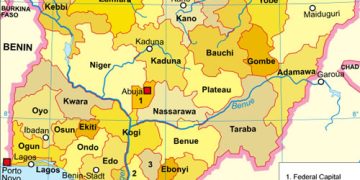
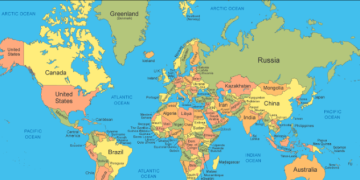
A largely semi-arid region, the Sahel stretches from Senegal on Africa’s Atlantic coast, through parts of Mauritania, Mali, Burkina Faso, Niger, Nigeria, Chad and Sudan to Eritrea on the Red Sea coast.
It is plagued by the increasing threat posed by terrorism and violent extremism and its spread in surrounding countries and regions.
This is compounded – or caused – by weak development progress in the Sahel and the impacts of climate change on food supplies, migration flows and conflict over land and resources.
“The complexity and multi-dimensional nature of these challenges attest to the necessity to respond collectively to the Sahel crisis, and in a more coherent, comprehensive and integrated manner,” Mohammed explained.
These challenges, she said, promoted changes to the UN Integrated Strategy for the Sahel to better meet the needs of the 10 countries in the region.
She listed five key priorities on addressing the root causes of the crisis: inclusive and equitable growth; and public good services, including access to basic service, governance and rule of law;
Others are climate and energy; gender equality and women’s empowerment; and security, including preventing violent extremism, transnational crime and human trafficking.
According to her, empowering youth is an overall priority.