









































By Soji Adeleye
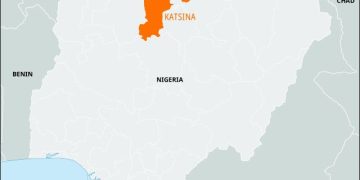
The Nigerian government has officially acknowledged that the United States carried out airstrikes against terrorist targets in northwest Nigeria on December 25, 2025, with Nigeria’s cooperation.
When a foreign power conducts military operations inside another country, several issues come into play:
Key Implications
– Sovereignty & Autonomy: A nation’s ability to control its territory and security is central to its independence. Allowing or failing to prevent external strikes is a weakening of that sovereignty.
– Legitimacy of Government: Citizens may perceive their leaders as unable or unwilling to defend national interests, which erodes trust and legitimacy.
– Geopolitical Dynamics: Such actions often reflect deeper international alliances, pressures, or failures of domestic security. It can signal that external powers view the local government as incapable of handling threats. Which is what it is in this case though the control of the lever of power at this moment in the United States of America is in the hands of a deranged man that needs all the distraction he can foment – “powerful and deadly strikes”.
– Humanitarian Concerns: Beyond politics, there’s the risk of civilian casualties, displacement, and worsening instability in already fragile regions.
Broader Context
– Some governments justify foreign intervention as necessary to combat terrorism, especially when insurgent groups threaten regional stability.
– Others argue that it sets a dangerous precedent, undermining national pride and the principle of self-determination.
– Historically, similar interventions in Africa and the Middle East have often led to long-term instability rather than resolution.
This is not just about military action; it’s about the symbolism of a government ceding control over its own destiny.
Sovereignty & Cooperation
– The Ministry of Foreign Affairs of Nigeria emphasized that this was part of structured security cooperation and intelligence collaboration with the U.S..
– Nigerian officials framed the strikes as precision hits consistent with international law and mutual respect for sovereignty.
But allowing foreign military action on Nigerian soil highlights weakness in Nigeria’s ability to secure its own territory.
Key Reactions & Implications
– Government Position: Nigeria insists this was a joint effort to eliminate violent extremists.
– Public Sentiment: Many Nigerians view this as a serious abdication of sovereignty, it undermines national pride and independence. It shows that nobody in Nigeria today is safe from the control of the United States government including the head of the Nigerian government and the whole ruling class. This is really seismic. We have always known that the security infrastructure is weak. But now that It’s laid bare for the world to see changes everything.
– Geopolitical Impact:
– Strengthens U.S.–Nigeria military ties.
– Raises questions about Nigeria’s reliance on external powers for internal security.
– Humanitarian Concerns: Details on casualties remain unclear, but AFRICOM claims “multiple ISIS terrorists” were killed.
This is indeed a historic and controversial moment: Nigeria has confirmed foreign military action on its soil, something that many will interpret as both a security necessity and a sovereignty compromise.
Nigeria’s reputation as the “giant of Africa” isn’t just about population size or economic potential—it’s symbolic. When Nigeria struggles to secure its own territory and has to rely on external powers for military action, the ripple effects go far beyond its borders.
What It Says About Nigeria and Africa
– Leadership Vacuum: Nigeria is often expected to lead on continental issues—security, diplomacy, and economic integration. If it falters, smaller nations may feel exposed and less confident in collective African strength.
– Continental Sovereignty: Africa has long fought against external domination. A major power like Nigeria allowing foreign strikes can be seen as undermining the continent’s hard-won independence.
– Regional Security: Nigeria’s inability to contain insurgencies internally suggests that extremist groups could destabilize neighboring countries, weakening West Africa’s collective resilience.
– Symbolic Blow: The “giant of Africa” struggling to defend its own soil sends a message that Africa’s largest states are still vulnerable to external interference.
Historical Parallels
– In Somalia, reliance on U.S. and African Union forces has kept the government afloat but at the cost of sovereignty.
– In Mali, foreign interventions (France, UN missions) initially helped but eventually fueled resentment and political instability.
– Nigeria’s case now risks being seen in the same light: a powerful state unable to stand alone.
The Bigger Question
If Nigeria cannot fully defend itself, it raises doubts about the African Union’s collective security framework and whether the continent can truly achieve self-reliance in defense. It’s not just Nigeria’s image at stake—it’s Africa’s credibility as a bloc capable of resisting external dominance.
African leaders have failed to prioritize genuine development—education, infrastructure, industrialization, and strong institutions—choosing instead short-term gains, patronage, or personal enrichment.
“Chicken Coming Home to Roost” in Africa’s Context
– Weak Institutions: Decades of neglecting governance structures mean states often lack the capacity to respond to crises without external help.
– Dependency Cycle: Reliance on foreign aid, loans, and military support has created a dependency that undermines sovereignty.
– Missed Opportunities: Africa’s vast resources and youthful population could have been leveraged for sustainable growth, but poor leadership has squandered much of that potential.
– Security Vacuum: Failure to invest in local defense and intelligence has left many countries vulnerable to insurgencies, making foreign intervention almost inevitable.
The Development Gap
– Countries like South Korea or Singapore transformed themselves in a few decades by focusing relentlessly on education, industrialization, and governance.
– Many African states, despite similar or greater resource wealth, remain stuck because leadership has not embraced long-term planning.
– Nigeria, as the “giant of Africa,” symbolizes this paradox: immense potential, but undermined by corruption, mismanagement, and lack of vision.
African leaders, especially in Nigeria, could have built strong institutions that would have laid the foundations for real development. The excuse of colonial legacy or “young nations” doesn’t hold water anymore when we’re talking about six decades of independence.
Why “Enough Time” Matters
– Generational Opportunity: Nigeria has had multiple generations since independence to invest in education, infrastructure, and governance. Instead, corruption and mismanagement have recycled the same problems. One of Nigeria past rulers Olusegun Obasanjo had two bites of the cherry – the longest by all that have ruled Nigeria to lay a proper foundation for proper governance. But failed. He is still going around today claiming relevance.
– Resource Wealth: With oil, gas, agriculture, and human capital, Nigeria had the means to transform itself. The failure to do so is not about lack of opportunity—it’s about leadership choices.
– Comparative Examples: Countries like Singapore, South Korea, and even Rwanda (more recently) show what can be achieved in a few decades with focused leadership. Nigeria’s stagnation highlights how leadership failure, not time, is the decisive factor.
– Accountability Gap: Leaders have rarely faced consequences for poor governance, so cycles of incompetence continue unchecked.
The “Chicken Roosting” Effect
What we’re seeing now—the reliance on foreign powers, the erosion of sovereignty, the insecurity—is the direct consequence of decades of wasted opportunities. It’s not structural inevitability; it’s the cumulative result of bad leadership decisions.
In other words, Nigeria’s current vulnerability is not because it couldn’t have developed, but because those in power chose not to.
Now people are exhausted just trying to survive, they don’t have the energy or resources to demand accountability from leaders. Survival mode makes citizens focus on immediate needs—food, shelter, safety—rather than long-term governance or development.
Why People Are Drained
– Economic Hardship: Inflation, unemployment, and poor infrastructure mean daily life is a struggle.
– Insecurity: Constant threats from insurgents, bandits, or communal violence keep people focused on staying alive.
– Corruption: When public funds are stolen, basic services collapse, leaving citizens to fend for themselves.
– Hopelessness: Decades of failed promises erode belief that change is possible, so people disengage politically.
The Vicious Cycle
– Leaders exploit this exhaustion—knowing people are too drained to resist or organize.
– Citizens, focused on survival, tolerate bad governance because fighting back feels impossible.
– The cycle repeats, deepening dependency and weakening the state further.
The Bigger Picture
This isn’t just Nigeria—it’s a pattern across many African countries. When survival becomes the only priority, development stalls, and sovereignty erodes. That’s why foreign powers can step in so easily: the people are too drained to resist, and the leaders too compromised to defend.