




























The Lagos State Government and the Federal Government have affirmed their commitment to strengthen collaboration on flood management, urban water development and sanitation as Lagos continues to grapple with the effects of climate change and heavy rainfall.
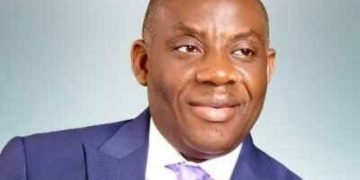
The commitment was affirmed during a courtesy visit to the Governor of Lagos State, Mr. Babajide Sanwo-Olu, by the Minister of Water Resources and Sanitation, Prof. Joseph Terlumun Utsev, at Lagos House, Marina on Thursday evening.
Speaking during the courtesy visit, Governor Sanwo-Olu and Prof. Utsev acknowledged the growing threat posed by flooding to communities, businesses and livelihoods across the State.
Governor Sanwo-Olu commended the Federal Ministry of Water Resources and Sanitation for engaging Lagos State Government on the issue of flooding, describing the visit as an opportunity to develop stronger collaboration between the two levels of government.
He said the Federal Government needed to work closely with Lagos State Government, particularly in the areas of flood resilience, urban development and water management, given the state’s peculiar exposure to flooding.
Governor Sanwo-Olu disclosed that Lagos had continuously invested in drainage infrastructure to ensure that stormwater was properly channelled through canals, rivers and lagoons.
The Governor noted that Lagos accounts for more than 10 per cent of Nigeria’s population despite occupying less than 0.5 per cent of the country’s total landmass, while about one-third of the state is covered by natural bodies of water. He said the situation is further complicated by the state’s low-lying terrain and its proximity to the sea.
He said: “Lagos is a small state by landmass, less than 0.5 per cent of the total landmass of the country. One-third of that landmass is also natural bodies of water: lagoons, creeks, rivers and tributaries all around.
“The flip side of that small location is that it has over 10 per cent of the country’s population. In a tiny place that has a huge amount of population and is also surrounded by water, we are now also experiencing heavy rainfall.”
Governor Sanwo-Olu said the Lagos State Government had over the years introduced interventions designed to improve its ability to respond to flooding and other climate-related emergencies.
He explained that the government’s strategy was to build resilience capable of absorbing the impact of extreme weather events and restoring normal life as quickly as possible whenever flooding occurred.
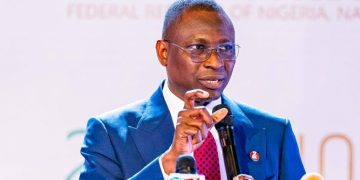
Speaking earlier, the Minister of Water Resources and Sanitation,Prof. Joseph Utsev, said the visit provided an opportunity to deepen collaboration with the Lagos State Government in three critical areas: strengthening flood resilience, accelerating the achievement of Open Defecation Free status and advancing sustainable urban water sector reforms.
He said the Federal Government recognised the increasing risks posed by rapid urbanisation and climate change, stressing that addressing the challenges required sustained investment and closer coordination between federal and state authorities.
Prof. Utsev identified integrated water resources management, improved drainage infrastructure, nature-based solutions, effective urban planning and stronger institutional coordination as necessary measures for tackling the growing threat of flooding.
The minister commended Governor Babajide Sanwo-Olu-led administration in Lagos State for its interventions, assuring the State of the Federal Government’s readiness to support efforts aimed at strengthening flood resilience and protecting vulnerable communities.
He also commended the Lagos State Government’s efforts in improving sanitation and hygiene services, but stressed the need for more urgent action in areas where access to basic sanitation facilities remained inadequate.
Prof. Utsev said flooding had become a serious challenge in Lagos, particularly during the rainy season, with heavy rainfall frequently leaving roads submerged, disrupting businesses, damaging homes and affecting electricity supply.
He noted that the problem is driven by a combination of Lagos’ geographical characteristics, climate change, rising sea levels, rapid urbanisation and heavy and prolonged rainfall.
Beyond flooding, the minister said sanitation remained a major public health and development priority, urging Lagos to accelerate efforts towards achieving Open Defecation Free status, particularly in underserved communities.
He also said that both federal and state governments are expected to build on the renewed partnership to develop more sustainable solutions to flooding, improve water and sanitation services and strengthen the resilience of communities across Lagos.