






































The Federal Government says beneficiaries of the Students Loan Scheme will be in stages; from federal government owned institutions to state schools, then to private schools and later to vocational skills.
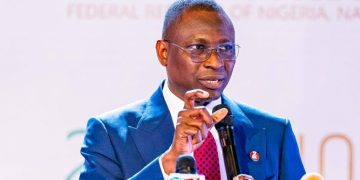
Dr Akintunde Sawyer, Executive Secretary, Nigeria Education Loan Scheme (NELFund) made this known during an interview with the News Agency of Nigeria (NAN) on Thursday in Abuja.
He said initially, the scheme was designed for only public schools, but President Bola Tinubu made a pronouncement that he would want it to be extended to private schools and vocational trainings.
Sawyer said that the private institutions would not be covered immediately due to their relatively high school fees.
“This is a process, so we will move from public institutions and to private overtime because we want all Nigerians to benefit.
“Funds are not limitless, so we want to look for those who really need to benefit from it first
“We are also looking closely on how we will support and encourage those in the vocational sector. We will put a process in place for that to happen,’’ he said.
Sawyer said that the scheme will receive funding from the Federal Inland Revenue Service while they were also expecting support from the Nigeria Immigration Service and Nigeria Customs Service.
He added that some revenues from sale of oil would be ceded into the funding as well as donations from the private sector, well-meaning individuals and organisations.
The Executive Secretary assured that NELFund would be fair to all in the management of the scheme and ensure that that the targeted students benefited.
“Applications will be done online. So, there is no need for us to really open offices anywhere outside of our head office, here in Abuja.
“So, we have decided that we want all applicants to be able to access this scheme, regardless of where they are, who they are and who they know.
“We want this to be a process that is fair to all,’’ he said.
Sawyerr said that the application would be strictly for Nigerians and the main targets were the indigent students.
He explained that the technology-based platform would allow students to open an account and have their own user name and password.
According to him, students would have to reapply for the loan every academic session.
“Our intention is to cover 100 per cent of their institutional fees and we are also looking at giving them upkeep money,’’ he said.
SCHEME WILL TAKE DEPRESSION OFF HOMES
Dr Sawyer also said that the loan scheme would take depression off many homes and criminals off the streets of Nigeria.
He said that the loan scheme would also give people hope to be able to compete, not just within Nigeria, but globally.
“It will help Nigeria as a country to increase its capacity, knowledge and the ability to get things done and really put us in a position where, as an economy, we will be able to compete globally.
“Recently, there has been a clamour for Nigeria to be a knowledge-based economy and this loan scheme is about knowledge, so it will do just that.
“We cannot all be trading or carrying bags of cement on our heads and thinking we are competing in a world where it is knowledge most advanced countries are selling, not commodities.’’
Sawyer said that students, who benefit from the loan scheme, would be expected to pay when they get jobs after school.
He said that there would be no restriction whatsoever, for people who took the loan.
“If people want to travel after graduation, they are free to do so. However, we have the register of those who have taken loans, so, in the future, some of them may want to borrow money from a commercial bank to buy a car, to build a house or to do something.
“Clearly, if you haven’t paid back the loan that you borrowed many years ago, it may be difficult for you to access new loans,’’ he said
He called on those that would benefit from the loan scheme to be diligent enough to pay adding “if you take a loan and you don’t pay back, it means that somebody else who is trying to access education will not be able to.
“You got your own education, allow other people to get theirs,’’ he said
Sawyer said that the organiation would continue to look at mechanisms and learn from other countries like Malaysia, Kenya, South Africa, Rwanda and others who are practicing the scheme to perfect it.
“We will look at the mistakes they have made. We will look at the things that they have done that have worked well and we will imbibe the best at the moment.
“We are thankful to the president of Nigeria, Bola Tinubu, for signing this very important Act into law because it opened up the opportunity for millions and millions of future leaders.
“It will help them to be better leaders because they will have better knowledge,’’ he said
LOAN RECOVERY BEGINS 2 YEARS AFTER NYSC
The Federal Government says the recovery process from beneficiaries of the Nigeria Education Loan Scheme (NELFund) will commence two years after the National Youth Service Scheme(NYSC).
Dr Sawyer said that the reason for the two-year grace after NYSC was to afford the beneficiaries enough time to get a job and be stable before the repayment.
“The law provides that for students who go into paid- employment, repayment will be two years after NYSC, but, that does not mean that they cannot pay back before that time.
“However, if they don’t have a job two years after NYSC, we cannot compel them to pay. Where are they going to get the money from? So, we will help them and wait for them to be able to pay.
“There will be a register of those who have taken the loan and employers will have access to that register and see who has a loan.
“Once they see who has a loan, when they are employing the individual, they will be obliged through the payroll system to refund 10 per cent of the earnings of that individual back to the fund,’’ he said.
Sawyer said that the modalities of how the money would be rooted were still being worked out, but the employer would be obliged to make those deductions for as long as that person is at work.
“If they are yet to secure employment or if they lose their jobs they are not obliged to pay.
“We are not trying to turn applicants into criminals ,we are trying to help Nigerians who need better education to get it so that they can improve their lives and the country as a whole can see improvement in its social-economic development,’’ he said.
For those who might want to deliberately circumvent the process of repayment, Sawyerr said there must be a way the law will catch up with them.
He said this could be achieved whenever the defaulters have a need to access loans or any facilities from commercial banks.