






































*Says recent economic reforms are already delivering measurable results
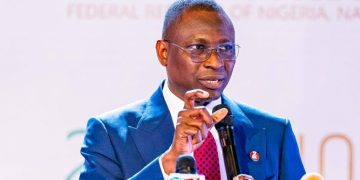
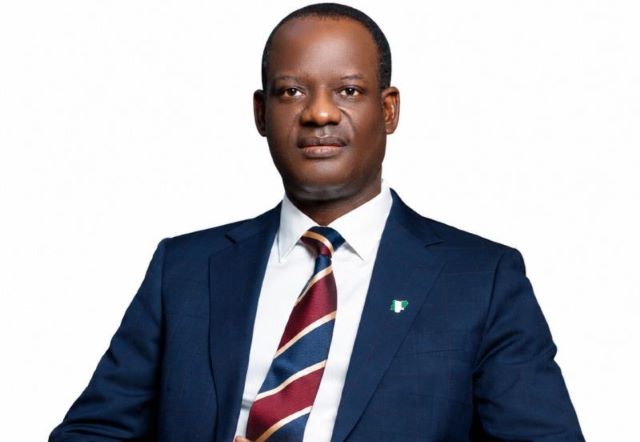
WorldStage– Nigeria’s Minister of Finance and Coordinating Minister of the Economy, Taiwo Oyedele, has said the Federal Government remains on course to building a $1 trillion economy by 2030, declaring that recent economic reforms are already delivering measurable results and positioning the country for sustained investment-driven growth.
Speaking at the Africa Emerging Markets Forum in Abuja, the minister said the administration of President Bola Ahmed Tinubu deliberately chose long-term economic stability over short-term political convenience by implementing far-reaching fiscal and structural reforms.
He explained that the government inherited an economy burdened by years of policy distortions that discouraged investment, weakened productivity and reduced competitiveness, stressing that delaying reforms would have been more costly than confronting them.
According to him, key reforms implemented over the past three years include the unification of the foreign exchange market, removal of fuel and foreign exchange subsidies, fiscal consolidation and comprehensive tax reforms aimed at creating a simpler and more competitive business environment.
The minister said the new tax regime has reduced the burden on small businesses and low-income earners, removed Value Added Tax (VAT) from essential goods and services, expanded input VAT credits for manufacturers, eliminated withholding tax on manufacturing activities and established the Office of the Tax Ombudsman to strengthen dispute resolution.
He noted that the reforms were designed not merely to increase government revenue but to improve Nigeria’s competitiveness and attract private capital.
Highlighting the impact of the reforms, the minister said capital inflows have increased significantly, while Nigeria’s capital market has emerged as one of the world’s best-performing markets in 2026.
He added that Nigeria’s economy recorded 3.89 per cent real GDP growth in the first quarter of 2026, while the non-oil sector expanded by 3.94 per cent, demonstrating that economic growth is becoming increasingly diversified.
He also disclosed that the country’s external reserves have exceeded $50 billion, inflation has moderated from its 2024 peak, and Nigerian banks recently completed a two-year recapitalisation programme that raised N4.65 trillion, with more than 70 per cent sourced from domestic investors.
According to the minister, Nigeria’s removal from the Financial Action Task Force (FATF) grey list further strengthens investor confidence.
While acknowledging that macroeconomic stability alone is insufficient, he said the government’s next priority is to convert stability into investment, productivity, quality jobs and improved household incomes.
“A reform that shows up on national statistics but not on the household dining table has not finished its job,” he said.
To cushion the social impact of reforms, the minister said the Federal Government has expanded cash transfers to 15 million vulnerable households, lifting an estimated 7.5 million Nigerians out of extreme poverty.
He also referenced the recent launch of the NG-CARES, HOPE and SOLID programmes, valued at more than $3 billion, to strengthen primary healthcare, basic education and support vulnerable communities.
Addressing concerns over the removal of fuel subsidy and foreign exchange subsidies, the minister said the reforms were primarily intended to eliminate economic distortions and corruption rather than simply generate fiscal savings.
He disclosed that the government would soon publish a comprehensive account detailing the savings realised and how the funds have been utilised.
According to him, much of the fiscal space created has been absorbed by increased debt servicing costs following the end of deficit financing through money creation, the implementation of the new N70,000 national minimum wage and expanded investments in education through the Nigerian Education Loan Fund (NELFUND).
The minister also defended continued government borrowing despite improved revenue performance, explaining that higher revenue collection does not automatically eliminate financing gaps created by budget deficits.
On poverty, he disagreed with the view that the reforms had permanently worsened living conditions, arguing that while the policy reset initially reduced real incomes, economic recovery is already reversing the trend.
He stated that Nigeria recorded nearly 10 per cent real per capita income growth in dollar terms in 2025, positioning the country among the fastest in reducing poverty, while the government intends to measure progress using multidimensional poverty, real per capita income growth and inequality indicators.
Speaking on monetary and fiscal policy coordination, Oyedele said the Ministry of Finance and the Central Bank of Nigeria have strengthened collaboration by aligning economic assumptions before policy decisions are made to avoid conflicting interventions.
Oyedele, revealed that the ministry is also developing a framework to reduce the cost of capital without introducing new subsidies, in order to stimulate investment in the productive sectors of the economy.
He further identified excessive bureaucracy, policy inconsistency and regulatory bottlenecks as major constraints to investment, revealing that preliminary government analysis suggests the economic cost of overregulation exceeds the combined revenue generated from company income tax, personal income tax and VAT.
He said removing such barriers would significantly improve the business environment without requiring additional public spending.
Outlining the ministry’s immediate priorities, the minister listed revenue optimisation, economic growth and fiscal discipline as the three pillars that will drive economic management.
He said the ministry is also building a new institutional framework anchored on what he described as “DNA”—diligent execution, national interest and accountability—to improve policy implementation and strengthen transparency.
Reaffirming Nigeria’s economic ambition, the minister said the target of achieving a $1 trillion economy by 2030 is not a slogan but a measurable objective that will be pursued through disciplined reforms, effective coordination between fiscal and monetary authorities and stronger partnerships with the private sector.
The minister urged investors to take advantage of Africa’s ongoing structural transformation, stressing that periods of economic reform often present the greatest investment opportunities.
“The choice before us is simple,” he said. “We can wait for perfect conditions, or we can seize this moment and build the continent of our dreams together.”