










































WorldStage— The Executive Chairman of the Economic and Financial Crimes Commission (EFCC), Mr. Ola Olukoyede, has charged students, particularly graduates of engineering, to shun corruption and uphold integrity, accountability and transparency in their professional and personal lives.
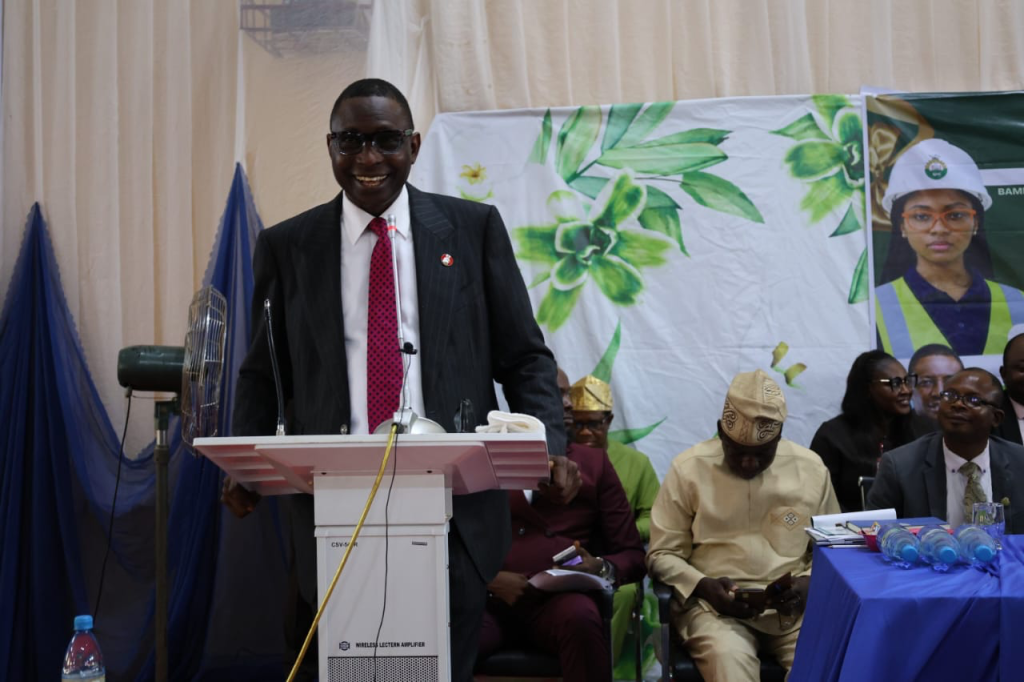
He gave the charge in Ikere-Ekiti, Ekiti State on Thursday, November 12, 2026 at the Induction Ceremony of 45 Engineering graduates of Bamidele Olumilua University of Education, Science and Technology (BOUESTI), where he delivered a lecture titled, “Integrity, Accountability and the Fight Against Economic and Financial Crimes: Building a Culture of Transparency and Responsibility in Nigeria.”
The EFCC Chairman who is the Guest Lecturer, described integrity as the foundation of ethical leadership and responsible service, warned that corruption in the public and private sectors remained a major obstacle to Nigeria’s development.
He said engineers, by virtue of their professional responsibilities, must demonstrate integrity in the execution of projects, noting that compromised standards in infrastructure development could endanger lives and undermine public trust.
According to him the absence of integrity allows professionals to falsify records, manipulate contracts, divert public funds and compromise the quality of projects meant to serve the public.
The anti-graft czar challenged the newly inducted graduates to resist the temptation of using their professional positions for personal enrichment at the expense of public interest.
“Where there is integrity, no public official will embezzle public funds, and where there is integrity, no engineer will certify a poorly executed project,” he said.
The EFCC chairman lamented that despite Nigeria’s enormous natural and human resources, corruption, poor public accountability and the mismanagement of national wealth had continued to undermine the country’s development.
He disclosed that the Commission had secured 10,872 convictions and recovered monetary assets worth over N1.288 trillion in the last three years as part of efforts to combat economic and financial crimes.
Olukoyede, however, maintained that the fight against corruption could not be won through investigation, enforcement and prosecution alone, stressing the need for a fundamental change in individual and national values.
He said the EFCC had adopted a preventive approach through its Fraud Risk Assessment and Control (FRAC) department, which identifies systemic weaknesses in Ministries, Departments and Agencies (MDAs) that could create opportunities for fraud.
He also urged students to reject cybercrime, identity theft, internet fraud and other illicit activities, warning that the temporary gains of criminal activities could lead to lasting damage to their reputations and future prospects.
The Commission, he added, was investing in a Cybercrime Research Centre at its academy in Abuja, to promote research, training, fraud prevention and the redirection of young people towards ethical practices.
Olukoyede further called on families, educational institutions, religious organisations, traditional rulers and professional bodies to take collective responsibility for promoting integrity and accountability in society.
Earlier, the Vice-Chancellor of the university, Prof. Babatunde Omojola, highlighted the importance of the Induction Ceremony in advancing the University’s commitment to producing competent and professionally responsible graduates.
Omojola emphasised the need for Universities to equip students with the knowledge, practical skills and ethical values required to address societal challenges, particularly in a rapidly evolving technological environment.
He urged the inductees to justify the confidence reposed in them by the institution, uphold the standards of the engineering profession and deploy their expertise towards national development.
The University don showered encomium on the EFCC Chairman on his giant strides in sanitising Nigeria and honouring the school’s invitation.
In his welcome address, the Dean of the Faculty of Engineering, Engr. S.A. Akinola, said the Induction Ceremony was an important milestone for the University, the faculty and the engineering profession.
Akinola identified knowledge, responsibility and partnership as the three pillars guiding the faculty’s vision, stressing that engineering education must go beyond theoretical knowledge to equip students with practical skills to address societal challenges.
He said the faculty was encouraging innovation through student projects in sensor-based systems, automation, solar energy and other technology-driven solutions.
The dean also disclosed that the faculty was working towards establishing an engineering innovation scale-up facility, modern workshops and collaborative learning spaces to expose students to contemporary engineering tools and technologies.
He called for partnerships with professional bodies, government institutions, corporate organisations and development partners to support the faculty’s development plans.




