






































WorldStage— Nigeria has registered a massive national delegation of 1,506 participants for the ongoing COP31 Climate Summit in Antalya, Türkiye, placing her third globally in national representation and underscoring its significant physical footprint at the international conference.
An analysis of provisional registration data by Carbon Brief shows that total attendance at the summit has surpassed 92,000 registered participants, putting the event on track to become the largest gathering in the history of United Nations climate negotiations.
The analysis by Carbon Brief published by the United Nations Framework Convention on Climate Change (UNFCCC) shows that Nigeria trails only host nation Türkiye, which registered 2,950 delegates, and COP30 host Brazil, with 1,994.
China follows in fourth place with 1,021 participants, while Indonesia rounds out the top five with 978.
The data indicates that COP31, running from 9 to 20 November 2026, is poised to become the largest gathering in the history of UN climate negotiations.
Total provisional in-person registrations have reached 92,934 participants, surpassing the previous record of 81,027 attendees set at COP28 in Dubai.
Including more than 3,000 virtual registrants, overall registration exceeds 95,000.
Final attendance figures will be confirmed by the UNFCCC after the summit based on badge collections.
Nigeria’s delegation comprises 573 participants accredited under the official “Party” badge category and 933 under “Party Overflow” badges.
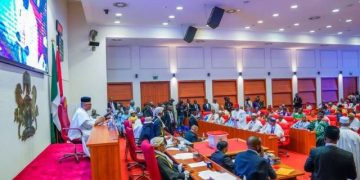
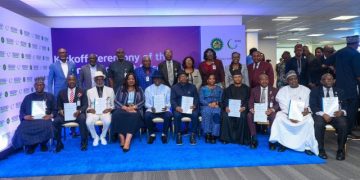
The contingent includes federal and state government officials, lawmakers, private sector representatives, civil society organisations, academics, and media professionals.
Nigeria remains Africa’s largest contingent at the summit, ahead of Uganda, which ranked seventh globally with 627 delegates.
This year’s figures reflect a steady upward trajectory in Nigeria’s COP participation.
After fielding 1,411 delegates at COP28 in 2023 and scaling down to 634 at COP29 in Baku in 2024, registrations climbed to 1,453 at COP30 in Belém in 2025—where Nigeria also placed third globally—before edging up by 3.6 percent to reach 1,506 in Antalya.
While officials from the National Council on Climate Change (NCCC) maintain that robust representation is vital to securing climate finance—estimating Nigeria needs $336.5 billion between 2026 and 2035 for mitigation and adaptation—the large contingent has sparked renewed domestic debate over public spending and transparency amid ongoing economic challenges at home.
Critics and public observers have raised fresh questions regarding the scale of government spending on international summits, particularly as many citizens continue to face severe economic pressures and hardships.
Meanwhile, President Bola Tinubu has skipped the World Leaders’ Summit at COP31, marking the third consecutive year he has missed the high-level UN climate gathering.
As negotiations continue through November 20, 2026, the focus remains on global climate financing, mitigation strategies, and the operationalization of green commitments.






