













































WorldStage– The Federal Government of Nigeria has proposed the establishment of a national risk market and a specialised commercial dispute resolution tribunal to boost investment and deepen the capital market.
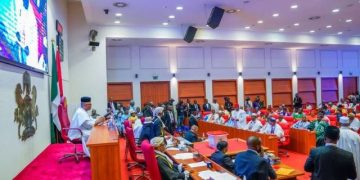
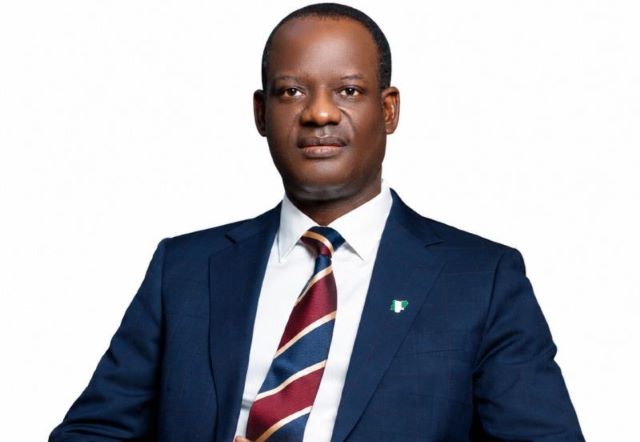
The Minister of Finance and Coordinating Minister of the Economy, Prof. Taiwo Oyedele, made the proposal at the second Biennial Conference of the Capital Market Academics of Nigeria (CMAN) on Tuesday in Abuja.
Oyedele said the proposed national risk market would enable the government to share risks with the capital market instead of absorbing them directly on its balance sheet.
He said the market would cover political, climate, agricultural and infrastructure risks, as well as policy continuity insurance, export guarantees and credit enhancement instruments.
According to him, the initiative will transform infrastructure financing by allowing risks to be priced and borne by parties best equipped to manage them.
The minister also proposed the establishment of a specialised Commercial Dispute Resolution Tribunal to accelerate the resolution of business disputes.
He said delays in resolving commercial disputes remained a major obstacle to investment, noting that such cases currently took an average of 15 years to pass through the High Court, Court of Appeal and Supreme Court.
According to him, prolonged litigation creates uncertainty, discourages investors and raises the cost of doing business.
Oyedele said the proposed tribunal would be staffed by judges and arbitrators with expertise in commercial, financial and capital market matters.
He added that it would operate with digital case management systems and mandatory timelines to ensure speedy resolution of disputes involving businesses, suppliers, joint venture partners and other commercial entities.
The minister said the tribunal would complement the existing Investment and Securities Tribunal by providing a more efficient platform for resolving commercial disputes.
He identified an independent judiciary, a credible Central Bank and an efficient public bureaucracy as key pillars for attracting sustainable investment.
Oyedele also urged government officials, professionals and the media to improve communication on economic reforms.
According to him, attracting long-term capital requires sound economic policies, stronger institutions, policy consistency, efficient justice delivery and a shift in public attitudes towards debt and private investment.
Also speaking, the Director-General of the Securities and Exchange Commission (SEC), Dr Emomotimi Agama, called for stronger collaboration between regulators and academics.
Agama said research-driven policymaking was essential for strengthening the capital market and promoting inclusive economic growth.
He described CMAN as an important bridge between academic research and financial market regulation.
“I have long believed that good regulation begins with good thinking. The policies we make at the Securities and Exchange Commission are only ever as strong as the evidence and the ideas that inform them,” he said.
Agama said the country’s capital market was undergoing significant reforms following the enactment of the Investments and Securities Act, 2025, and the implementation of a new 10-year Capital Market Master Plan.
According to him, the reforms require rigorous research, constructive scrutiny and honest debate to keep regulatory policies responsive to emerging realities and aligned with global best practices.
He reaffirmed the commission’s commitment to working with the academic community to strengthen regulation and support the sustainable development of Nigeria’s capital market.
Earlier, the President of CMAN, Prof. Uche Uwaleke, called for stronger collaboration between academia and the financial services industry to deepen the country’s financial markets and accelerate economic growth.
Uwaleke said Nigeria possessed substantial academic and industry expertise but lacked a structured framework to connect both sectors for national development.
He urged the Federal Ministry of Education and the National Universities Commission (NUC) to recognise industry experience alongside academic publications in the appointment and promotion of lecturers in banking, finance, insurance, accounting and capital market studies.
He also recommended the recruitment of accomplished retired bankers, investment professionals and capital market practitioners as adjunct lecturers to strengthen teaching and improve curriculum relevance.
Uwaleke further urged the Central Bank of Nigeria, SEC, the National Insurance Commission, the National Pension Commission and the Nigeria Deposit Insurance Corporation to institutionalise structured sabbatical and research fellowship opportunities for qualified academics.
The conference has as its theme: “The Nigerian Capital Market as a Catalyst for Equitable and Inclusive Growth.”