









































WorldStage— The Federal Ministry of Education leadership has presented the Renewed Hope Education A–Z Scorecard, detailing 26 flagship policies, reforms, and measurable milestones achieved under President Bola Ahmed Tinubu’s administration.
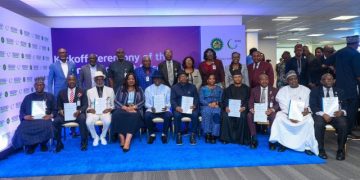
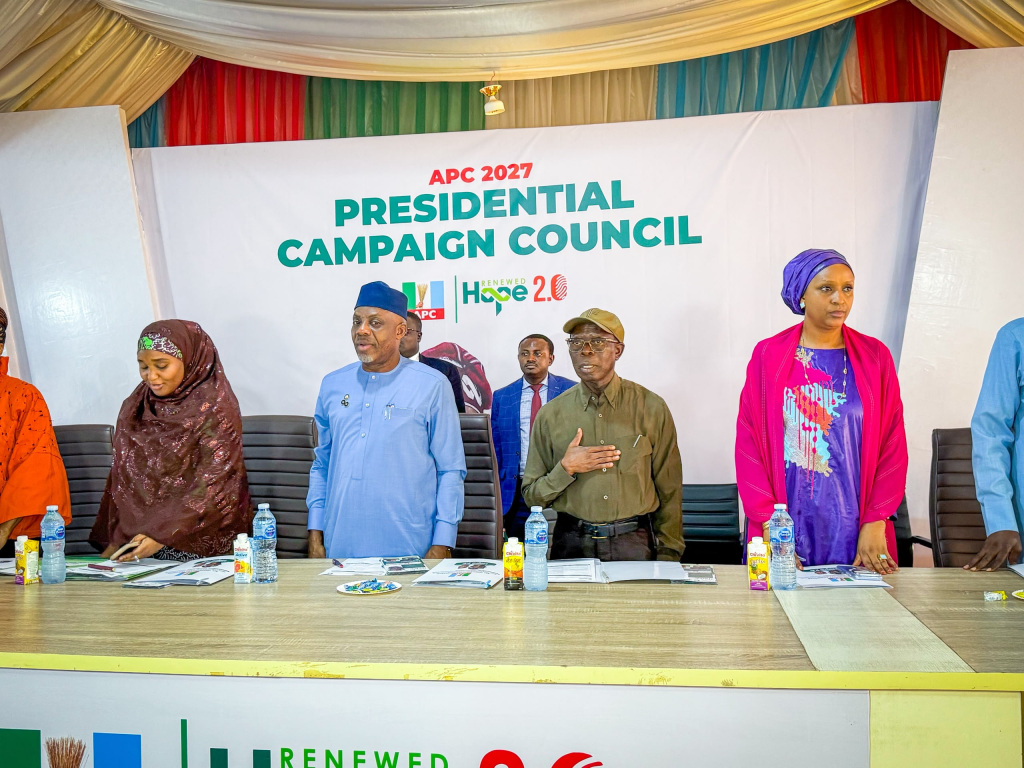
The unveiling at World Press Conference took place on November 16, 2026, at the All Progressives Congress (APC) Presidential Campaign Council (PCC) Headquarters, located opposite the Unity Bank Headquarters in Abuja’s Central Business District.
Convened under the Education Sector Mobilization Directorate, the event was led by the Honourable Minister of Education, Dr. Maruf Tunji Alausa, alongside the Minister of State for Education, Prof. Suwaiba Said Ahmad.
Party stalwarts, cabinet members—including Minister of Industry, Trade and Investment Dr. Jumoke Oduwole—education stakeholders, and members of the press attended the high-level briefing.
Presenting the comprehensive document, titled “From Reform to Results,” Dr. Alausa highlighted how the Nigeria Education Sector Renewal Initiative (NESRI) is translating policy blueprints into tangible outcomes across basic, secondary, technical, and tertiary levels.
The A–Z framework focuses on six core priorities: promoting Science, Technology, Engineering, Mathematics, and Medical Sciences (STEMM); reducing the number of out-of-school children; advancing Technical and Vocational Education and Training (TVET); empowering the girl-child; accelerating digitalization; and strengthening quality assurance.
Major emphasis in the scorecard include the ₦3.52 trillion budgetary allocation to education and the rollout of the $552 million World Bank-backed HOPE-EDU programme, designed to support 29 million children, upskill over 500,000 teachers, and upgrade 65,000 public schools nationwide.
The ministers also underscored the impact of the Nigerian Education Loan Fund (NELFUND), which has disbursed over ₦355.9 billion to more than 1.6 million tertiary students, stabilizing university campuses and expanding access to higher education.
In her remarks, Prof. Suwaiba Said Ahmad emphasized targeted interventions at the foundational level, citing the Better Education Service Delivery for All (BESDA) and Adolescent Girls Initiative for Learning and Empowerment (AGILE) programmes.
She emphasized that the scorecard aims for total transparency and is being translated into Hausa, Igbo, and Yoruba to foster nationwide accountability.
The event also featured remarks from Special Adviser Hadiza Bala Usman and support from figures like Senator Adams Oshiomhole, who praised the administration’s data-focused strategy.
According to the scorecard, the efforts have returned over one million out-of-school children to classrooms, reached 7.19 million girls, and modernized the national curriculum to reintroduce Nigerian History.
Addressing attendees, Dr. Alausa noted that the scorecard serves both as an accountability report to Nigerians and a vital resource for coordinated communication and strategic mobilization, demonstrating the administration’s commitment to building a skilled, globally competitive workforce.




