
















































WorldStage– Nigeria stands at a precarious economic crossroads as escalating conflict in the Middle East triggers volatile oil markets. The recent joint airstrikes by the United States and Israel on Iran, coupled with retaliatory actions across the Gulf, have sent global energy prices surging offering a potential windfall for Nigeria’s oil sector even as experts warn of rising inflation pressures that could unsettle the nation’s financial stability.
U.S. President Donald Trump, on Monday said the conflict could last four to five weeks, adding urgency to Nigeria’s economic balancing act.
Nigeria is Africa’s largest oil exporter and depends heavily on crude oil earnings to fund government operations, infrastructure development and fiscal reforms. The geopolitical disruption in the Middle East has lifted global crude prices amid fears of supply shortages. The strategic Strait of Hormuz, which carries about 20 percent of global oil exports, remains a critical flashpoint, and any disruption there has already pushed prices upward.
Adding to the tension, several maritime insurance companies have reportedly withdrawn war-risk coverage for vessels entering the Persian Gulf, underscoring rapidly escalating security concerns across one of the world’s most vital energy corridors following the ongoing airstrikes.
Nigeria: Immediate Implications
Oil accounts for over 80 percent of Nigeria’s export earnings and remains the backbone of federal revenue. A sustained rise in crude prices above the government’s budget benchmark could strengthen foreign exchange inflows, boost external reserves and temporarily ease pressure on the naira.
Energy analysts note that if oil prices remain elevated, Nigeria could build stronger fiscal buffers in the short term — particularly as the government intensifies efforts to ramp up production and curb crude theft.
However, experts warn that Nigeria’s production constraints may limit how much of the global price rally translates into actual revenue gains. Without significantly increasing output, the country risks underutilizing the benefits of the oil surge.
First gains of local refining
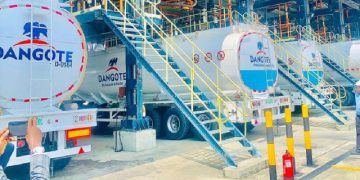
With Dangote Refinery now capable of meeting local fuel demand, Nigeria for the first time will not like before be negatively impacted rising global oil prices which often translate quickly into higher domestic petrol and diesel costs.
Experts’ View: A Double-Edged Geopolitical Shock
The Chief Executive Officer of the Centre for the Promotion of Private Enterprise (CPPE), Dr. Muda Yusuf, has described the escalating tensions involving Iran, the United States and Israel as a major geopolitical shock with mixed implications for Nigeria’s economy.
According to Yusuf, the conflict has injected a fresh layer of uncertainty into the global economic landscape, with energy markets serving as the primary transmission channel. He emphasized the strategic importance of the Strait of Hormuz — a corridor through which roughly 20 percent of global crude oil supply is transported daily — warning that any disruption would immediately affect oil prices, shipping costs, insurance premiums and global supply chains.
Beyond logistics, he noted the potential for output disruptions, given that several Middle Eastern countries are major oil producers. Such risks, he explained, typically fuel price spikes and heightened volatility in international energy markets.
“For Nigeria, an oil-dependent economy where crude accounts for over 85 percent of export earnings and nearly half of government revenue, the implications are profound,” Yusuf stated.
He observed that geopolitical tensions in the Middle East have historically triggered sharp increases in crude prices, driven largely by supply concerns. Speculative activity around the Strait of Hormuz, he added, can generate price swings of between $5 and $15 per barrel within short periods.
In the immediate term, higher crude prices could translate into stronger export receipts, improved foreign exchange inflows, enhanced external reserves and increased allocations from the Federation Account Allocation Committee (FAAC) to all tiers of government.
However, Yusuf cautioned that revenue gains remain heavily dependent on Nigeria’s production performance. Current crude output, fluctuating between 1.4 million and 1.6 million barrels per day, remains below installed capacity and continues to face constraints from oil theft, pipeline vandalism and underinvestment in upstream infrastructure.
“Without sustained improvements in production efficiency and asset security, Nigeria may struggle to fully optimize any price windfall,” he warned.
Looking beyond the immediate horizon, Yusuf highlighted a medium-term risk: if the conflict escalates and begins to dampen global economic growth, oil demand could weaken, potentially leading to price corrections.
Nonetheless, he acknowledged that in the short term, elevated oil prices could ease pressure on the naira and bolster investor confidence provided macroeconomic stability is maintained.