














































By Bamidele Famoofo
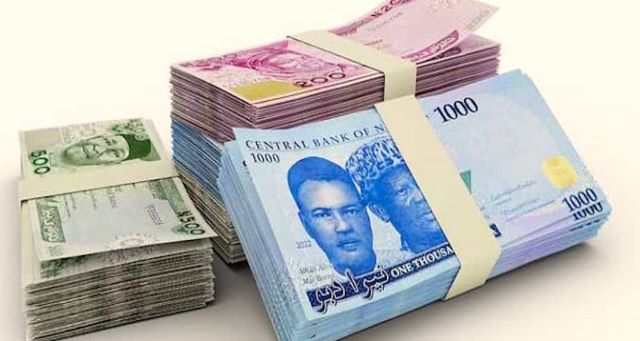
WorldStage– The Nigerian foreign exchange market maintained its positive momentum in May 2026, with the naira recording modest gains across both the official and parallel market segments. At the Nigerian Autonomous Foreign Exchange Market (NAFEM), the naira appreciated marginally by 0.12 percent month-on-month to close at ₦1,373.25/$1, compared to ₦1,374.90/$1 recorded at the end of April.
Similarly, the parallel market mirrored the positive trend, with the local currency strengthening to ₦1,372/$1 from ₦1,374/$1 in the previous month, reflecting continued convergence between both market segments and improved confidence in the foreign exchange market.
The naira’s performance remains particularly impressive on a year-to-date basis. At the official market, the currency has appreciated by 4.55% from its year-opening level of ₦1,435.76/$1, while the parallel market has delivered a stronger gain of 6.78 percent from ₦1,465/$1 recorded at the close of 2025. The sustained appreciation underscores the effectiveness of ongoing foreign exchange reforms and improving market liquidity conditions.
Meanwhile, developments in the global oil market presented a mixed backdrop for Nigeria’s external sector. Brent crude oil prices declined sharply by 18.50 percent month-on-month to settle around $92.92 per barrel, marking the steepest monthly drop since 2020. Similarly, WTI crude fell by approximately 14.88 percent to close below $89.44 per barrel.
The decline was largely driven by easing geopolitical tensions following optimism surrounding a US-Iran ceasefire agreement and expectations of a reopening of the Strait of Hormuz, which reduced concerns over global supply disruptions. Nigeria’s Bonny Light crude also moderated during the month, falling to $98.44 per barrel from $128.13 per barrel recorded at the end of April.
Despite the decline in oil prices, Nigeria’s external reserves strengthened considerably during the period. Gross external reserves increased from $48.36 billion in April to $49.34 billion as of May 26, representing a month-on-month increase of approximately $900 million or 1.86 percent.
The improvement further reinforced the country’s external buffers and provided import cover of approximately 9.04 months, supporting the CBN’s capacity to sustain foreign exchange market stability and meet external obligations.
Looking ahead, the outlook for the naira remains cautiously positive, supported by stronger external reserves, improved FX liquidity, sustained policy reforms, and continued investor confidence. However, the recent weakness in global oil prices poses a potential downside risk to foreign exchange earnings and reserve accretion. Nonetheless, barring any significant external shocks, exchange rate stability is expected to persist in the near term as authorities continue efforts to deepen market efficiency and strengthen external sector resilience.