




















































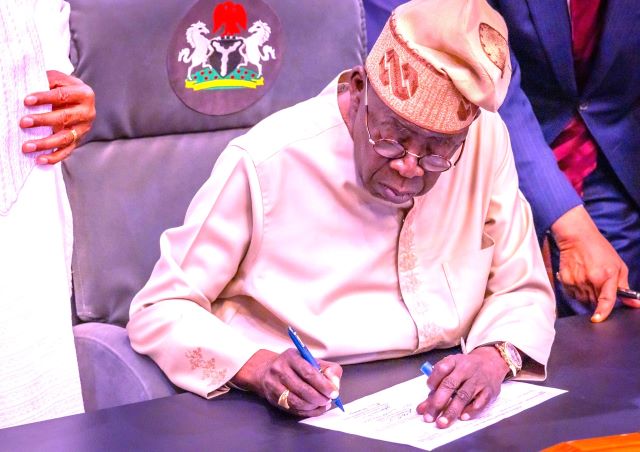
WorldStage– President Bola Tinubu’s speedy assent to the Electoral Act (Amendment) Bill 2026 on February 18, 2026, has triggered a sharp divide in public reaction, characterized by government praise and intense criticism from opposition and civil society groups.
The primary flashpoint is the provision for electronic transmission of results, which critics argue has been weakened.
While the law allows for electronic transmission, it includes a “fallback” provision that permits manual collation if technology or network issues occur.
The Peoples Democratic Party (PDP) has labelled the assent as a “direct assault on democracy” and a “betrayal of trust,” arguing that the fallback clause creates room for manipulation.
PDP disenchantment with the assent was accentuated by legislative protest that occurred on Tuesday when the bill’s final stages were marked by rowdy sessions and walkouts by opposition lawmakers in both the Senate and House of Representatives, who demanded mandatory, real-time electronic transmission.
Also, civil society organizations (CSOs), groups including Yiaga Africa, ActionAid Nigeria, and the Nigeria Civil Society Situation Room had before the President’s assent held protests at the National Assembly opposition the nature of the amendment.
They warn that “conditional” transmission erodes public trust ahead of the 2027 elections.
Similarly, advocates like former Minister Oby Ezekwesili and former Labour Party’s presidential candidate, Peter Obi, expressed concerns that the law ignores citizens’ demands for a fully digital and verifiable audit trail.
However, some government officials, including Minister of the FCT, Nyesom Wike, hailed the prompt signing as a demonstration of commitment to “deepening the democratic process.”
Also, the Independent National Electoral Commission (INEC) supported the reforms, describing them as a step toward greater transparency and better planning.
Some other supporters, including certain Labour Party factions, noted that the bill’s provisions for early voting (for security and media) and simultaneous elections would reduce costs and election-day tension.
Despite the controversy, the Act introduces several significant changes, among which are Early Voting, which allows essential workers (security, INEC staff, journalists) to vote up to 14 days before election day; New Timeline that mandates elections 185 days before terms expire to ensure all legal challenges are resolved before the May 29 inauguration; and Legal Fast-tracking that will reduce the duration for election tribunal judgments from 180 days to 90 days.