




























































By Bamidele Famoofo
WorldStage– Governments across the globe raised more than $107 billion from carbon pricing in 2025, with revenues tripling over the past decade.
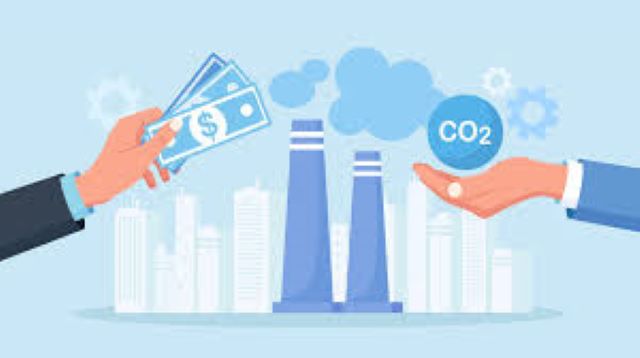
Carbon pricing means putting a price on carbon dioxide \CO₂\ and other greenhouse gas emissions.
The idea of carbon pricing is to force companies and people who cause pollution to pollute less because of the price they are made to pay.
A world bank’s new ‘State and Trends of Carbon Pricing 2026’ report obtained by WorldStage, analyzed 87 carbon pricing systems and finds that all large middle-income economies now either operate—or are planning—direct carbon pricing instruments to support climate and development goals.
Annual government revenues from ETSs and carbon taxes in 2025 rose by two percent to over US$ 107 billion.
Carbon pricing revenue collected by governments has risen from under US$ 30 billion in 2016 to over US$ 100 billion each year, in real terms, since 2021.
The vast majority of revenues occur in developed economies, noting that carbon prices in developing economies are generally lower, and the use of allowance auctions is currently limited in ETSs in major middle-income countries.
Carbon pricing revenues continue to be directed toward climate mitigation investments, including Japan’s new GX-ETS, which will channel future revenues toward a national fund for energy transition projects.
Overall carbon credit issuances rose eight percent from 2024 to 2025, still 20 percent below 2022 levels, but more than 80 percent above the level of issuances a decade ago.
Governmental crediting mechanisms have increased in number from 24 to 34 over the past 10 years, with credit issuances rising by nearly 40 percent in 2025 compared to 2024.
Meanwhile, ssuances from independent crediting mechanisms decreased by around four percent between 2024 and 2025 but remain around 70 percent of total credit issuances.
“The first credits under the newly operational Paris Agreement Crediting Mechanism (PACM) were provisionally issued to a clean cookstoves project in Myanmar,” the report disclosed.
Retirements of carbon credits declined by more than 10 percent from 2024 to 2025, attributed to credits used for compliance in California returning to 2023 levels after a ten-fold spike in 2024.
Credits used for voluntary purposes dominate retirements, representing over 80 percent of the total credits retired in 2025.
Beyond current retirements, future demand signals can be seen in the US$ 12 billion of offtake agreements for future carbon credits signed in 2025, marking a three-fold rise from 2024 levels.
Projects that receive either high ratings from third-party providers or high integrity labels are increasingly sought by buyers in both compliance and voluntary carbon credit markets.
Carbon credit prices across project types declined slightly across 2025, but credits that are eligible for international compliance or obtained high ratings continue to generate a price premium.
The largest price movement occurred in forest conservation projects in Southeast Asia, where constrained supply created a short-term spike in prices for these credits in the second half of 2025.
Carbon Offsetting and Reduction Scheme for International Aviation (CORSIA) eligible credits have traded since September 2025 at prices between US$ 15/tCO2e and US$ 22/tCO2e, which exceeds the price range for most other credit types (US$ 1–14/tCO2e).
There is growing evidence of a correlation between how a project is evaluated by rating agencies and its market price, reflected, for example, in an 87 percent price increase for each rating band for reforestation projects.
As of 2025, more than 40 countries .and regions have carbon pricing covering more than 23 percent of global emissions. The big ones include EU, China, Canada, UK, California and New Zealand.
Meanwhile, there is no national carbon tax/ETS yet in Nigeria, Africa’s most populous nation. But Nigeria committed under the Paris Agreement to reduce emissions, and DMO as well as Ministry of Environment have been exploring carbon markets. Nigeria also has potential to sell carbon credits from forestry, gas flaring reduction, cookstoves, etc.





