















































By Abiodun Folarin
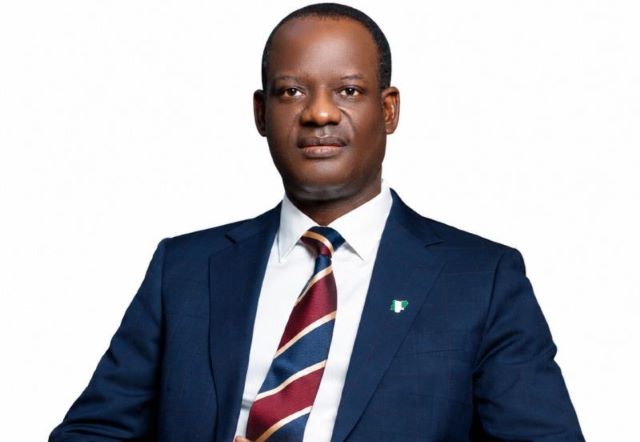
WorldStage— Chairman of the Presidential Fiscal Policy and Tax Reforms Committee, Prof. Taiwo Oyedele, has charged the newly inaugurated Technical Subcommittee on Fiscal Policy and Tax Reforms to focus on simplifying Nigeria’s tax system, improving competitiveness and resolving implementation challenges arising from the country’s new tax laws.
Oyedele who is the Minister of Finance gave the charge while inaugurating the Technical Subcommittee, said the proposed Finance Bill 2027 should not be treated as another routine annual legislative exercise, but as part of a continuous process of improving the fiscal and tax architecture.
He said the committee’s task was not to rewrite the 2025 tax reforms, but to preserve their fundamental principles while addressing ambiguities, unintended consequences and compliance challenges exposed by implementation.
According to him, the first phase of the reform process, which began with the establishment of the Presidential Fiscal Policy and Tax Reforms Committee by President Bola Ahmed Tinubu in July 2023, was aimed at fundamentally restructuring a tax system that had become complex and fragmented.
He noted that the reform process culminated in the Nigeria Tax Act 2025, Nigeria Tax Administration Act 2025, Nigeria Revenue Service (Establishment) Act 2025 and Joint Revenue Board (Establishment) Act 2025, which took effect from January 1, 2026.
Oyedele, however, stressed that the enactment of legislation was not the end of the reform process, noting that the real test begins when laws are implemented and their effects are experienced by businesses, investors, government agencies and citizens.
“Good reform is a process, not an event,” he said, adding that implementation would inevitably reveal areas requiring clarification, refinement or further reform.
He said the public Call for Inputs was deliberately expanded beyond taxation to cover fiscal policy and management, public financial management, debt, transparency, capital markets and cross-border capital flows, stressing that fiscal policy encompasses how government raises revenue, spends, borrows and manages public assets.
The Chairman disclosed that 134 submissions were received from across Nigeria’s geopolitical zones, with major issues including clarification of VAT thresholds, withholding tax and capital gains treatment, multiple taxation, coordination among revenue authorities, digitalisation and data-sharing.
Other issues raised by stakeholders, he said, included taxpayer rights, faster tax refunds, safeguards for small businesses and measures to improve investment and competitiveness in sectors such as mining, renewable energy, healthcare and capital markets.
Oyedele urged the Subcommittee to assess the submissions strictly on their merits, evidence and national interest, rather than the identity or institutional affiliation of those making the proposals.
He identified fairness, efficiency, competitiveness, evidence-based policymaking and simplicity as key principles that should guide the panel’s work.
He warned that a provision designed to increase government revenue could impose a greater cost on the wider economy if it discourages investment, production or expansion.
“We need investment, expansion, competitive manufacturing and formalisation,” he said, emphasising the need to prioritise productivity and value creation.
Oyedele also directed the Subcommittee to review the Deduction of Tax at Source Regulations 2024 in line with the new tax laws and prepare revised Withholding Tax Regulations.
He stressed that withholding tax should remain an advance-payment and compliance mechanism rather than becoming an additional cost of doing business or a tax on working capital.
The Subcommittee was further mandated to review the Companies Income Tax (Significant Economic Presence) Order 2020 and develop an updated framework aligned with the new tax laws and international best practice.
Oyedele said Nigeria must protect its legitimate tax base while remaining competitive in attracting technology and cross-border investment in an increasingly digital and globalised economy.
The Subcommittee has been given six weeks to complete its assignment and submit its report.
Oyedele said the composition of the panel, involving the Ministry of Finance, Ministry of Justice, Nigeria Revenue Service (NRS), Joint Revenue Board (JRB), Nigeria Customs Service, SMEDAN, organised private sector and professional bodies, was designed to promote collaboration and reduce delays in resolving fiscal and tax issues.
He also directed members to maintain confidentiality of deliberations and working drafts until authorised for release, while disclosing any conflict of interest and recusing themselves where necessary.
He charged members to approach the assignment as a national responsibility rather than representing narrow institutional interests.
According to him, the first phase of the tax reform was focused on changing the architecture, while the next phase should ensure that the new system works better by providing greater clarity, simplicity and predictability.
“Success will not be measured by how many sections we change, but by how many real problems we solve,” Oyedele said.