

















































By Abiodun Folarin (From Ado Ektiti)
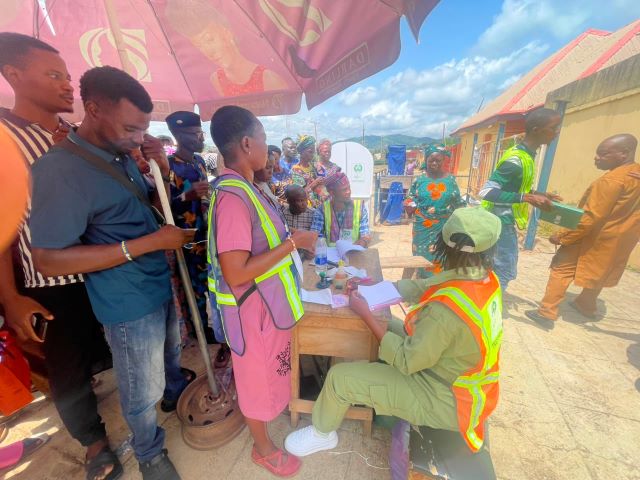
WorldStage— Technical glitches affecting the Bimodal Voter Accreditation System (BVAS) disrupted voting activities at Polling Unit 018, located in the open space in front of the Federal Polytechnic, Ado-Ekiti, as voters endured long delays during the Ekiti State governorship election.
A visit by WorldStage correspondent to the polling unit revealed a large crowd of voters waiting under harsh weather conditions, with many expressing concern over the slow pace of accreditation and voting caused by repeated BVAS malfunctions.
One of the voters, Mr. Wasiu Owolewa, alleged that recurring technical failures, reports of vote-buying, voter disenfranchisement, and poor voting conditions were undermining the electoral process.
According to Owolewa, the voting process had not run smoothly since the morning.
“The eligible voters have been on the queue without being able to cast their votes because of the malfunctioning BVAS machine. This is the third time the machine has broken down,” he said.
He explained that officials informed voters that technicians were working to resolve the problem, but noted that the repeated breakdowns had frustrated many voters, some of whom reportedly left the polling unit without voting.
“This is a form of disenfranchisement, which is not good enough. I believe INEC should have improved on this and made alternative arrangements,” he stated.
Owolewa also raised concerns over reports that some registered voters whose names appeared on the voters’ register were unable to vote because they could not present their Permanent Voter Cards (PVCs).
“We have information that in some other places, such voters are being allowed to vote once their names appear on the register. I do not understand what is happening with INEC this time around,” he added.
While dismissing suggestions of deliberate sabotage, Owolewa maintained that the challenges reflected operational shortcomings on the part of the Independent National Electoral Commission (INEC).
“I do not think it is deliberate. The lapse is on the part of INEC. They should improve on this in future elections,” he said.
He noted that the crowd at the polling unit was largely a result of the BVAS failures, stressing that a functional accreditation system would have significantly reduced congestion and waiting time.
Also speaking, a Peoples Democratic Party (PDP) agent at the polling unit, Mr. Adeosun Tolulope, confirmed that the BVAS machine had repeatedly malfunctioned since voting commenced.
“The major challenge here is the BVAS machine. When voting started, only three people were able to vote before the machine stopped working for about 45 to 50 minutes. It was later fixed, but after some time, it stopped working again,” he said.
“As you can see, it has just started working once more. We do not know what will happen next. Some voters have already gone home because they could not endure the long wait under the sun, while others are still here hoping to vote.”
Tolulope called on INEC to strengthen its technical preparations for future elections.
“I would advise that in subsequent elections, INEC should make better provisions for voting machines and improve the voting environment. The machine is not working properly, and the environment is not conducive,” he said.
Providing details on the polling exercise, the PDP agent disclosed that voting commenced at approximately 8:30 a.m., adding that fewer than 30 voters had successfully cast their ballots as of the time of the interview.
He further stated that the polling unit has about 886 registered voters.
The development raised concerns about voter turnout and the ability of election officials to complete the accreditation and voting process efficiently at one of the state’s busy polling centres.