
































WorldStage Newsonline– Delta State, one of Nigeria’s nine littoral states with 163km coastline or 19.2% of the total of 850km in the country has indicated its readiness to embrace the emerging trillion dollar blue economy on the account of it huge tourism potential among others.
Olorogun Lucky Oghene-Omoru, Director General, Delta State Investments Development Agency (DIDA) said at the Nigeria Blue Economy Stakeholders Conference organised by Alfe City Institution at the BWC Hotel, Victoria Island, Lagos, from 15th – 17th February, 2022 that the state “is a tourism haven on account of its warm and highly hospitable people, spectacular sand beaches along the coastline, many cultural festivals, biodiversity of the ecosystem, historical monuments and sites among others.”
In his presentation titled ‘Delta State Atlantic Ocean coastline infrastructure development aspirations and inland waterways policy framework on the development of the Nigeria blue economy’ he said the state government’s policy on tourism “is to create the enabling environment through the provision of infrastructure and encouragement of a private sector driven tourism industry.”
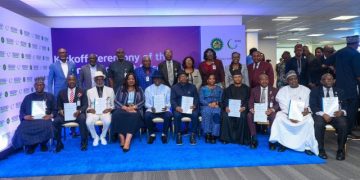
At the forum which was graced by the Minister of Information and Culture, Minister of State for Niger Delta Affairs, Nigerian Navy, Infrastructure Concession Regulatory Commission (ICRC) among other strategic stakeholders, Oghene-Omoru listed some of the notable tourism sites in the state to include River Niger- Source at Umuaja in Ukwuani LGA; Nana Living History Museum in Koko, Warri South LGA; Obi Palace Idumuje-Ugboko in Aniocha North LGA. This is one of the oldest palaces in the state; The Mungo Park Building (Asaba Museum) in Oshimili South LGA; and Bible Site in Araya, Isoko South LGA.
Delta State can also boast of many rivers which transverse the length and breadth of the state such as River Niger, Ethiope, Orogodo, Warri, Benin, Forcados and River Ramos, etc such that the state is easily a blue economy hub.
Oghene-Omoru said all the 25 Local Government Areas (LGA) in Delta State shall be impacted by the blue economy initiative and specifically asked that the state as a critical Stakeholder in the proposed Blue Economy project should be included in the development of the initial conceptual framework and implementation processes.
He expressed belief that the challenges of the blue economy are global and will require global solutions that can be adapted to national and local priorities.
“The majority of the governments around the world should participate in the discussion about innovative methods, technologies, and cutting-edge research to tackle sustainable Blue Economy opportunities,” he said.
On the potential of the blue economy in accelerating economic growth of Nigeria, Oghene-Omoru said “it involves building an ecosystem of industrial and mercantile business activities in order to comprehensively harness the abundant natural, aquatic and marine resources of the Atlantic Ocean, Rivers, lakes, inland Waterways and the River Basins, etc in Nigeria.
“Incidentally, these aquatic bodies are characterized by marshy, swampy and difficult terrain which are costly to develop and pose challenges regarding the provision of infrastructural facilities.
“However, concerted efforts must be made to mobilize investment capital in order to turn these areas into the Nigeria’s industrial and business hubs and the grow the national GDP as was done in Cape Town in South Africa, Istanbul in Turkey, Singapore, Malaysia and many Australia and Chinese and USA cities to mention a few examples around the world.”
On the way forward for blue economy initiative in Nigeria, Oghene-Omoru said, “A UN-Habitat paper on Blue Economy and Cities to support coastal cities and districts in their processes of implementing sustainable development practices to seize Blue Economy opportunities underlines important aspects that coastal cities, waterfront cities, urban centres, local and national governments should bear in mind when creating their own economic opportunities, and environmental protection and spatial planning activities.
“Local and national governments should understand that Blue Economy includes all types of water bodies, including the world’s oceans, lakes, rivers, and wetlands.

“As the majority of the urban centres in the world are located along the coasts, they should acknowledge the value of the water bodies and harness them to create sustainable livelihoods, green and blue jobs, sustainable housing and infrastructure, waste management, ecological protection, and restoration of coastal and waterfront areas.
“National government policymakers, local government officials, marine protection experts and other civic stakeholders should integrate spatial planning and integrated coastal zone management for better economic, social, and environmental outcomes.
“Governments should anticipate, mitigate and adapt to the impacts of climate change. In addition, several plans and programmes should be set in place to prevent further degradation of the environment, focusing on waste management, wastewater, oceans, and marine pollution.
“Every government should involve and engage all segments of the population, including women, youth, and other marginalized groups.
“Governments should invest in data, science and cutting-edge technology to support governance prioritization, reforms, and shaping management decisions.”