





























* Uchechukwu Peter Umezurike wins The Nigeria Prize for Literary Criticism 2020/2021
* NLNG boss Dr Philip Mshelbila regrets lack of winner for The Nigeria Prize for Science category
WorldStage Newsonline– The Advisory Board for The Nigeria Prize for Literature on Saturday 30th October 2021at the 2021 Grand Award Ceremony for The Nigeria Prizes at Eko Hotel, Victoria Island, Lagos declared Cheluchi Onyemelukwe-Onuobia as the winner of the $100,000 NLNG Literature Prize for 2021 with an entry, ‘The Son of the House’.
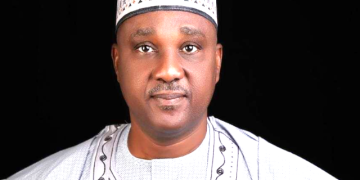
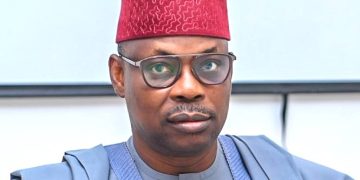
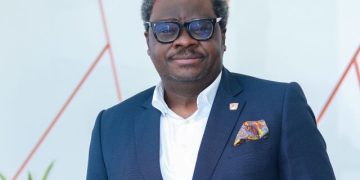
The Advisory board also ratified, that The Nigeria Prize for Literary Criticism 2020/2021 be awarded to Uchechukwu Peter Umezurike for his critical essays – “Self-Publishing in the era of military rule in Nigeria, 1985 – 1999”, “Postcolonial Ogres in Ngugi Wa Thiong’o’s Wizard of the Crow”, and “Land of cemetery: funereal images in the poetry of Musa Idris Okpanachi”.
Cheluchi Onyemelukwe-Onuobia’s The Son of the House was published in 2019 by Parresia Publishers. The novel presents the predicaments of two women, Nwabulu a one-time housemaid and a successful fashion designer; and Julie, an educated woman who lived through tricks, deceits and manipulations, as they meet in captivity. Both women decide to tell each other their stories. They soon discover that their lives had crossed at different points.The subject matter of the novel is developed through the rupture of traditional plot and the mediation of a single narrative voice. It is made up of a prologue and a three part story moments, each dominated by multiple points of narration, The Son of the House is an experimental novel with a complex plot structure made up of a main plot and several subordinate plots that intercept.
The final three novels shortlisted for the awards were Abi Dare’s The Girl with Louding Voice; Cheluchi Onyemelukwe-Onuobia’s The Son of the House; and Obinna Udenwe’s Colours of Hatred.
A statement by the Advisory Board – The Nigeria Prize For Literature, 2020/21 read by Prof Akachi Adimorah-Ezeigbo, Chairman, Advisory Board – The Nigeria Prize for Literature & Literary Criticism said, “After a careful scrutiny of the three Novels, the Panel of Judges and the Advisory Board have, in consideration of its profundity of technique and subject matter as a Nigerian family saga, its thematic depth and social relevance as a commentary on the diversity of collective experiences that shape, hold and mar families in postcolonial Nigeria, and its feminist undertones, found Cheluchi Onyemelukwe-Onuobia’s The Son of the House outstanding, and declare it the Winner of the 2021 Nigeria Prize for Literature.”
Obinna Udenwe’s Colours of Hatred is a plot-driven detective storyand published by Parresia in 2020. The novel is a confessional that centres on the story of Leona of the Dinka tribe and her involvement in the killing of her father-in-law. It is a whodunit, which through introspection and re-telling explores issues of love, hatred, war, revenge, oppression, extra-judicial killings, military rule, displacement and exile with their attendant tensions that leave scars on people and homes. In this context, the novel draws substantially from the tradition of modernism and deploys investigative techniques of detective narratives and flash backs to account for what has happened.
As for the choice of Uchechukwu Peter Umezurike as winner of The Nigeria Prize for Literary Criticism 2020/2021, the Advisory Board said, “This particular contestant submitted three Essays all of which were published within the 2017 and 2020 specified date of publication. In addition, the Journals in which the essays were published are reputable with rigorous peer-review process. The three entries are bound by their focus on how underdevelopment and poor leadership have created not only absurd conditions but also made the development of coping/survival strategies vital to how individuals and groups survive in Nigeria since the introduction of Structural Adjustment (SAP).
“Remarkable is the depth of analysis that characterized the 3 essays. Not only does the author lay the background for the conversation into which he enters with his essays, he also shows the point of departure he charts. For instance, in his “Self-Publishing in the era of military rule in Nigeria, 1985 – 1999,” while acknowledging that studies have been carried out on the Nigerian book industry, he was able to demonstrate that none has interrogated how the self-publishing culture emerged. Noteworthy also is the historiography of publishing in Nigeria prior to the incursion of the military into the sociopolitical climate that the author was able to enact in the said essay, and his ability to establish a confluence between the Structural Adjustment Programme (SAP) introduced by the military and the inauguration of the regime of self-publishing in Nigeria. As demonstrated by the author, among other things, it is the folding-up of established publishing houses in the 1980s and 1990s as a result of the economic realities of the time-period that inaugurated the regime of self-publishing.
“The depth of analysis of the 3 essays is, perhaps, also owing to the applicability of the theory/concept utilized by the author. For instance, in his “Postcolonial Ogres in Ngugi Wa Thiong’o’s Wizard of the Crow, the writer deploys as well as establishes an intersection between Mbembe’s, Pageaux’s, and Bakhtin’s postulations of the grotesque in his analysis. Drawing on the features of the grotesque such as parody, exaggeration, degradation, and scatological images, he criticizes the state and its carnivorous power as depicted in Ngugi’s novel.
“Above all is the relevance of this author’s papers to literary studies in Africa, especially Nigeria. The publications contribute to scholarship in postcolonial studies and publishing as the works highlight and explicate postcolonial realities of disenchantment, alienation, exploitation, oppression, neocolonialism, deprivation, power relations, political leadership, loss of freedom, failure of leadership, abuse of power, and the gap between the rulers and the ruled. These issues, though peculiar to the African continent and the Nigerian nation-state, are universal. In this way, the writer rescues African/Nigerian imaginative works from their putative appellation in the West as anthropological materials.”
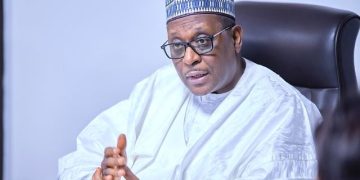
Dr Philip Mshelbila, Managing Director/CEO, Nigeria LNG Limited in his keynote address at the 2021 Grand Award Ceremony said, “On behalf of the Board, Management and Staff of NLNG and the Advisory Boards for the Science and Literature Prizes, I congratulate the winners of this year’s prizes and welcome you to the exclusive club of laureates of Africa’s most prestigious literary prize.”
He said, The Nigeria Prize for Science, The Nigeria Prize for Literature and The Nigeria Prize for Literary Criticism were designed to encourage the daring mind to imagine, create and innovate with the intent of turning the wheel of development and leading to the emergence of a better man, a better society and a better world.
“I am glad to note that we have a winner for The Nigeria Prize for Literature and for The Nigeria Prize for Literary Criticism this year. Sadly, we have none in The Nigeria Prize for Science category,” he said.
On the non delivering of a winner in science he said it was painful not just to NLNG, or to the Advisory Boardfor the Science Prize, but also to those who sent in entries.
“It should induce a national feeling of despondence. And it should be a call for us all to rethink the place of science in our curriculum. Science should not belong to the classrooms alone. We all must support its growth and development,” he said.
“I will, therefore, encourage venture capitalists, captains of industry, chambers of commerce and other consumers of innovation to fill this gap by adopting science departments of universities and research institutes in their various communities as part of Research and Development departments. Companies that do not have such R&D departments could align with the universities as progress partners. That demonstration of care will motivate scientists and researchers to endure the loneliness and long hours it takes to break new grounds in science and technology. And, I dare say, we will have more entries for this great prize than we get every year. All these will have a positive exponential effect on science, research and innovation in the country.”
He went memory lane on the inspiration behind the sponsorship of the awards by the NLNG, saying, “From time immemorial, man has been the hand turning the wheel of progress, the mind discovering new ways of doing things and the one seeking and conquering uncharted territories. To achieve these, man depended and still depends on the power of his mind. What is the mind, we may want to ask? For the purpose of clarity, we will look at the mind as the seat of consciousness, the essence of our being, without which we definitely cannot be considered meaningfully alive. We didn’t gather this evening to theorize on the broad concept of this deep and unfathomable side of humanity, for this is neither a gathering of psychologists nor a conclave of psychiatrists. We are here to celebrate men and women who apply their minds creatively to unravel the challenges life presents to us day-after-day. While the writer imagines what the ordinary mind deems unattainable, the quizzical scientist finds in the same works the challenges which force him to the laboratory or observatory to dig deep and search for a thousand ways to make that which seemed impossible possible.
“Centuries ago, scientists experimented with all sorts to achieve the power of the Greek god, Midas who was reputed to have turned everything he touched to gold. The quest for this dream gave birth to Alchemy. Whilst base metals never became gold, that unrelenting scientific quest led to the development of the synthetic version of almost every article of nature today. In the same vein, the 17th Century French writer, Cyrano de Bergerac in his novel Voyages to the Moon and Sun dreamt of walking on the moon, three hundred years later, in the 20th century, men landed on the moon and today private companies like Space-X with their team of scientists and battery of high-tech equipment are jostling to lead the race for space tourism. If the writers didn’t imagine it, if the scientists didn’t interrogate its possibility, argue about it and commit to centuries of research, we won’t be where we are today.
“For us to create a better society, we need the imaginative power of the fiction writer to dream up the impossible; we also need the scientist using the scientific method to find the best and most efficient way to make that dream a reality. The interaction of these two sets of minds continues to drive the development of modern society. Their position is so important that visionary policy makers must seek them out, encourage and promote them and their works. If we truly want our country Nigeria to experience growth in its education, economy, technology and industry, we must court them, love and make them productive and regenerative. That is why in NLNG, we have, since 2004, spent tens of millions of dollars to ensure that these groups of special minds never give up on their efforts and never give in to the emptiness that their solitary journey into the search for the unknown sometimes presents them with.
“Being a company committed to building a better Nigeria, NLNG cherishes the importance of these drivers of progress in achieving our clearly stated vision. Our core values of Integrity, Teamwork, Respect, Excellence and Caring are existential tiles in the broad mosaic of minds readied and constantly reinforced to drive such progress. By continuously improving our workforce to global best of class standards, innovating and breaking new grounds, we become better tooled and better prepared to change our world, thus delivering increase in dividends and profits for our investors, satisfaction for our stakeholders and improvement in the quality of life for our host communities, our host state and our country, Nigeria.
“Since we began operations in 1999, we’ve made significant impact on the economy of the country. Our current contribution to Nigeria’s Gross Domestic Product is about 1 percent. Over the years, we’ve paid dividends of over $18 billion cumulatively to the Federal Government of Nigeria through the Nigerian National Petroleum Corporation, NNPC. As at today, NLNG is the biggest tax payer to the Federal Government, and to the State and Local Governments hosting our operations.
“While growing the economy, NLNG grows the gas sector and the required manpower and skills needed in its operations. Over 12,000 direct jobs will be created within the next five years during the construction phase of the recently commenced Train 7 Project.We support our community and Nigerian contractors to enable them achieve standards of excellence by enhancing their capacities and capabilities. The efforts in growing local content will pay off significantly in theTrain 7 Project. We can proudly tell Nigerians that 55% of both the engineering and procurement activities of this monumental project will be carried out in Nigeria and by Nigerian vendors while 100% of all installations and construction will happen in Nigeria. The impact this will have on our economy stretches further than the project to include improvement in the quality of the people’s lives and stimulating a desire to unleash their innate potentials. Nothing beats the impact a happy and working people have on the economy. Such environment, such social balance, kindles creativity and enables innovation to thrive.
“To achieve this aspiration, we focus our Corporate Social Responsibility at both the national and local levels on the four pillars of Education, Economic Empowerment, Infrastructure and Health. An educated, healthy, gainfully engaged citizen living a good life in a secure and safe environment is a candidate for creativity and innovation, for when the mind is free of the mundane, it seeks the sublime.
“Since 2012 when we first offered post-primary scholarship to 28 children, we’ve grown to offer what is certainly one of the highest non-government interventions in the educational sector from post-primary level to post-graduate level in Nigeria. You will agree with me that if we should add our aggregate annual spend on the annual prizes for literature and science, we will probably be ranked first in Africa for intervention in education. Such feat has been repeated in the health sector, where we boldly aspire to make Bonny Island the first Malaria-Free-Zone in Nigeria by the year 2025. To further sustain a healthy citizenry, we have provided the people with a sustainable health insurance scheme. Our Covid-19 interventions went far beyond the Island. We worked with different partners and government authorities to provide technical and strategic interventions to mitigate the spread of the virus. We provided for the island and our other host communities, Rivers and some other State Governments and the Federal Government world class equipment, infrastructure, medical aid, medications, PPEs, and palliatives worth millions of dollars to push back and help contain the pandemic.
“Our dream of making Bonny a Malaria-Free-Zone is tied to our wider vision of making this historical kingdom a major tourist destination in Africa. The multi-billion Naira Bonny-Bodo Road, when completed, will significantly bring Bonny closer to the rest of the world and the rest of the world closer to the Island. Our other infrastructure and youth empowerment projects are aimed at further touching the lives of people in their localities. As these projects lift the lives of the people, it also sets them free to think, create and innovate. Who knows? Maybe when next we gather for another cycle of prizes, we would be watching the short video of a writer or scientist, who was once a boy paddling his canoe on the shores of the Atlantic bordering Bonny Island. Such an occasion will bring to full circle the joy of our gathering here tonight.”



