






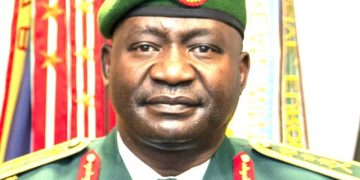





















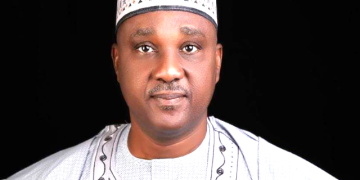











WorldStage— Nigeria’s Minister of Defence, General Christopher Musa, has announced that the Nigerian military is receiving real-time intelligence and satellite support from the United States to track and target militant leaders ahead of the general elections scheduled for January 2027.
Speaking during a press briefing in Abuja, Musa stated that deepening security cooperation between Abuja and Washington has significantly sharpened the armed forces’ operational capabilities as the country battles Islamist insurgents, armed bandits, and kidnapping gangs.
According to the defence chief, US satellite imagery, intelligence sharing, and military training have enabled Nigerian troops to conduct near-daily missions and overnight operations that have successfully eliminated several terrorist and bandit leaders in the north-west and north-east regions.
“We took out a lot of the bandit leaders and the terrorists themselves,” Musa told reporters.
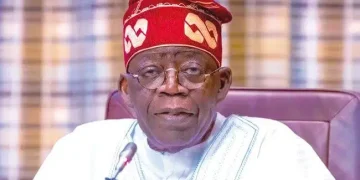
He noted that these intelligence-led operations are part of a broader effort by security agencies to prevent violence before, during, and after the January 16, 2027, presidential and National Assembly polls, in which President Bola Tinubu is seeking a second four-year term.
Beyond direct combat support, Nigerian authorities are working closely with US counterparts to disrupt the technological and financial networks of armed groups.
Musa revealed that security agencies are actively monitoring militants’ use of Starlink satellite internet services, cryptocurrencies, and commercial drones.
To further bolster air capabilities, Nigeria is also expecting additional military helicopters from both the United States and Italy to complement recently commissioned air assets.
Addressing regional security threats, the defence minister warned that the Islamic State Sahel is attempting to recruit profit-driven criminal bandit gangs in north-western Nigeria, raising fears that they could evolve into ideologically driven insurgents similar to the Islamic State West Africa Province (ISWAP) in the north-east.
While militants have historically used dense forests and porous borders with Niger and Benin to evade capture, Musa noted that enhanced surveillance now restricts their movement through difficult terrain.
To eliminate cross-border safe havens, Nigeria has secured a “right of pursuit” agreement with neighbouring Cameroon, Niger, and Chad, permitting Nigerian troops to pursue fleeing militants and bandits up to five kilometres across shared borders.
“We don’t want them to develop that capacity,” Musa emphasized. “We’re blocking the logistics and taking them out from within Nigeria.”






