






































WorldStage– Members of the United States Congress have pledged to closely monitor Nigeria’s January 2027 presidential election, citing persistent insecurity and the urgent need for a credible democratic process.
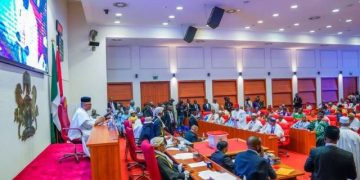
The commitment emerged during a public hearing convened by the House Foreign Affairs Subcommittee on Africa, where lawmakers evaluated the Nigerian government’s efforts to curb regional violence and protect vulnerable populations.
During the session, titled “One Year Later: Assessing Nigeria’s Efforts to Protect Christians and Secure the Middle Belt,” Republican Representative Riley Moore emphasized that Washington must maintain strict vigilance over the upcoming polls to ensure citizens can freely choose their leaders.
“We need to be watching these presidential elections like a hawk, and I’m going to be watching them, and we all need to be watching them,” Moore told the panel.
The hearing, chaired by Congressman Chris Smith, revisited Nigeria’s security landscape one year after President Donald Trump redesignated the country as a Country of Particular Concern (CPC) in October 2025.
Smith noted that violence in the Middle Belt has escalated rather than subsided, arguing that perpetrators continue to act with impunity while communities endure ongoing killings, abductions, and displacement.
Testifying before the committee, Assistant Secretary of State for African Affairs Frank Garcia acknowledged that bilateral efforts have yet to yield sufficient security improvements.
“Progress has not been adequate,” Garcia stated, clarifying that while Abuja is not ignoring the crisis, existing interventions have failed to produce the desired impact on the ground.
He added that Washington expects stronger accountability, improved responses to early attack warnings, and tangible protection for at-risk communities.
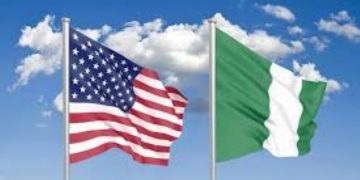
Garcia also highlighted ongoing U.S.-Nigeria cooperation, noting that a Joint Working Group established after the 2025 CPC designation met in Abuja in January and in Washington in August 2026.
According to Garcia, the United States has supplied training and equipment to Nigerian police units, expanded biometric intelligence sharing, and collaborated with Nigerian financial institutions to disrupt terrorist financing networks.
As Nigeria prepares for its January 16, 2027 presidential vote, congressional leaders signaled that electoral integrity and human rights protection remain central to U.S. foreign policy toward Africa’s most populous nation. Lawmakers indicated they will continue scrutinizing both security conditions and democratic benchmarks in the months leading up to the ballot.






