




































WorldStage— The Speaker of the House of Representatives Rt. Hon. Abbas Tajudeen, has stated that the reforms in Nigeria’s petroleum sector must serve the best interest of the citizens.
Abbas stated that the Petroleum Industry Act should especially benefit Nigerians and boost the economy.
“Ultimately, the success of the PIA must be measured beyond institutional restructuring and corporate performance indicators. It must be reflected in increased production, greater investment, improved energy security, stronger domestic refining, enhanced revenue generation, employment opportunities, and tangible benefits for Nigerians, particularly communities that host petroleum operations.
“In sum, the petroleum industry must work for the Nigerian people. That is the larger public purpose that must guide our collective efforts,” he said.
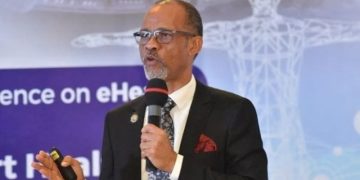
The Speaker stated this in Abuja on Monday at a retreat on the Petroleum Industry Act (PIA), organised by the Office of the Speaker and the Nigerian National Petroleum Company Limited (NNPCL).
While declaring the retreat open, Abbas noted that the event was to bring together key stakeholders to examine the progress of the Act.
Represented by Majority Leader of the House, Hon. (Prof.) Julius Ihonvbere, the Speaker added that the retreat was to also confront the challenges of the PIA implementation and strengthen the institutional framework for corporate governance and legislative oversight.
The Speaker pointed out that the Act was enacted to fundamentally change the structure, governance, and economic direction of Nigeria’s petroleum industry.
He added that the aim was not simply to establish new institutions or replace existing regulatory arrangements, but to create a more transparent, commercially viable, accountable, and investment-friendly petroleum sector capable of contributing meaningfully to national development.
“Five years down the line, the central question is how much of that promise we have translated into practice,” he stressed.
While noting that the PIA represents “one of the most consequential pieces of economic legislation in Nigeria’s recent history,” the Speaker said its transformation of the Nigerian National Petroleum Corporation (NNPC) into NNPCL, the establishment of distinct regulatory institutions, the introduction of a framework for host community development and the restructuring of the fiscal and governance environment “were all intended to address longstanding institutional deficiencies and reposition the industry for greater efficiency and competitiveness.”
Abbas said, “As we pursue the economic reforms of the administration of President Bola Ahmed Tinubu, GCFR, the National Assembly remains committed to providing the legislative support, constructive engagement, and rigorous oversight necessary to ensure that these reforms deliver their intended benefits.
“We must sustain the conditions for investment and economic growth while protecting the public interest and ensuring that every institution operates within the accountability framework established by law.”
He noted that the retreat builds on the continued commitment of the 10th House to strengthening legislative engagement with the petroleum industry.
He recalled that in April 2024, the House convened a two-day retreat on economic transformation and development, with particular attention to the implementation of the PIA and tax reforms.
“We have since sustained that engagement through committee-level interventions. In June 2026, for instance, the House Committee on Petroleum Resources (Midstream) undertook engagements in Port Harcourt and Lagos to examine operational challenges, regulatory performance, domestic gas utilisation and the protection of critical energy infrastructure.
“The House has also continued its investigations into crude oil theft, scrutiny of pipeline surveillance arrangements, and legislative interventions aimed at strengthening the security of petroleum infrastructure. We recognise that the protection of national petroleum assets is not merely an industry concern; it is an economic and national security imperative.
“These engagements reflect our determination to move beyond oversight based exclusively on official reports towards more informed, evidence-based assessments of the actual conditions confronting the industry,” he added.
Nevertheless, the Speaker stated that significant challenges remain, and Nigeria must contend with production constraints, crude oil theft, pipeline vandalism, infrastructure deficiencies, investment uncertainty, regulatory bottlenecks, and the need to optimise domestic refining capacity.
He stated, “We must also ensure that adequate crude oil supplies are available to domestic refineries without undermining the commercial viability of upstream operations.”
Speaker Abbas also noted that Nigeria’s gas resources equally represent “an enormous but insufficiently realised national asset.” He said unlocking their potential requires sustained investment in infrastructure, appropriate commercial arrangements, and regulatory certainty.
“These challenges cannot be addressed by legislation alone. They demand consistent implementation, institutional coordination, credible regulatory enforcement, and investor confidence,” he noted.
The Speaker stressed that he expected the retreat to produce concrete outcomes, which include “clear identification of the principal implementation gaps in the PIA, areas requiring stronger legislative attention, more effective channels of engagement between the relevant House Committees and NNPC Limited, and a framework for monitoring agreed actions.”
He stated, “We must also distinguish between legislative deficiencies and failures of implementation. Where existing provisions are adequate but poorly implemented, our priority should be enforcement and institutional compliance.
“Where genuine legislative gaps or unintended consequences have emerged, the National Assembly must be prepared to consider appropriate amendments. We must not assume that every implementation challenge requires a new law.
“Sometimes, what is needed is the faithful enforcement of the law already in place.”





