











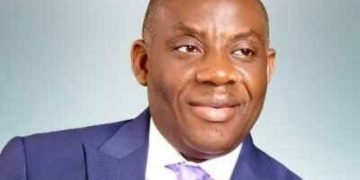






























WorldStage— The Minister of Education, Dr. Tunji Marauf Alausa, has affirmed that education remains a shared national responsibility that transcends political affiliations and called on all stakeholders to institutionalise reliable education data, strengthen accountability, invest in human capital and sustain collaborative reforms capable of delivering measurable improvements in learning outcomes.
He issued the affirmation while declaring the Executive Retreat open, urging Commissioners to embrace evidence over assumptions, collaboration over isolation and continuity over fragmented reforms.
He emphasized that the future prosperity and competitiveness of Nigeria will ultimately depend on the quality of education provided to today’s learners.
In a keynote presentation titled “Beyond the Tenure of Commissioners: Sustaining Education Reforms in the Era of Digital Disruption,” Former Aviation Minister and Chancellor of the Athena Centre for Policy and Leadership, Mr. Osita Chidoka, challenged Commissioners to build reforms that outlive political administrations. He stressed that lasting improvements in education require policy continuity, reliable data, stronger teacher development, accountability and sustained investment in learning outcomes rather than short-term interventions.
Representing the World Bank Country Director, Mr. Matthew Verghis, the Senior Economist and Task Team Leader for the HOPE Education Programme, Mr. Shin Nomura, reaffirmed the World Bank’s commitment to supporting Nigeria’s education reform agenda through the HOPE Education Programme. He explained that the programme became effective in March 2026 and is designed to improve education governance, financing, teacher development, learning outcomes and data systems through a performance-based financing model. He urged states to complete all preparatory requirements to enable timely access to programme funding.




