











































By Abiodun Folarin
WorldStage– The Independent National Electoral Commission (INEC) and the National Orientation Agency (NOA) have begun an ambitious nationwide campaign to rebuild public confidence in Nigeria’s electoral process, signalling an early push to address voter apathy, fake news and civic disengagement ahead of the 2027 general elections.
The collaboration, unveiled on Wednesday in Abuja during a strategic meeting between the leadership of both agencies, represents one of the earliest institutional efforts to shape voter behaviour long before political campaigns begin.
With NOA’s nationwide network of 818 offices, including offices in all 774 local government areas, the initiative is expected to drive sustained grassroots voter education, strengthen civic awareness and improve citizens’ understanding of Nigeria’s evolving electoral process.
The move comes as INEC acknowledges that while technological innovations have substantially improved election administration, declining voter participation and widespread misinformation are emerging as the biggest threats to credible elections.
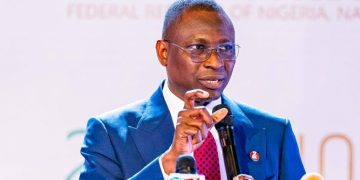
INEC Chairman, Professor Joash Amupitan, said Nigeria has reached a stage where successful elections will depend not only on efficient logistics but also on restoring public trust in the electoral process.
According to him, innovations such as the Bimodal Voter Accreditation System (BVAS) and the INEC Result Viewing Portal (IReV) have significantly enhanced transparency and reduced opportunities for electoral manipulation.
He noted that recent elections, including those in the Federal Capital Territory and Ekiti State, recorded over 90 per cent early opening of polling units, seamless biometric accreditation and prompt electronic transmission of results.
However, he observed that those operational improvements have not translated into higher voter turnout, as many eligible Nigerians remain discouraged by misinformation, inadequate understanding of electoral procedures and lingering doubts about the value of their votes.
“We can deploy the best technology, optimise our systems and perfect election logistics, but none of that will matter if Nigerians lose faith in the value of their votes,” Amupitan said.
He stressed that public education must now become as critical as election logistics, warning that advances in electoral technology are outpacing public understanding.
Under the partnership, INEC will provide technical expertise, voter education materials and institutional support, while NOA will mobilise its extensive grassroots network to communicate electoral information through community engagement, local languages and digital platforms.
The campaign will also focus on combating vote-buying, countering fake news, clarifying electoral procedures and educating citizens on how technology has strengthened the integrity of elections.
“As we prepare for the 2027 elections, we cannot afford to wait until campaigns begin before engaging Nigerians. The work of rebuilding confidence must start now,” the INEC chairman said.
The commission also disclosed that preparations for the 2027 general elections are already underway, with the presidential election scheduled for January 16, 2027, while governorship elections are expected to hold on February 6, 2027.
Responding, Director-General of the National Orientation Agency, Mallam Lanre Issa-Onilu, described the partnership as a strategic national intervention capable of transforming civic education into a continuous exercise rather than a seasonal election activity.
He said lessons from the last general election revealed significant knowledge gaps, particularly among first-time voters and Nigeria’s growing Generation Z population, making sustained civic engagement imperative.
“The last election in particular saw something happen in this country. The people we refer to as Gen Z came of age. When it came to its own drawback, we saw a huge gap in knowledge and we saw a lot of productive time committed to issues that should never be discussed because there was only so much knowledge. That was very dangerous for us as a country,” he said.
Issa-Onilu argued that civic education should not begin only a few months before elections but should remain a permanent national programme designed to strengthen patriotism, democratic participation and public confidence in state institutions.
Both agencies agreed to jointly implement a nationwide civic education programme that combines INEC’s electoral expertise with NOA’s grassroots presence to improve voter awareness, promote informed participation and reduce the influence of misinformation.
Analysts believe the partnership could become a critical test of whether Nigeria’s growing investment in election technology can be matched with increased voter participation, stronger public trust and a more informed electorate ahead of the 2027 general elections.