





































*Geopolitics has become a lever shifting global trade. So the AU can ignore the puny powers prowling its Sahel—at AfCTA’s peril.
WorldStage– The African Continental Free Trade Area (AfCFTA) has reached its implementation stage this year. Its policy design and planning took years of push and shove and horse-trading: Morocco, Algeria, Tunisia, Nigeria, South Africa, and others even pussyfooted before they signed up.
The final stage, however, arrived with a catch: the Alliance of the Sahel States (AES), a rogue comity of three, for now.
It has split the continent down the middle. Some advocate the Alliance accommodation as a reality; others call for whipping it into line. Many trade analysts, also, see the pact as baggage geopolitics brings to integrated economies. Yet others are not reading much to the Alliance disruption of AfCFTA.
Under jackboots, Niger, Mali, and Burkina Faso have, no doubt, upset the regional integration AfCFTA seeks for economic development in Africa. The juntas hardly care. But many still consider the agreement the best thing that happened to the continent.
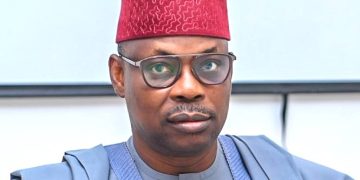
Yemi Kale described it as the market architecture of the global reset.
“AfCFTA is enhancing tradability within the continent — transforming 55 small markets into one investable economic space,” the Afreximbank chief economist said recently in a keynote address in Lagos.
Ken Ugbeche viewed it more as forming a bloc that wields economic power, and an idea well thought out. “All over the world, people are clustering together. Europe never existed until its members came together,” the publisher of the Political Economist told WorldStage News. “When the UK fails to speak up in global politics, you see Europe still standing up to America.”
AfCFTA’s potential can actually carve out a bloc for Africa, too. And with that the continent can stand its ground in the global trade reeling in the throes of geopolitics.
In the reset he highlighted in his speech, Kale emphasized the role of geopolitics. “The world has moved from efficiency-driven globalization to resilience-driven regionalization,” he said.
Africa has only captured 3 percent of global trade. Yet the continent crawls with 1.4 billion consumers, making it the world’s largest economic region awaiting integration. Going by projections, its working population will expand for the next 74 years.
In view of that, Kale noted, Afcfta offers a path toward a unified $3.4 trillion market. That’s the combined GDP of the 54 countries, including the Alliance, which signed up on the agreement. And the market they so create will become a hive of competitive production and consumption growth over the long haul.
Kale also emphasized the value-chain production this brings to Africa’s mineral resources. Unlike now that the continent trades most of them for dollars, and imports finished products.
Take ECOWAS for instance. The region brims over with gold, oil, and gas. Mining data reveals about $121 billion worth of these headed West, especially to the US and Switzerland, in 2024.
East Africa, too, sits on precious stones and rare earth resources: gold, diamond, nickel, cobalt, copper, and gemstones. China, Thailand, UAE, and India have been the major buyers. Uganda exported $4.2 billion worth of these to India, Hong Kong, and the UAE in 2024.
The southern Africa region also boasts of endowments in precious stones and rare-earth minerals. It holds 70 percent of the world’s chromium deposit, and South Africa, in particular, 91 percent of the world’s platinum deposit. Each of the producers earns more than 70 percent of their income flogging the global markets with these commodities.
“North Africa doesn’t really like identifying with most of Africa’s aspirations because it considers itself more of Europe,” Ugbechie said. (Only two, Libya and Sudan, of the bloc’s seven countries have yet to sign up, though.) But the region also flourishes with resources similar to its southern counterpart.
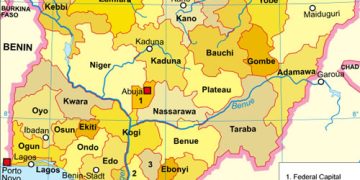
Then comes the Alliance, right within ECOWAS. The three have the continent’s largest gold, lithium, and Uranium deposits, among other minerals. Russia, China, and the UAE have now become their trading partners since they broke up with France.
AfCFTAhas come to change all this with what Kale described as the ‘missing middle layer’. It’s the core of the value chain production that ‘converts and scales resources and demand’.
So Africa can bump up its current 18 percent intra-African trade to over 30 percent.
“We can now sell in our own currencies without the dollar America uses to control the world economy,” Ugbechie said. “After all, everybody is preserving its own.”
Preparations have been under way since. Harmonized rules of origin, customs and payment digitization, and service liberalization are already in place. Even a unified currency is a possibility Kale and Ugbechie believed is in order.
But the Alliance has thrown a wrench in the groundwork. Order may turn out a pipe dream.
Mali, Niger, and Burkina Faso originally pulled out of ECOWAS for security reasons. The AU later sympathized with that. But the pact has since extended to trade protectionism. They now charge 0.5 percent tariff on import from other nations. They could even start demanding payments in their Alliance’s unified currency. Their Confederal Bank for Investment and Development (BCID-AES) might pull off their currency transition from CFA before ECOWAS floats its Eco—or the AU its Afro.
Still spoiling for war, these landlocked nations saber-rattle their coastal neighbours at the slightest opportunity. Their hostility portends logistics friction for Afcfta.
Kale, however, believes the Alliance and its regional politics are no problem for AfCFTA.
“The last time I checked they were still in the AU,” he told the WorldStage News. And their dalliance with Russia and China hungry for mineral resources is nothing new. “It is the same way Nigeria still trades its oil with the US and others. AfCFTAis not to stop them.”
Well, Ugbechie thinks self-sufficiency means cutting off the umbilical cord tying Africa to the West or Europe or Asia. “It was after the military took over we knew how much France had plundered Nigerien uranium,” he said.
But the AES ditching France for Russia and China seems more of politics and less of self-reliance in global trade. Which is why the Alliance hardball with the AU and ECOWAS only erects barriers against the integration AfCFTA needs.
“It’s a big problem for AfCFTA because you can no longer move goods across these countries,” he added. “And all the insecurities Nigeria, Benin Republic, Ghana, and others face come from Mali, Burkina Faso, and Niger. So expect more.”
Ugbechie wouldn’t blame the Alliance much. Africa has not really bonded, he noted, citing North Africa’s exceptionalism. And the result is lack of respect. “Who’s the African leader that Africa respects—Tinubu or Ramaphosa, with all their baggage?”
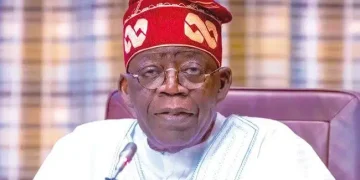
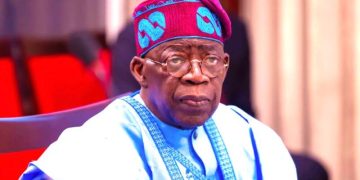
For the Alliance to come to heel, the analyst suggested, President Bola Tinubu and his South Africa’s counterpart Cyril Ramaphosa take the lead. “They should build a liaison with the AES for pan-Africanism,” he said.
The Afreximbank chief also resonated with the idea: ECOWAS and the AU should forget isolating the three countries.
For as long as Africa remains fragmented, the global North loves it, according to Ugbechie. Sustaining that therefore helps the resource-hungry corner the best of everything Africa has to offer—including AfCFTA.
Kale doesn’t see much of a problem, there though.