




























































WorldStage– The much anticipated implementation of African Continental Free Trade Area (AfCTA) will not depend on trade volumes among African countries but on the financing structures.
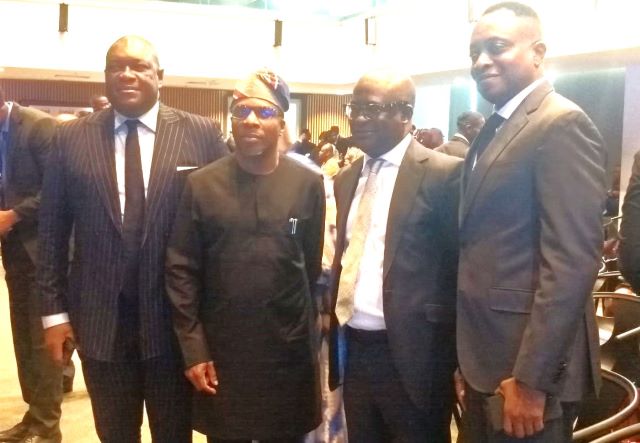
That was the projection of Yemi Kale, group chief economist and managing director, research and trade intelligence, African Export-Import Bank (Afreximbank) in his keynote speech at the Feb 17 Ecobank Nigeria Customers Forum 2026.
Analysts projecting the 2026 economic outlook for Nigeria in light of Trump 2.0 and other current global economic realignments, a cycle they believe will soon play out, have to think wider.
The tariff war the US is waging and all the geo-political tensions it generated don’t fit into what many consider a temporary downturn or correction.
It’s a global reset, according to Yemi Kale.
“What we are witnessing is a structural regime change in the way trade, investment, and corporate strategy are organised globally,” Kale said in his keynote speech at the Feb 17 Ecobank Nigeria Customers Forum 2026.
Before now, Kale noted, the world economy was riding on efficiency alone, making countries and their multinationals outsourcing labour and other production factors to max out costs.
But now, sectors like energy, semi-conductor, food security, and technology have become matters of national security, enjoying as many protectionist measures as possible, including tariffs.
“Governments are actively deploying subsidies, incentives, and regulations to rebuild local capacity in manufacturing, energy, and strategic technologies,” the former statistician-general said.
His delivery, Strengthening Regional Integration for Economic Transformation, focused on the strategy for the African Continental Free Trade Area (AfCTA) now at its implementation stage.
No fewer than 54 African countries have signed up for the continental trade treaty, their combined GDPs standing at $3 trillion. It also has the potential to raise intra-African trade to over 30 percent, from where it stands currently at 15 percent – 18 percent.
According to him, the success of AfCTA implementation will not depend on trade volumes among African countries but on the financing structures.
Kale said that is where Ecobank factors in.
A pan-African bank, Ecobank boasts a network of 1,300 branches across 36 sub-Saharan African countries. It spreads further with over 2000 ATs and more than13800 PoS machines. Ecobank Nigeria’s capital base has now crossed the N200- billion capital base.
Kale believes the bank and others in the industry have recapitalized enough to support intra-African trade when it fully takes effects.
The forum, its second edition, at the Ecobank Pan-African Centre, Lagos, targeted customers whom Bolaji Lawal, MD/regional executive, noted might be panicking about the economic outlook in the pre-election year in Nigeria.
“We look at what could appeal to them—trade, FX liquidity, interests rate, export proceeds, remittances,: Lawal said.
The forum had two panel discussions on Afcta, FX liquidity, foreign direct investment, portfolio investments, and others.
The panelists included Kale and other treasury and trade experts from Dangote Cement, CFAO Nigeria Ltd, Agro Trader Group, GZ Industries, Promasidor Nigeria Ltd, and Airtel Nigeria.