























































*Pushes bill to back automotive policy with legislation
*How end-of-life vehicle policy can generate about N150b annually
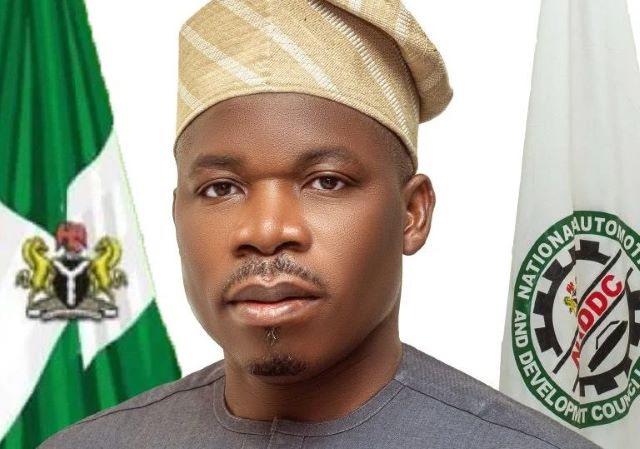
WorldStage– The National Automotive Design and Development Council (NADDC) has developed skills, strengthened local manufacturing capacity and advanced vehicle design initiatives in 2025, according to its Director-General, Mr Joseph Osanipin.
Osanipin, while speaking to newsmen in Abuja, said this was done in line with the council’s mandate to transform Nigeria’s automotive industry.
Osanipin said the council had focused strongly on capacity building as a core pillar of the National Automotive Industry Development Plan (NAIDP).
“Capacity building is one of the major pillars of our NAIDP, and we have done a lot in that area.
“We have carried out training on vehicle conversion from Premium Motor Spirit (PMS) and diesel to compressed natural gas, as well as training on electric vehicles,” he said.
He said NADDC had developed National Occupational Standards (NOS) for compressed natural gas retrofitting and electric vehicle(EV) maintenance.
According to the NADDC boss, plans are underway to introduce structured certification programmes by 2026.
“We are very concerned about certification. When our people are trained and they go out, what do they show? What defines their competencies? That is what we are going to achieve in 2026,” he said.
Osanipin said Nigerian Engineers and students had made progress in local vehicle design, including the development of tricycles, buses and electric campus buses in collaboration with 12 universities and private sector partners.
“We want a situation where our academics reflect what is happening in reality.
“If we succeed, and we are able to produce two or three good auto engineers in Nigeria, what that will do to the economy cannot be imagined,” he said.
According to the NADDC boss, the council is intensifying efforts to deepen local component manufacturing in the country.
He described components as the engine room of the automotive industry, saying that Nigeria spends more on vehicle parts annually than on vehicle imports.
“Components are where the real value is. If you look at what we spend on tyres, brake pads, filters and other parts every year, it is far more than what we spend importing vehicles,” he said.
Osanipin said the council was engaging stakeholders to address infrastructure, financing and policy challenges confronting local component manufacturers.
He said this was particularly crucial as Nigeria was positioning itself to benefit from the African Continental Free Trade Area (AfCFTA).
The director-general emphasised that sustained media engagement would be critical to driving public understanding and acceptance of reforms needed to transform the sector.
BILL TO BACK AUTOMOTIVE POLICY
Osanipin also said NADDCis intensifying efforts to secure legislative backing for the National Automotive Industry Development Plan (NAIDP).
He said to guarantee policy stability and attract long-term investment into Nigeria’s automotive sector.
Osanipin said that while the NAIDP currently exists as a policy framework, it must be strengthened through an Act of Parliament to give investors confidence.
He said automotive manufacturing required huge capital outlay as establishing a functional auto manufacturing plant could cost between three and four billion dollars.
According to Osanipin, this scale of investment demands legal certainty beyond policy pronouncements.
He said that converting the NAIDP from a policy to legislation would ensure continuity, protect investments, and shield the sector from policy reversals.
He further said that discussions were ongoing with relevant stakeholders, including lawmakers and industry players to ensure its realisation.
The NADDC boss said the proposed legislation would institutionalise incentives, local content development, and standards enforcement across the value chain.
Osanipin described the move as critical to Nigeria’s ambition of building a sustainable and globally competitive automotive industry
END-OF-LIFE VEHICLE POLICY
Osanipin also said Nigeria’s proposed End-of-Life Vehicle (ELV) policy is projected to generate about N150 billion annually for the economy.
He said this could be achieved through recycling, parts recovery and other value-chain activities.
Osanipin said that the policy, scheduled for implementation in 2026, would establish a structured system for the disposal and recycling of vehicles that have reached the end of their usable lifespan.
“In developed countries, when you buy a new vehicle, you make a payment at the point of registration towards the disposal of that vehicle at the end of its life.
“That is why you do not see abandoned vehicle parts on the roadside or at mechanic workshops,”he said.
Osanipin said the policy would require vehicle owners to make a modest contribution at registration to fund an ecosystem responsible for environmentally safe dismantling, recycling and recovery of vehicle components.
According to him, more than 85 per cent of parts from end-of-life vehicles remain reusable or recyclable,.
“Instead of abandoning vehicles by the roadside, people can turn them in and value can be created from them.
“The circular economy associated with this can run into billions of naira and the ELV framework will also stimulate the development of second-hand parts markets and create employment opportunities across the country,” he said.
The NADDC boss reiterated that while the policy offeres strong economic benefits, environmental protection remained the primary driver.
“The most important reason is the environment and the health of the people,” he said.
The director-general acknowledged that the policy might face resistance due to the introduction of small fees, but said sustained public enlightenment would be carried out.
“Sometimes, what is good for you, if you are not told, you may not be willing to accept it. Therefore, there is the need for media support in educating the public on the long-term benefits of the policy,” Osanipin said.





