
























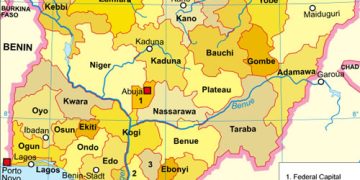





















WorldStage– Nigeria’s intervention in quashing the military putsch in Benin Republic on Sunday, December 7, 2025 has brought to the fore the Nigeria’s high stakes in the French former colony and her influence on democracy, security, and the geopolitics of West Africa.
President Tinubu’s order of swift military intervention in the Benin following the Sunday’s failed coup attempt has reignited a complex debate at the intersection of national security, constitutional legality, regional diplomacy, and democratic stability in West Africa. As the region battles a surge of coups, violent extremism, and weakening civilian institutions, Abuja’s decisive, though constitutionally contested, response underscores both the opportunities and dilemmas facing Africa’s most populous democracy.
West Africa has experienced nine coups or attempted coups since 2020, from Mali and Burkina Faso to Niger and now Benin. These uprisings are fuelled by a mix of jihadist insurgency, public disillusionment with civilian governments, and geopolitical realignment involving France, Russia, and increasingly China.
In Benin’s case, the attack led by Colonel Pascal Tigri was contained within hours, but the episode reflects the wider instability sweeping Francophone states where over 45% of citizens express declining trust in electoral democracy, according to Afrobarometer.
Nigeria’s rapid deployment, acting on two formal requests from Cotonou, reflects Abuja’s growing concern that the coup wave could spill over into its borders.
Nigerians’ reactions to Tinubu’s government intervention in the Benin coup attempt are largely divided. While some citizens and political figures commended the swift action as a defense of democracy, many others criticized the government for prioritizing foreign stability over severe domestic insecurity and economic hardship.
Proponents of the intervention generally agree that Nigeria, in its role as a regional leader and within the framework of the ECOWAS Protocol on Democracy and Good Governance, has a duty to stop the spread of military rule in West Africa.
Supporters, including human rights activist Deji Adeyanju (lawyer and rights activist), Adebamiwa Gbenga (public analyst and media publisher) and Prof. John Adikwu (academic don/political analyst) praised the decisive action as a clear signal against anti-democratic forces in the Sahel, noting it was a “proud moment” for those who value democracy.
Some other analysts and government officials argue that a stable Benin Republic, which shares a long border with Nigeria, is crucial for Nigeria’s own national security and that a slow response would have emboldened other coup plotters.
The Presidency also emphasized that the military acted lawfully at the formal request of the Beninese government, in compliance with the regional bloc’s guidelines.
However, the most prevalent reaction among a large segment of the Nigerian public, particularly on social media, was one of dismay and a sense of misplaced priorities. Critics highlighted the perceived hypocrisy of the Nigerian military acting swiftly in another country while banditry, kidnapping, and terrorism continue to ravage many states within Nigeria itself. The sentiment, “charity begins in neighbouring countries instead of her homes,” was widely expressed.
Many citizens again questioned the financial and military resources being expended abroad when they are desperately needed for domestic issues and the welfare of the Nigerian people given the current economic challenges, high inflation, and cost of living crisis in Nigeria.
While the intervention was invited, some users on social media drew parallels and questioned why Nigeria could intervene in a sovereign Benin but resist calls for external assistance (like from the US) to address its internal issues.
Overall, the intervention generated a significant public debate, balancing regional democratic ideals against the pressing need to address severe internal security and economic crises.
Commenting on the intervention, Adebamiwa stated: “Nigeria’s armed forces face immense pressure. Fighting insurgents, bandits, and separatist groups across at least six active security theatres, the military has neutralized thousands of terrorists over the past decade, though official figures vary and independent verification remains difficult in conflict zones. Unlike Benin’s coupists, terrorists inside Nigeria operate from dispersed forest camps, mixing with civilian populations and employing guerrilla tactics specifically designed to deter conventional airstrikes.
“This structural difference explains why the precision strikes witnessed in Benin cannot simply be replicated in Niger, Chad, or Nigeria’s internal battlegrounds. The challenge is compounded by the sensitive allegiances of communities along the borders, where cross-border ethnic ties sometimes complicate enforcement efforts and fuel political suspicion.”
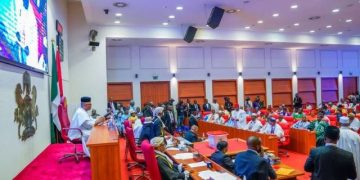
He recalls that under Section 5(4)(b) of Nigeria’s 1999 Constitution, the President must obtain Senate approval before deploying troops on combat duty outside national borders, except in immediate defence of Nigeria.
Critics argue that President Bola Tinubu acted unlawfully by ordering an air and ground response without prior legislative consent.
Supporters counter that the urgency of the coup attempt justified prompt action and that Benin’s formal request for help aligns with ECOWAS protocols on collective security.
The controversy highlights an uncomfortable truth, constitutional safeguards often collide with real-time security demands, particularly when regional stability and Nigeria’s own national interests are at stake.
Tinubu’s supporters frame his move as statesmanship, opponents call it geopolitics disguised as democratic defense.
Beyond the military dimension lies a deeper political calculation. Nigeria’s action reassures partners like France and ECOWAS that Abuja remains the region’s democratic anchor, especially after Niger, Mali, and Burkina Faso transitioned toward military rule and Russian influence.
Supporters are also of the view that President Tinubu, with decades-long credentials as a pro-democracy activist, seeks to position Nigeria as West Africa’s “Democratic Defender-in-Chief.” Yet sceptics argue that global optics play a role, suggesting the intervention serves multiple goals, reinforcing Nigeria’s regional dominance, securing international backers, and sending a message to domestic actors who might underestimate the military’s reach.
As one analyst, Prof. Adikwu, puts it, “This is as much about democracy as it is about geopolitical chess.”
The failed coup in Benin is a reminder that democracy without economic justice cannot endure. In Francophone West Africa, nearly 40% of the population lives in poverty, youth unemployment exceeds 30%, and weak public services fuel resentment against civilian administrations. Until governments provide jobs, education, security, and credible elections, military overreach will continue to tempt dissatisfied populations.
Nigeria’s intervention may have preserved Benin’s constitutional order for now, but long-term stability depends on broader governance reforms across the region, says Adikwu.
In his own opinion, Adebamiwa says “West Africa must choose between a future defined by recurring coups or one anchored in accountable leadership, shared prosperity, and institutions that work for all.”
Ultimately, democracy survives not by force alone, but by delivering dignity, opportunity, and justice to the people it claims to serve, he asserted





