






























By Segun Otokiti
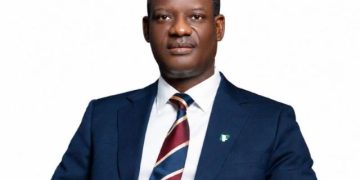
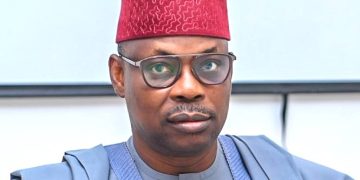
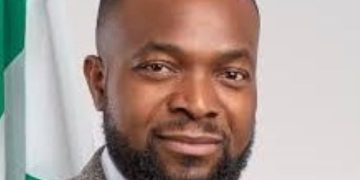
The integrity of Nigeria’s public office is once again being tested with the emergence of a certificate forgery controversy surrounding Chief Geoffrey Uche Nnaji, Minister of Innovation, Science, and Technology.
Reports from early October 2025 allege that the minister submitted forged university and National Youth Service Corps (NYSC) certificates for his 2023 ministerial appointment. The allegations are based on a two-year investigation by an online news medium, Premium Times, and backed by recent official statements from the University of Nigeria, Nsukka (UNN), and the NYSC.
Key allegations include forged university degree, with Premium Times and other outlets reporting that Nnaji claimed to have graduated from the University of Nigeria, Nsukka (UNN) in 1985 with a Bachelor of Science degree, but that the university’s Vice-Chancellor, Simon Ortuanya, stated in an October 2, 2025 letter that while Nnaji was admitted in 198, he never completed his studies and was never issued a certificate. This was a reversal of an earlier position by a former registrar in December 2023, which the university has since recanted.
Another allegation is that Nnaji’s National Youth Service Corps (NYSC) certificate revealed several inconsistencies, ranging from signature on the certificate said to be that of an NYSC Director-General who was not appointed until 1988, two years after Nnaji’s supposed 1986 service year; that the NYSC also reportedly told Premium Times it has no record of the certificate; and that a court filing from a lawsuit Nnaji initiated against UNN and others in September 2025 reportedly includes his admission that the university never issued him a degree certificate. The lawsuit was seen by critics as an attempt to block the release of his academic records.
But Nnaji’s spokesperson, Robert Ngwu, dismissed the forgery claims as politically motivated. He insisted that Nnaji is a legitimate UNN alumnus who graduated in 1985. Ngwu alleged that the controversy was orchestrated by Nnaji’s political rivals, including the Enugu State Governor, Peter Mbah. He stated that a Federal High Court order was issued in September 2025 restraining UNN from tampering with Nnaji’s academic records and compelling the release of his transcript.
Following reports and the alleged court admission, a civil society group, Global Gender Safety and Moral Development (GGSMD), called for Nnaji’s immediate resignation. On October 6, 2025, Nnaji failed to appear at a press conference his office had called to address the allegations, sending his spokesperson instead.
The political fallout has been immediate. Opposition parties, civil society organizations, and public commentators have called for Nnaji’s suspension pending an independent investigation, framing the case as a litmus test for Nigeria’s anti-corruption credentials. But in all of these, the minister has insisted the scandal is politically motivated, alleging that elements within Enugu State, particularly the Governor and UNN leadership aligned with the PDP, are orchestrating a campaign to discredit him. This tug-of-war highlights the intersection of politics, accountability, and institutional credibility in Nigeria’s governance landscape.
Legally, Nnaji has sought recourse through the Federal High Court in Abuja, filing Suit FHC/ABJ/CS/1909/2025 to compel UNN to release his academic transcript and prevent alleged tampering. This step reflects the judiciary’s role as an arbiter in disputes that extend across both public accountability and individual rights, underscoring the importance of procedural correctness over public speculation.
Experts and observers note that the controversy is indicative of wider systemic weaknesses. The security vetting process, which cleared Nnaji despite NYSC alerts, raises questions about procedural rigor within Nigeria’s public service. Moreover, media investigations, whistleblower disclosures, and historical precedents from the Kemi Adeosun NYSC case to instances of JAMB certificate fraud illustrate that elite misconduct, whether real or alleged, consistently challenges public faith in governance.
Public reaction has been a mixture of outrage and theatrical politics. Social media platforms have amplified calls for resignation and prosecution, often compared with counter-narratives defending the minister. Civil society organizations emphasize that the case is not just about one individual but also about establishing a standard for vetting public officials, safeguarding institutional credibility, and demonstrating that deceit cannot be tolerated in positions of national responsibility.
Multiple Nigerian ministers have been involved in certificate forgery allegations at one time or the other. In the past and present, these controversies often lead to public outcry, calls for resignation, and sometimes, legal action.
Prominent examples of ministers and public officials, aside Uche Nnaji, that have been involved in certificate forgery allegations are the late former President Muhammadu Buhari, President Bola Ahmed Tinubu, Kemi Adeosun, Adebayo Shittu, Salisu Buhari, Stella Oduah and Dino Melaye, among others.
In 2018, Premium Times reported that Adeosun had a forged NYSC exemption certificate. She had acquired the certificate after studying abroad and failed to participate in the mandatory national service. Adeosun later resigned from her position in September 2018, citing the controversy and her ignorance of the law regarding the NYSC certificate.
Adebayo Shittu, Minister of Communications in the administration of the late President Muhammadu Buhari was in October 2018 reported not to have participated in the mandatory one-year NYSC scheme. Shittu defended his non-participation by stating that serving as a state lawmaker after his graduation was equivalent to national service. He completed his ministerial term without being reappointed in Buhari’s second term.
Also, President Tinubu has during his political career faced scrutiny over his educational background, with a court dismissing an application to investigate his certificate in 2018.
There’s again the case of Salisu Buhari who in 1999 after being elected Speaker of the House of Representatives was forced to resign when he was found to have forged his university certificate. There’s also the case of Stella Oduah, a former Minister of Aviation under the former President Goodluck Jonathan’s administration, who faced allegations regarding her National Youth Service. Then Dino Melaye, the former senator was accused of lying about degrees he claimed to have obtained from Harvard University and the Ahmadu Bello University.
Other high-profile certificate forgery allegations are not new in Nigerian politics. It’s a recurring problem in Nigeria’s political landscape, often sparking debate about political integrity and vetting processes. But the Nnaji certificate controversy underscores a fundamental challenge in Nigerian governance, balancing the need for accountability with protection against politically motivated attacks.
The unfolding court proceedings, presidential decisions on ministerial tenure, and media scrutiny will determine not only Nnaji’s fate but also Nigeria’s capacity to enforce integrity standards, protect institutional processes, and maintain public trust in governance. In an era where the credibility of public office is fragile, the stakes extend far beyond the individual, touching the nation’s collective commitment to truth, law, and fairness.
In recent years, the government has intensified efforts to crack down on certificate forgery, especially those from “degree mills” in neighboring countries. In 2025, the government ordered the dismissal of civil servants with counterfeit degrees and announced measures to sanitize the system.



