









































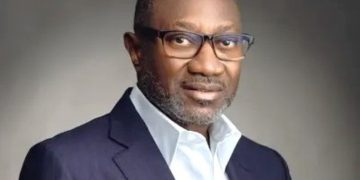



WorldStage Newsonline– The Minister of Foreign Affairs, Amb. Yusuf Tuggar and Mr Lateef Fagbemi, the Attorney General of the Federation (AGF) and Minister of Justice, have reiterated their commitment to positioning Nigeria as a principled, capable, and forward-looking actor in the evolving global digital diplomacy.
The ministers disclosed this during the inauguration of the two-day high-level seminar titled: “Anticipatory, cyber and digital diplomacy” organised by the Ministry of Foreign Affairs on Wednesday in Abuja.
The seminar, which holds from Sept. 2 to 3, is an initiative designed to strengthen Nigeria’s foreign policy architecture and equip diplomats with the necessary tools to confront challenges of the emerging digital age.
Tuggar said, “We are living through a historic transformation, a convergence of disruptive technologies, shifting geopolitical alignments, and deepening digital interdependence is redefining the foundations of diplomacy.
“From Artificial Intelligence and quantum computing, to the geopolitics of data and militarisation of the cyberspace, the very nature of statecraft is being rewritten right before our eyes.
“Nigeria must not be a mere bystander. We must act with purpose to position ourselves as a principled, capable and forward-looking actor in the evolving global digital order.”
The minister explained that such required embedding anticipatory cyber and digital diplomacy into the core of Nigeria’s foreign service, national security architecture and our multilateral engagements, to bolster ability to detect early warning signals.
Also, to foresee systemic shocks and plan strategically for the future, whether in the global race for critical minerals, regulation of artificial intelligence or the restructuring of global supply chains.
He stressed the need for diplomats to be trained on cyber diplomacy before they unfold, saying Nigerian diaspora though rich in expertise and global networks should be integrated into the cyber and digital diplomacy strategies.
Similarly, Fagbemi said that punitive measures through legal framework would be put in place by stakeholders in the fights against cybercrime, in the bid to prevent future occurrences.
According to him, such is not a proposal by the Ministry of Foreign Affairs, it is designed as a part of the initiatives to strengthen Nigeria’s foreign policy and balancing the interplay between digital sovereignty and interdependence.
Fagbemi said, “The rise of a globally interconnected digital landscape presents both unprecedented opportunities and complex challenges rendering traditional diplomatic methods insufficient.
“As Nigeria’s Chief Law Officer, the Federal Ministry of Justice is positioned to address this new reality with strategies that are proactive, technologically astute and ethically grounded.
“Digital diplomacy is a proactive strategy that moves beyond reacting to crisis, it involves developing the foresight to identify and address potential challenges before they escalate.
“This requires forward-looking legal and policy framework that can effectively manage impact of rapidly emerging technologies. Also policy frameworks that addresses legal, security and ethical issues, such as data governance, artificial intelligence and cyber security.”
The British High Commissioner to Nigeria, Richard Montgomery, disclosed that the United Kingdom’s cyber diplomacy with Nigeria is framed with an enlarged or wider Security and Defence Partnership (SDP).
He mentioned that both United Kingdom and Nigeria had signed new Memorandum of Understanding (MOU) on cyber security that has enabled a very significant uptick in collaboration between the UK and Nigeria.
“Now, in combination, we have agreed to share lessons and collaborate in threat hunting that includes building cyber threat intelligence capability, identifying critical national infrastructure and operations and response planning among other things.
“While Nigeria make its own sovereign decisions on cyber architecture, we are happy to share lessons on the British Foreign Office and the way we work with our wider agencies to promote international cyber agreements and governance,” Montgomery said.
In her keynote address, Prof. Nnenna Ifeanyi-Ajufo, Professor of Law and Technology, Leeds Law School, Leeds Becket University, commended the initiatives on positioning Nigeria for the future, harnessing anticipatory cyber and digital diplomacy for global influence and national resilience.
According to her, it is apt to have been organised at a time the intersection of diplomacy, technology and national security is reshaping, not only global relations, but also the diplomacy of nations.
“The reality is that nations that will thrive and not just survive in the 21st century are those that adapt swiftly, think ahead and engage globally through both traditional and innovative diplomatic tools. Nigeria’s Foreign Affairs Ministry stands at a pivotal moment.
“As Africa’s largest economy and one of its fastest growing digital hubs, the choices we make today in anticipatory cyber and digital diplomacy will determine the strength of our global influence and the resilience of our nation in the year ahead,” Ifeanyi-Ajufo said.
The event was attended by crème-de-la-crème from across the diplomatic community, members of the military and para-military, as well as stakeholders from the Ministry Foreign Affairs and Ministry of Justice.