












































WorldStage Newsonline– The Federal Government of Nigeria has said that it will partner with the United Nations Industrial Development Organisations (UNIDO) to promote sustainable plastic value chain through circular economy practices.
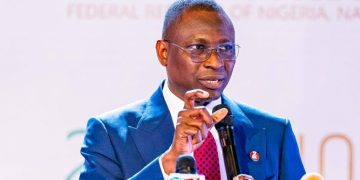
Olubunmi Olusanya, Director, Pollution Control and Environmental Health in the Ministry of Environment, communicated this at a seminar on “Plastic Circular Economy with Case Studies” on Thursday in Abuja.
The plastic circular economy with case studies is under the UNDO project on “Promoting Sustainable Plastic Value Chains through Circular Economy Practices.”
Olusanya, who was represented by Mr Usman Abdullahi in the ministry, expressed concern over the increase of plastic wastes in the environment from different sources such as packaging and storage of food, drinks and beverages.
Olusanya said plastic wastes littered the environment blocking drainages; thereby, resulting to flooding and release of toxic gases when burnt or incinerated with devastating effects on human health and the environment.
“It is necessary to understudy what other countries are doing in terms of circular economy practices in plastics management in order to adopt areas that can be applicable to our local and national scenarios.’’
Mr Jean Bakole, Regional Director of UNIDO Nigeria Regional Hub, said that the consumption of plastics in Nigeria had risen from 500,000 metric tons to 1.2 million annually.
Bakole said that if the problem was not tackled and effectively managed, it would be big problem not only for Nigeria but for neighbouring countries.
He explained that UNIDO’s projects on promoting sustainable plastic value chain through circular economy practices was to contribute to Nigeria’s inclusive and sustainable industrial development be reducing leakage of plastics on the environment.
According to him, the project is to be integrated into effective implementation of plastic waste management and strengthening plastic value chain.
“It is expected to demonstrate the benefit of adopting circular economy practices and resource efficient production for plastic value chains in Nigeria,’’ he said.
Mr Dangiwa Ewa, Assistant Director in the ministry of environment, said the National Policy on Waste Management in Nigeria goals were to reduce plastic waste generation in the environment by 50 per cent and its baseline figure by 2025.
“It is also to reduce global warning and greenhouse effects associated with plastic production through usage to its disposal by 60 per cent by 2030.
“Some of the objectives are to make Nigeria’s ecosystem and human settlements clean, plastic litter free and sustainable.
“Ensure sustainable consumption and production pattern that recognise the environmental guiding principles, waste management hierarchy and support the setting of plastic circular economy in Nigeria,” he said.
Oh his part, Emem Umana, Japan Embassy Representative, commended UNIDO for the progress of the project since its implementation in 2022..
Umana, who identified Japan as a small country with 40 per cent the size of Nigeria, said it was a maritime nation with more than 4000 islands and its coast side of 35 times longer than Nigeria.
“The government of Japan considers the problem of maritime plastics as a very serious one and is pleased to be able to implement this project in Nigeria.
“This is because Japan and Nigeria are very far apart in terms of distance but are connected by sea; therefore, your concern is our concern,” he said.




