






























































WorldStage– The Federal Government of Nigeria has urged African nations to collaborate in bridging the telecommunication gap, revealing that nearly one billion people on the continent lack mobile internet access.
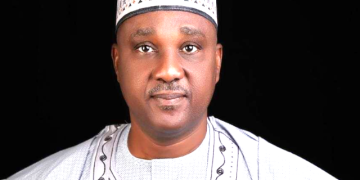
The Permanent Secretary, Ministry of Communications and Digital Economy, Nadungu Gagare, said this on Thursday in Abuja.
Gagare, who was represented by Mr Ahmed Alsukun, a Director in his office, spoke at the 7th Special Session of the African Telecommunications Union (ATU) Administrative Council, a regional telecom meeting in Abuja.
“We believe that regional co-operation is essential if Africa is to build a strong, inclusive and innovative digital economy to empower our growing youth population.
“Working together, we can expand connectivity, improve digital infrastructure, promote skills, strengthen cyber security, protect data and create opportunities for our people,” he said
He said that a united Africa would have the greatest influence in international decision-making and be better placed to protect continental interests.
In her remarks, the Chairperson of the ATU Administrative Council, Ms Nonkqubela Jordan-Dyani, said building economic resilience must become a deliberate regional strategy through ICT.
Jordan-Dyani, who is also the Director-General of South Africa’s communications department, urged member states to prioritise Digital Public Infrastructure (DPI) to drive continental integration.
“The DPI, which includes digital identity and electronic payment systems, acts as a catalyst to enable secure interactions across the region.
“It is our collective commitment to continue to build our organisation and maximise its effectiveness to shape the digital future of Africa and drive our development,” she said.
She commended Nigeria for taking the lead in implementing digital public systems, noting that developing nations must design public services that deliver maximum value.
Earlier, the Secretary-General of the ATU, Mr John Omo, said that the special session formed a critical part of statutory preparations for the conference.
Omo said that the union could only exercise its authority effectively when the proposals placed before it were legally sound, credible and fully implemented.
“The progress recorded during this period has been made possible through collective effort, and we now have the sole responsibility to bring this work to a conclusion,” he said.
The News Agency of Nigeria (NAN) reports that the event brought together African telecommunications regulators, policymakers and government officials to review the ATU’s work.
The two-day gathering will also agree on reforms and develop common strategies to shape Africa’s digital future before they are formally adopted.