




























WorldStage Newsonline– The Federal Government of Nigeria said it is making giant strides in the development of National Freight Offices in line with ECOWAS Protocol at the nation’s border towns to regulate borders and International Road Corridors.
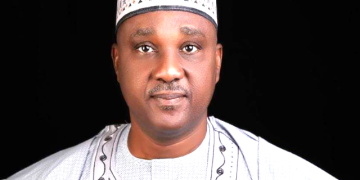
The Honourable Minister Of Transportation, Rt. Honourable Rotimi Ameachi who disclosed this today at the virtual 5th WorldStage Economic Summit (2020) with the theme: “New Reality: Consolidating Economic Diversification’’, said efforts were also being made to put in place proper regulations in the road subsector to provide an enabling and competitive environment for Road Transport Operators.
The Minister who was represented by Mrs Ilori Mercy Olanike, Director Transport Planning and Coordination, said, “I am glad to inform you that Nigerian Government is making tremendous progress in changing the trajectory of the transportation sector in Nigeria from unproductive to a productive and competitive one.”
He identified the critical areas central to actualizing economic diversification in Nigeria as massive investment in transportation infrastructure.
“Transportation is crosscutting and permeates many economic sectors, facilitates international trades, supports food security, delivers energy and enables industrial and infrastructural development. It generates employment and helps create prosperity, thereby fulfilling critical economic as well as social functions,” he said.
“In the computation of the global competitiveness index, the World Economic Forum (WEF) admits that transportation infrastructure are not only key pillars but also basic requirements upon which other pillars must stand. Adequate transportation infrastructure could trigger a country’s economic progress by diversifying production, trade and export. It is important to note that transportation Infrastructure ranking usually have low economic diversification index.”
Specifically, he said the Government has embarked on implementation of multi-modal transport system and revitalization program as well as huge transport infrastructure investment across the Country.

“These interventions by the Federal Ministry of Transportation include massive construction of roads, rail lines with access roads, inland water ports, seaports, new terminals in existing ports, dry ports with access to rail and roads, Inland Container Depots/Freights all geared towards building a modern and efficient transportation system that guarantees sustainable socio-economic development of Nigeria.
“Also of relevance is the development of adequate manpower to ensure efficiency in the Transportation Sector.”
In the rail Subsector, he said, the rehabilitation of the Narrow Gauge line and construction of the Standard Gauge lines along, Abuja- Kaduna, Lagos-Ibadan, Warri-Itakpe recently commissioned were efforts made to provide revenue for the Government and provide employment opportunities to the teeming Nigerian Youths.
In the Maritime Subsector, he said government had adopted Public Private Partnership approach in construction of deep seaports, River Ports and Inland Container Dry Ports which has potentials of creating direct and indirect employments stimulating economic activities along the various transport corridors in the country that will impact on millions of lives in Nigeria.
“The transportation Sector is blessed with myriad of potentials and opportunities for development,” he said.
“The current Administration will not leave any stone unturned in its efforts to transform the Sector for the benefits of Nigerian Citizens.”
He described economic diversification as a process of broadening the range of economic activities both in the production and distribution of goods and services.
“It entails stabilization of economies by diversifying their economic base. A diversified economy has diverse revenue streams that provide nations with the Security and reliability they need, ensuring that if One economic revenue stream fails, the nation relies on the several other options for revenue generation. Economic diversification could be explained from the perspective of sustainable development to ensure long-term stability of the economy. Through this means, it has the capacity to fundamentally strengthen the adaptive capacity of an economy and safeguard its long-term prospects, in the face of depletion of the basic natural resources and the vagaries of economic fluctuations under the pressure of competition from globalization,” he said.
“One of the problems that bedevil developing economies is the struggle to escape from the clutches of a dominant monolithic sector economy. Pre-independence, the Nigerian Economy was dominantly agrarian. As the nation prepared to launch the economy, Oil was discovered in marketable quantity in the late 50s and by 1970, Nigeria had started full exploration. Instead of diversifying the economy, the economy rather shifted from agricultural to oil sector. Consequently, the non-oil sectors such as service, manufacturing, extractive, construction and transportation began to suffer from neglect.”
He said the choice of the WorldStage Economic Summit theme “New Reality: Consolidationg Economic Diversification” affirmed the commitment of the Organisers to proffer innovative solutions that will help fast-track diversification of Nigeria’s economy.
“I am optimistic that the team of experts and participants assembled for this Summit will come up with actionable recommendations that will address a whole lot of contemporary issues hindering the efforts of Government in diversification of Nigeria’s economy,” he said.
He appealed to all the Participants to participate fully in the program as well as take advantage of this unique opportunity to make robust contributions that will enhance the sustainable socio-economic development of Nigeria.