




















































*Laments 0.27hp per hectare mechanisation, pushes new policy as road map
WorldStage– The Federal Ministry of Agriculture and Food Security (FMAFS) has lamented that the nation’s mechanisation rate stands at a mere 0.27 horsepower (hp) per hectare (ha), a figure that pales in comparison to other nations and falls drastically short of the Food and Agriculture Organisation recommendation of 1.5 hp/ha
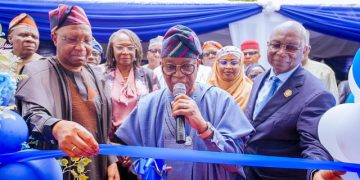
However, the Permanent Secretary, FMAFS, Dr Marcus Ogunbiyi, said at a 2-day Validation Workshop of the policy on Tuesday in Ilorin that the National Policy on Agricultural Mechanisation would be a comprehensive road-map for transforming Nigeria’s agricultural sector, when approved.
Ogunbiyi said that the meeting was to chart sustainable pathways for agricultural mechanisation in Nigeria.
He said that the stakeholders were gathered to validate a policy document that was poised to become a cornerstone of Nigeria’s agricultural renaissance.
Ogunbiyi, represented by the Director, Federal Department of Agricultural Mechanisation, Mr Sule Majeed, said the document was a product of extensive, all-inclusive consultations and expert opinions from across the nation.
The permanent secretary said that agricultural mechanisation in Nigeria was currently in a state of immense potential constraints and significant challenges.
”Over 78 percent of farm power is still provided by human muscle, followed by 15 percent from animals, leaving a meagre 7 percent from mechanical sources.
”This reliance on crude, labour intensive methods has resulted in decreased production output, low yields and high post-harvest losses.
“It has also resulted in a sector struggling to keep pace with our growing population and economic aspirations,” he said.
Ogunbiyi noted that the vision of the policy was to transition Nigerian agriculture from subsistence to a modern, commercial and competitive enterprise.
”The policy is anchored on the principles of sustainability, inclusivity and innovation.
”It is our chance to reduce drudgery, create wealth, ensure food security and make agriculture a profession of pride and profit for millions of Nigerians,” he said.
The Executive Director, National Centre for Agricultural Mechanisation (NCAM), Mr. Abdulgafar Kamal, said the policy was a roadmap to reposition mechanisation as a central driver of food security, youth employment and sustainable development.
”Agricultural mechanisation remains a cornerstone for transforming Nigeria’s agriculture.
“Without it, our aspirations for food security, agro-industrialisation and sustainable rural livelihoods will remain limited.
”This validation meeting provides the opportunity to review, refine and finalise a policy framework that will shape the future of agricultural mechanisation in Nigeria for years to come.
”This effort will not only empower our farmers but also reduce drudgery, enhance productivity and ensure Nigeria’s agricultural sector is both resilient and sustainable.
”The policy, once validated and adopted, will serve as a roadmap to improve access to mechanisation services, encourage local manufacturing and assembly of agricultural machinery.
”It will also encourage skills development, youth employment and ensure that mechanisation is sustainable and environmental friendly,” he said.
Other stakeholders present include commissioners of agriculture from different states, Nigeria Customs Services, Standard Organisation of Nigeria, All Farmers Association of Nigeria, among others.



