












































WoldStage Newsonline– The Federal Ministry of Health and Social Welfare has called for stronger coordination and optimised resource utilisation to tackle Nigeria’s escalating malnutrition crisis and address the country’s severe nutritional challenges.
This is coming as reports show that more than 14 million children are stunted, and approximately 3 million are wasted, underscoring the urgent need for comprehensive nutrition interventions
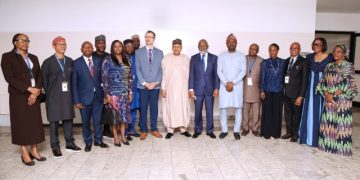
Mrs Ladidi Bako-Aiyegbusi, Director and Head of the Nutrition Department in the ministry, made the call in Abuja on Saturday during the three-day 8th Annual Conference of the Association of Nigerian Health Journalists (ANHeJ).
The theme of the conference is “Sector-Wide Approach Effectiveness in Addressing Poor Health Outcomes: The Role of the Media.”
Bako-Aiyegbusi, represented by Mrs Adenike Bayode, Baby Friendly Initiative Desk Officer in the ministry’s Nutrition Department, explained that Nigeria had continued to battle a malnutrition crisis, with millions of children suffering from stunting, wasting, and micronutrient deficiencies.
He said, “To address these issues, the ministry has rolled out the National Strategic Plan of Action for Nutrition, a framework that focuses on maternal nutrition, infant and young child feeding, micronutrient deficiencies, and the management of Severe Acute Malnutrition (SAM).”
In spite of the plan’s ambitious goals, she acknowledged that key challenges remained, including weak coordination among various stakeholders, limited political will, and inadequate funding.
“Collaboration is at the heart of overcoming these challenges. Joint learning fosters teamwork, which in turn helps optimise the use of resources and ensures that our interventions are more effective,” Bako-Aiyegbusi said.
She emphasised the importance of increasing the visibility of nutrition issues through subsidised spaces and slots, which are crucial for raising awareness and monitoring progress.
According to her, with coordinated efforts across government agencies, non-governmental organisations, and local communities, Nigeria aims to make significant strides in tackling its nutrition challenges. We must unite efforts across all sectors.
By working together, she said, stakeholders could provide mothers with the tools they needed to ensure healthier pregnancies and children, reduced malnutrition, and ultimately improved the quality of life for Nigerians.
“The policy also highlights essential actions such as promoting exclusive breastfeeding, improving maternal nutrition, and ensuring access to vital micronutrients like Vitamin A, iron, and zinc.
“However, securing sustainable funding and political commitment remains critical to scaling these interventions.”
Bako-Aiyegbusi called for better communication and social mobilisation, stressing the need to engage communities, traditional leaders, and religious bodies to drive behavioural changes and improve infant and young child feeding practices.
“In spite of the challenges, the media plays a crucial role as the bridge between the government and citizens.
“Through mass media, we can sensitise society to the importance of timely health care delivery and proper nutrition.
“As Nigeria faces both under nutrition and over nutrition, improved coordination, resource mobilisation, and community engagement remain essential,” Bako-Aiyegbusi said.
She underscored that only through sustained collaboration could Nigeria overcome its malnutrition crisis and ensured a healthier future for its citizens.



