








































By Steve Omolale
There seems to be an unbreakable covenant between Nigeria and darkness. Otherwise, how would one justify the darkness enveloping the country every night since as long as one can remember. The country had been wallowing in embarrassing darkness prior to 1999, when the military with all its braggadocio, could not even solve the intractable power supply challenges.
However, when former President Olusegun Obasanjo appointed his friend and the Cicero of Esa-Oke, the late Chief Bola Ige, Minister of Mines and Power in May 1999, our hopes for a stable power supply climbed to high heavens. But with all his magic wands, Ige could not do much before leaving that portfolio on January 3, 2000.
Since then, what all the succeeding ministers of power were able to achieve was to throw Nigeria into deeper darkness, thereby killing many businesses, among others.
The efforts of the former ministers after Ige, including the late Olusegun Agagu, Liyel Imoke, Saleh Mamman, Chinedu Nebo, Bart Nnaji, Rilwanu Babalola and Babatunde Fashola, among others did not impress Nigerians in anyway.
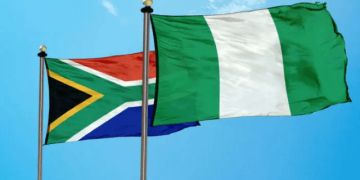
A comparative analysis of electricity generation and operating capacity between Nigeria and South Africa, two of the strongest economies in Africa, is like comparing light with darkness. Whereas Nigeria with a population of approximately 240 million people generates between 3,500 Megawatts (MW) and 5,500 MW, despite an installed capacity of 13,000 MW-14,000 MW, South Africa with a population of about 63 million people generates around 32,246 MW with an installed capacity of 45,521 MW – 58,095 MW
In fact, the highest megawatts ever generated since the advent of civilian rule in Nigeria is about 7,000, achieved by Fashola as the minister of power, works and housing under the administration of the late former President Muhammadu Buhari.
Electricity supply in Nigeria and grid collapses are now like Siamese twins, which none of the ministers of power, past and present, has been able to separate. Each of the ministers would have taken a seat on the table of infamy had all the other variables that could guaranty stable power supply been put in place.
The enormity of the challenges the country is facing in the power sector was succinctly put on October 20, 2020, when the then Senate Committee on Power confirmed that it will take Nigeria 40 years of continuous funding to have a stable power supply.
In 2024 alone, the country officially experienced over 12 grid collapses! Same last year. The grid also, as usual, experienced collapses on January 23 and 27, this year, when generation reportedly dropped to zero megawatts.
As at early this month, it was reported that generation also dropped to between 3,940 MW and 4,384 MW.
The collapses were attributed to technical and operational deficiencies, including weak infrastructure and the obnoxious activities of vandals.
Following the launch of the Roadmap for Power Sector Reforms in August 2010, former President Goodluck Jonathan’s administration officially privatised the power sector in 2013. Nigerians leapt for joy, thinking the best had come. But they were soon disappointed.
Under the reforms, the government unbundled the then Power Holding Company of Nigeria (PHCN) into 15 successor companies – 10 generation companies (GenCos) and five distribution companies (DisCos) – and sold them to private investors in November 2013. However, these private investors did not bring the expected relief to Nigerians, as they did not invest enough in generation and distribution equipment. In virtually all the states, the governors and some private individuals keep buying and donating transformers and other electrical items to communities to boost power distribution.
We continue living in darkness since then despite the privatisation, forcing even the Presidential Villa to opt for solar power, an indication of its frustration with the system.
Not a few people blamed Jonathan for the haphazard priviatisation of the power sector.
Although all the past ministers of power made concerted but futile efforts to write their names in gold, even with the challenges, the incumbent Minister of Power, Adebayo Adelabu, who was appointed on August 21, 2023, appears to be doing most of the things Nigerians at the receiving end of the corruption and inefficiency in the power sector have been craving for. He is laying the long-term foundation for a complete transformation of the jinxed power sector. The challenges are, however, enormous.
Challenges, such as the N4 trillion outstanding subsidies, rampant vandalism, electricity theft, the refusal of many citizens to pay their bills, poor investment in distribution infrastructure by some operators and resistance to sector commercialisation by electricity consumers are crippling the sector.
These challenges notwithstanding and although it is not yet Uhuru, activities of the Federal Ministry of Power in the last two years, during which it has focussed on sector reforms, energy access and infrastructure upgrades under its National Integrated Electricity Policy (NIEP) and the Integrated Resource Plan (IRP), which align with the Electricity Act 2023, have raised the hopes of stable power supply for ordinary Nigerians.
The ministry under Adelabu says it has embarked on the implementation of cost-effective tariffs for Band A customers, thereby raising revenue; transferred regulatory oversight to 11 states, including Enugu, Ekiti, Ondo, Ogun, Imo, Oyo, Edo, Kogi, Lagos, Niger and Plateau; increased generation to 6,003 MW in March 2025, while inaugurating off-grid and interconnected solar mini-grid projects across several states and added over 70 transformers between 2024 and last year with its Internally-Generated Revenue (IGR), while the World Bank and the African Development Bank (AfDB) added over 12,000 MVA transformation capacity to the national grid.
While these and other achievements are commendable, Nigerians are waiting with bated breath for them to positively impact the power sector and compliment the economic reforms of the present administration.
*Omolale, a seasoned journalist, writes from Lagos.





