










































By Abiodun Folarin
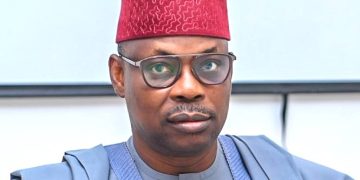
WorldStage– The Director-General of the Budget Office of the Federation, Mr. Tanimu Yakubu, has dismissed claims that the ₦12.83 trillion Service-Wide Vote (SWV) in the 2026 Appropriation Act is a hidden slush fund, insisting that the allocation represents statutory government obligations rather than discretionary funds available to the Presidency.
In a statement issued on Wednesday in Abuja, Yakubu explained that the Service-Wide Vote is a budget classification mechanism used to accommodate expenditures that cut across several Ministries, Departments and Agencies (MDAs), adding that it does not constitute cash held in reserve.
He stressed that an appropriation merely grants spending authority and should not be mistaken for immediately available funds.
“An appropriation is authority, not cash,” Yakubu said, noting that all releases remain subject to revenue availability, treasury controls, procurement regulations and legislative oversight.
Providing a breakdown of the allocation, the Budget Office said ₦2.18 trillion is earmarked for personnel-related obligations, including wage adjustments, salary arrears, pensions, gratuities, death benefits and insurance.
It added that ₦1.52 trillion is allocated for other recurrent expenditures covering military and police operations, national immunisation programmes, the Pension Protection Fund and social investment initiatives.
The remaining ₦9.12 trillion is designated for capital expenditure, largely to settle legacy liabilities, finance donor-supported projects and provide counterpart funding for critical health sector interventions.
Yakubu disclosed that ₦995.28 billion has been provided for salary and wage-related adjustments, while ₦882.79 billion is reserved for pension obligations.
“To describe these provisions as discretionary wealth is to erase the workers, retirees and bereaved families to whom the obligations are owed,” he stated.
The Budget Office further revealed that the capital component includes about ₦4.8 trillion in outstanding commitments carried over from the 2024 and 2025 budgets, ₦1.367 trillion for donor-funded projects and ₦482.76 billion as Nigeria’s counterpart funding for health programmes supported by the United States.
According to Yakubu, these are legally binding obligations rather than discretionary expenditures.
He also noted that the Service-Wide Vote increased from ₦9.305 trillion in the 2025 budget to ₦12.827 trillion in 2026, representing a 37.8 per cent increase.
The increase, he explained, reflects expanded government commitments arising from pension liabilities, wage settlements, security operations and health sector financing, rather than the creation of a discretionary spending pool.
Yakubu maintained that while public scrutiny of government expenditure is necessary, such scrutiny should be based on accurate information.
“The ₦12.83 trillion figure is the sum of named obligations. It is not a secret reserve. It is not cash held by the Presidency. Its size reflects the decision to gather broad federal commitments under one transparent budget heading,” he said.





