



























































WorldStage– The Nigeria Employers’ Consultative Association (NECA) has commended the Central Bank of Nigeria (CBN) for reducing the Monetary Policy Rate (MNR).
NECA Director-General, Mr Adewale-Smatt Oyerinde, praised the decision in a statement issued on Tuesday in Lagos.
He noted that the Monetary Policy Committee lowered the MPR from 27.0 per cent to 26.5 per cent at its 304th meeting.
Oyerinde described the 50 basis point cut as “a cautious but noteworthy signal” that authorities were responding to sustained pressures on businesses.
He said the marginal reduction might not immediately lower lending rates, but reflected “a gradual shift toward supporting growth without undermining price stability”.
According to him, the overall stance remained tight, with the Cash Reserve Ratio retained at 45 per cent and the liquidity ratio at 30 per cent.
He added that the asymmetric corridor around the MPR was also maintained, reinforcing a cautious monetary approach.
“With a substantial portion of deposits still sterilised, banks’ capacity to expand credit to the real sector may remain constrained in the near term,” he said.
Oyerinde described the move as “a careful balancing act” aimed at moderating inflation without worsening pressures on businesses.
He noted that firms continued to grapple with high operating costs, exchange rate volatility and weakened consumer demand.
“Inflation, particularly in food, energy and transportation, remains a significant challenge to employers and households,” he said.
He stressed that the modest easing must be supported by coordinated fiscal and structural reforms to address supply-side constraints.
Such reforms, he said, should improve infrastructure and enhance productivity across key sectors of the economy.
Oyerinde urged financial institutions to ensure the MPR reduction was gradually reflected in lending conditions for manufacturers and SMEs.
He affirmed that although the MPC had not fully relaxed its tightening stance, the rate cut signalled cautious optimism.
“Sustained improvements in inflation, exchange rate stability and investor confidence will determine scope for further easing that supports growth and employment,” he said.
CPPE
The Centre for the Promotion of Private Enterprise (CPPE) has praised the Central Bank of Nigeria (CBN) for cutting the Monetary Policy Rate by 50 basis points to 26.5 per cent.
According to CPPE, in a policy brief issued on Tuesday in Lagos, the move is growth-supportive.
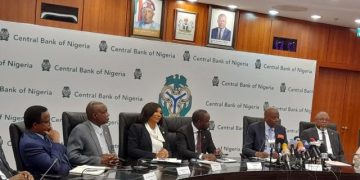
It said the decision of the Monetary Policy Committee, announced by the CBN Governor, Olayemi Cardoso, reflected improving macroeconomic fundamentals and a cautious shift from aggressive tightening.
The organisation noted that sustained disinflation, stronger external reserves, an improved trade balance and relative exchange-rate stability had created room for monetary easing.
It said the rate cut could boost investor confidence and support private-sector growth, but cautioned that weak monetary transmission might limit its impact on lending rates.
The CPPE identified high cash reserve requirements, elevated lending rates, government borrowing and structural banking costs as major constraints to effective transmission.
The group also stressed the need for fiscal consolidation, citing high public debt, persistent deficits and rising debt-service obligations as risks to macroeconomic stability.
The Chief Executive Officer of CPPE, Dr Muda Yusuf, said effective policy coordination and stronger transmission mechanisms were critical to unlocking investment and sustaining growth.
He commended the CBN for what he described as a measured and data-driven policy adjustment.
The CPPE bods noted that the easing reflected strengthening macroeconomic performance, declining inflation, growing reserves, improved trade balance and enhanced foreign exchange stability.
Yusuf added that for the benefits of monetary easing to be fully realised, authorities must strengthen transmission to ensure lower lending rates for the real sector and advance credible fiscal consolidation to safeguard stability.
He said that if supported by structural reforms and disciplined fiscal management, the current policy direction could unlock a stronger investment cycle and more durable economic growth.