
































African ministers for education on Friday endorsed a comprehensive strategy to revitalise formal learning and skills development in line with the continent’s quest to achieve the UN 2030 goals and Agenda 2063 on socio-economic transformation.
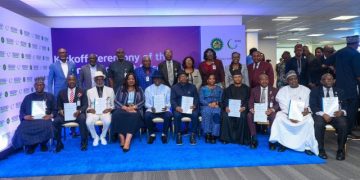
The ministers said this at the end of a 3-day “Pan African Conference on Education” held in Nairobi.
The ministers declared support for the new pact to transform education sector in Africa through policy reforms, private sector investments, capacity building for teachers and gender parity in school enrollment.
Amina Mohamed, Kenya’s Cabinet Secretary for Education, said that African governments would dedicate greater efforts toward the realisation of education for all goals.
“We agreed to support creation of resilient and responsive education systems as part of concerted efforts to rebuild our economies and improve people’s livelihoods,” Mohamed remarked.
Kenya’s Ministry of Education in conjunction with AU and the UN Educational Scientific and Cultural Organisation (UNESCO) organised the Nairobi forum to review milestones in the attainment of universal access to formal education from primary to tertiary levels.
Mohamed said there was a consensus on the need to reform education policies in Africa, increase budgetary allocation and forge strategic partnerships to eliminate illiteracy and skills gap in the continent.
“Our declaration calls for joint action and enhanced coordination to promote life-long learning as a basis to achieve socioeconomic transformation,” Mohamed said.
“The Nairobi declaration also calls for intra-African collaboration to realise our highest education aspirations,” she added.
African ministers in their communique reaffirmed commitment to tackle bottlenecks to the realisation of education for all goals including poverty, shortage of teachers, dilapidated learning facilities and archaic customs.
“We reaffirm our commitment to ensure access to equitable, inclusive quality education and life-long learning opportunities for all,” the ministers said.
They pledged support for policies that advance early childhood education and greater enrollment of girls in secondary and tertiary institutions.
Multilateral agencies hailed the renewed commitment by African leaders and policymakers to bridge access gaps in basic education.
Getachew Engida, the UNESCO Deputy Director-General, said African countries were well positioned to reap from investments in competence and skills based learning.
“Africa is on the verge of a monumental take-off and should prioritise education and skills development to solve its economic, social and environmental challenges,” Engida remarked.
He underscored the role of science, technology and smart innovations to catalyse Africa’s transformation.