



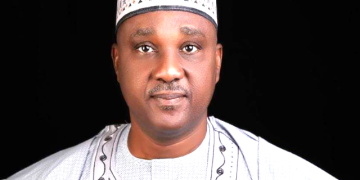




























WorldStage Newsonline– Minister of State for Education Prof Anthony Onwuka has called on all Nigerians to embrace the attitude of reading culture, saying the country had begun to lose a lot from reading culture.
Represented by the Permanent Secretary, Federal Ministry of Education(FME), Arch, Sunny Echonoh on Friday in Abuja at the International Literacy Day 2018, he lamented on the need to promote reading culture that Nigerian is beginning to lose the reading culture.
He said benefits of literate society are enormous “it create a free society, informed society and provide the right knowledge for people to realized their full potentials.
He said: “We have developed multiple programs beyond the formal educational sector to deal with all the various sectors of miss opportunities, such as the adult literacy, the girl child education that were not trained that are now mothers raising children without relevance skills and literacy to be able to groom the children.
He said, “Literacy is not only ones ability to read and write in English, anyone who can read and write in Igbo, Yoruba, Hausa, Idoma, Efik, Tiv, Edo etc is considered literate.
“We must teach our children from the foundation level how to read and write, by the time we all are literate we will begin to hold our leaders accountable, asking them how money was spent and what they have done with the allocation that was entrusted on them and communicate our needs to our leaders.”
United Nations Economic, Scientific and Cultural Organisation (UNESCO), Director General, Audrey Azoulay described literacy as the first step towards freedom, “towards liberation from social and economic constraints.”
Azoulay, who was represented by Secretary General, Mr. Kehinde Ayotunde, said that literacy is the prerequisite for development, both individual and collective, adding that it reduces poverty and inequality, create wealth, and helps to eradicate problems of nutrition and public health.
He said: “Today, worldwide, more than 260 million children and adolescents are not enrolled in school; 6 out of 10 children and adolescents around 617million do not acquire the minimum skills in literacy and numeracy; 750million young people and adults still cannot read and write and among two-third are women.
“These seriously debilitating shortcomings lead to a de facto exclusion from society and perpetuate a spiral of social inequalities and gender inequalities.
“A new challenge is now being added to this, a world in flux, where the pace of technological innovation is continuously accelerating.”
Azoulay noted that to find a place in society, get job, and respond to social, economic and environmental challenges, traditional literacy and numeracy skills are no longer enough; new skills, including in information and communication technology, are becoming increasingly necessary.
Azoulay said, the theme of this year’s international Day “Literacy and Skill Development”, focuses on the evolving approach to education. “UNESCO is actively engaged in the redefinition of literacy policies and encourages innovative educational practices”, he said.
Director Educational Planning Research and Development, FME, Dr. Mrs. Chioma Nwadei, said the international literacy day 2018, is aimed at promoting literacy a tool to empower individuals and the community for sustainable inclusive socio-economic development to combat worldwide issues of illiteracy and its attendant consequences.