









































The Lagos State Government has called for increased investment in nutrition and a more coordinated approach to food security, emphasising that the nutritional well-being of its population is directly linked to economic productivity, human capital development and the state’s long-term prosperity.
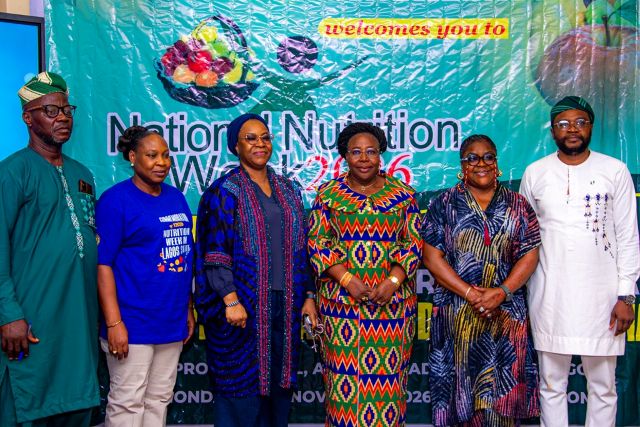
The call was made at the 2026 Nutrition Week commemoration, organised by the Lagos State Ministry of Economic Planning and Budget and the State Committee on Food and Nutrition (SCFN) on Monday at Protea Hotel, Ikeja.
With the theme, “Sustainable Nutrition for a Prosperous and Productive Nigeria,” the commemoration brought together senior government officials, nutrition professionals, civil society organisations and representatives of local government institutions to examine the importance of placing nutrition at the centre of development planning.
Delivering his goodwill address, the Commissioner for Economic Planning and Budget, Ope George, described nutrition as a critical investment in the state’s human capital and sustainable development.
Represented by the Permanent Secretary of the Ministry and Chairman of the State Committee on Food and Nutrition, Mrs Olayinka Ojo, the Commissioner noted that the consequences of poor nutrition extend beyond individual health, affecting children’s development, educational performance, public health and the productivity of the future workforce. He therefore stressed that improving nutrition must be treated as a development priority rather than an isolated health intervention.
Ojo drew attention to the relationship between food security and the effectiveness of the wider food system. She emphasised that making nutritious food available requires more than agricultural production; it also depends on effective storage, transportation, distribution, supply chain management and food safety.
She called for stronger collaboration among government institutions, businesses, civil society organisations, professional bodies and communities to improve access to safe, affordable and nutritious food, particularly for vulnerable populations.
The Permanent Secretary further highlighted the revised National Policy on Food and Nutrition 2026–2035 as an important framework for strengthening coordination and improving outcomes. She stressed the need to translate policy priorities into practical interventions and integrate nutrition into development plans.
The emphasis on inter-ministerial collaboration was particularly significant, given the cross-cutting nature of nutrition, which connects health, education, agriculture, economic planning and social development.
The Permanent Secretary of the Ministry of Basic and Secondary Education, Mrs Busola Dokunmi-Adegbite, who also participated in the programme, underscored the relevance of nutrition to the education sector and the broader development of children.
Similarly, Dr Adetoke Adekitan of the Lagos State Primary Health Care Board addressed the relationship between improved nutrition and human capital development. She highlighted the importance of local government participation in sustaining nutrition interventions, including the Nutrition 774 initiative, and called for a unified approach across all levels of government.
Earlier, the Director of the Economic Planning Department, Mrs Olaoluwa Bakare, in her welcome address, highlighted the importance of cooperation among government institutions and stakeholders in advancing development priorities. She provided the institutional context for the day’s discussions and emphasised the need for coordinated action.
The programme attracted participants from the Civil Society Scaling-Up Nutrition in Nigeria (CS-SUNN), the Nutrition Society of Nigeria and nutrition focal persons representing Lagos State’s 57 Local Government Areas and Local Council Development Areas (LGAs/LCDAs). Their participation reflected the importance of professional expertise, civil society engagement and local-level coordination in translating nutrition policies into interventions that reach communities.
The commemoration brought renewed attention to the need to connect nutrition policy with the practical realities of food access, public health, education and economic development. For Lagos, achieving sustainable nutrition outcomes will depend not only on the strength of its policies but also on how effectively government institutions and other stakeholders work together to implement them.