




















































By Steve Omolale– Since the advent of this democratic dispensation in 1999, Ekiti State has not had the privilege of a governor who spent two consecutive terms of eight years in office. It was in the same category with Oyo State until the late former governor, Senator Abiola Ajimobi, broke the jinx in that state in 2011-2019 as the first governor to serve two consecutive terms.
In Ekiti, a state decreed into existence by the dark-goggled late General Sani Abacha as Head of State in 1996, none of its past civilian governors had the opportunity of two consecutive terms. They either lost re-election, were removed by the court of law or were impeached. This has seriously affected the expected growth and development of the state, as policies and programmes meant for the people were either outrightly cancelled or modified by succeeding governors.
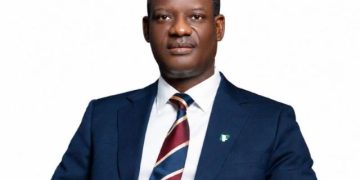
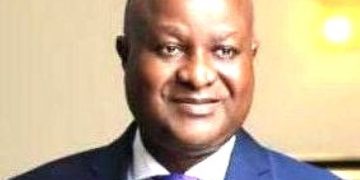
As the ruling All Progressives Congress (APC) prepares for its governorship primaries come October 27 in the state, the general consensus among the residents is for the incumbent Governor Biodun Abayomi Oyebanji to secure the ticket of the party, win the governorship election in 2026 and break the second term jinx.
This wish is not misplaced as what the people now believe to be a jinx started in 2003 when the first civilian governor of the state, Otunba Adeniyi Adebayo, lost his re-election bid to the then People’s Democratic Party (PDP) candidate, Mr. Ayodele Fayose, who first ruled the state between May 29, 2003 and October 19, 2006 when he was impeached.
Former President Olusegun Obasanjo, who declared a state of emergency in Ekiti, appointed the late General Tunji Olurin (rtd) as the sole administrator between October 19, 2006 and April 27, 2007, when Chief Tope Ademiluyi took over and ruled the state for just one month till May 29, 2007.
Then came Chief Segun Oni as the governor on May 29, 2007. However, his tenure was abruptly terminated by the Election Petitions Tribunal, reaffirmed by the Court of Appeal, on February 17, 2009, paving the way for the then Speaker of the state House of Assembly, the Rt. Hon. Tunji Odeyemi, to be at the helm as the acting governor.
Dr. Kayode Fayemi, who succeeded Odeyemi took over as the governor for his first term between October 16, 2010 and October 16, 2014.
Fayose took over for his second term on October 16, 2014, after defeating Fayemi in the governorship election, and ruled till October 16, 2018. Again, Fayemi succeeded Fayose for his own second term on October 16, 2018 and was in charge in the state till October 16, 2022 when Oyebanji became the new occupant of Oke Ayoba.
Having spent three years already, the political temperature in Ekiti State today has reached feverish pitch, as preparations for the next governorship election on Saturday, July 20, 2026, are already in top gear.
With increased monthly revenue, both internal and external, Oyebanji has demonstrated that the people of Ekiti deserve the best. And he is giving them the best by touching the lives of all categories of people in all segments. He is also bringing development to the grassroots, the most important of which are: making the rural areas accessible by good roads, providing rural electrification and mobilising the youth to embrace agriculture to make the state self-sufficient in food production in what is tagged agricultural revolution.
So, in effect, while the residents in urban areas are deeply feeling the positive impacts of his administration with enduring infrastructure, those in the rural areas are not left behind.
Like a focused pilot who is cruising at a convenient altitude, and besides the agricultural revolution, Oyebanji has focused on his other development agenda in the last three years. This has taken Ekiti out of the woods. Although his predecessors tried their best within the limit of available resources, building a solid foundation for the state, he has humbly decided to build a rock-solid structure on the foundation, which is now benefitting the people.
His development agenda, including sound education, health-care, Water, Sanitation and Hygiene (WASH), massive investment in the power sector, good governance, Ekiti Knowledge Zone and youth employment, among several others, have catapulted the state from a back zone state to a frontline one to the admiration of the residents.
For instance, one of the most important things that attracts investors to a state is peace and security. Ekiti remains the most peaceful state in the country because of the commitment of good resources to the issue of security.
Today and with Oyebanji’s impressive performance, it is pleasantly surprising that even many key opposition leaders in Ekiti have queued behind the general populace and are even insisting he must be allowed to go for his second term in office.
Indeed, the governor’s performance has literally killed the opposition parties, which had hitherto been in disarray, pummeled by all kinds of internal crises to the extent that many members of the structurally weak and struggling opposition have no option than to join the Oyebanji train.
From all indications, and as the stage is set for the APC governorship primaries next Monday, Oyebanji is the only candidate. Other initial contenders have either been disqualified or have stepped down for the governor following the wise counsel of many elders in the state. With this, the coast is clear for him.
And since there are only two parties in Ekiti right now, that is APC and the rest, victory in the general election in 2026 is beckoning on the governor to break the second term. This is the only way to ensure the continuity of the good work he started three years ago.
*Omolale, a seasoned journalist, writes from Lagos.



