






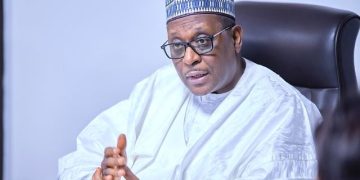





















WorldStage Newsonline– The Chairman of the ECOWAS Parliament Committee on Health and Member of Parliament from Cabo Verde, Dr. Orlando Pereira Dia, has called on West African countries to allocate at least 30% of their national budgets to education, stating that such investment is essential for boosting local production and reducing dependence on developed nations.
According to a statement, Dr. Dia told journalists on Thursday at the ongoing meeting of the Joint Committee on Education, Science and Culture, and Communication in Dakar, Senegal, that the role of both national and regional parliaments is to champion innovation and technology through education.
Dr. Dia stressed the need for ECOWAS countries to integrate innovation, information technology, and artificial intelligence into their education systems as a foundation for sustainable development.
He explained that prioritizing educational technology (EdTech) would enable West Africa to become more self-sufficient by transforming local raw materials into finished products, thereby creating jobs and wealth.
“The role of Parliament is to promote technology in education,” Dr. Dia said.
“I had to speak today about the role of Parliament both ECOWAS and national in advancing the education sector, technology, and innovation, which are crucial for the economic and social development of our countries.”
He added, “We must increase investment in education so that our countries allocate at least 30% of their national budgets to the education sector. This will allow proper integration of information technology and innovation into school curricula from primary to university levels.”
“Investing in education, technology, and innovation will enable us to industrialize our sub-region, transform our products, produce more, create wealth, and reduce dependency on external economies.”
Dr. Dia warned that the prevailing practice of exporting raw materials and importing finished goods undermines the region’s development.
“So far, what have we done? We allow developed countries to come here, take our natural resources, process them, and sell them back to us. We must do the opposite.
“Instead of exporting crude oil, we should extract, refine, and export finished petroleum products. If we produce cocoa, we must also produce chocolate. We must reverse the current trend.”
Also speaking at the session, former ECOWAS Parliamentarian Mr. Ibrahim Diouf called for harmonized education policies across member states, particularly in the area of EdTech.
He urged the ECOWAS Parliament to harmonize teacher training and school curricula, support research and innovation, promote collaboration among reform stakeholders, and implement regional corporate social responsibility strategies. He also stressed the importance of strong monitoring and evaluation mechanisms.
Diouf noted that while the use of ICT in schools is increasing, its actual impact remains difficult to measure due to poor planning, inadequate infrastructure, and limited internet access.
“The challenge lies in evolving toward a regional education system that integrates ICT, awards standardized diplomas, and adapts to the socio-economic realities of ECOWAS,” he said.
“Even though ICT adoption in education is growing, its effectiveness remains uncertain due to device malfunctions, lack of strategic planning, resource shortages, and an inability to accurately quantify its real impact.”
He concluded by urging educators to use digital tools strictly for academic purposes.
“We call on teachers using ICT in our schools to ensure it is solely for educational use. ICTs are only tools. Therefore, we must rethink how they are integrated into our education systems by providing the necessary human and material resources to ensure sustainable EdTech development,” Diouf said.